

Enhanced Project Management Tool
 This invention is a system for managing a project that includes multiple tasks and workers. Periodic monthly, task plan, schedule, and budget reports are generated and made available for display or further analysis. When the system receives a description of a skill set needed for a project, the skill set module is queried. The name and relevant skill(s) possessed by each worker is displayed in a visually perceptible format.
Multi-User Investigation Organizer
InvestigationOrganizer (IO) improves the effectiveness and efficiency of accident and incident investigations, as well as the quality of their results. IO is a Web-based system that was built as a customized application of the NASA Organizer semantic hypermedia system, and is used in criminal, security, and accident related investigations.
NETMARK
NETMARK software seamlessly integrates structured, semi-structured, and unstructured data and documents across enterprise organizations. It offers a highly scalable, open enterprise database architecture that eliminates or reduces the need for database design and administration, and converts information from a wide range of data types into a single, universal data type for storage, retrieval, and content- and context-sensitive query and search.
Software Tools to Process Time History Data for Display and Analysis
 A suite of software tools enables efficient processing of time history data. The tools can be used together or independently, offering a variety of capabilities, including comparison of time history data files to validate pre-processing activities. Originally developed to process flight test and simulation data, this suite has potential applications for the manufacturing, aerospace, and scientific research industries.
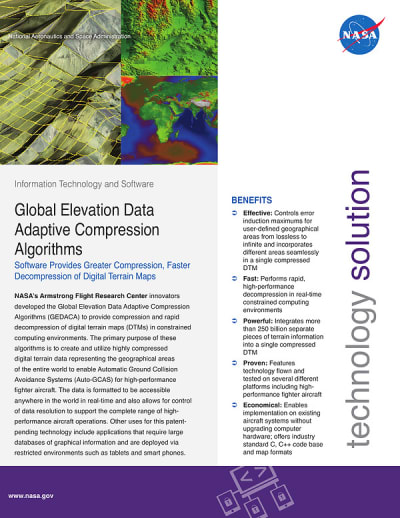
Global Elevation Data Adaptive Compression Algorithms
 GEDACA provide compression and rapid decompression of digital terrain maps in constrained computing environments. The software was developed to create and utilize highly compressed digital terrain data representing the geographical areas of the entire world to enable Automatic Ground Collision Avoidance Systems for high-performance fighter aircraft.
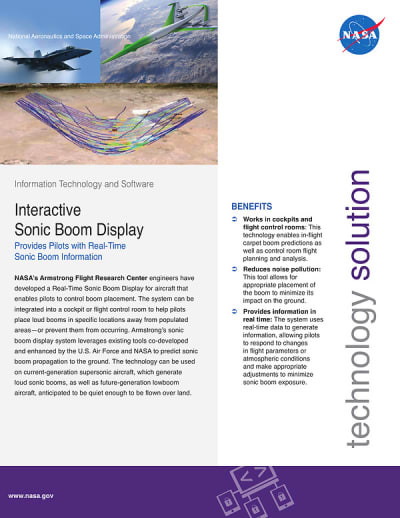
Interactive Sonic Boom Display
A Real-Time Sonic Boom Display for aircraft enables pilots to control boom placement. It can be integrated into a cockpit or flight control room to help pilots place loud booms in specific locations away from populated areas, or prevent them from occurring. It can be used on current-generation supersonic aircraft, as well as future-generation low-boom aircraft.
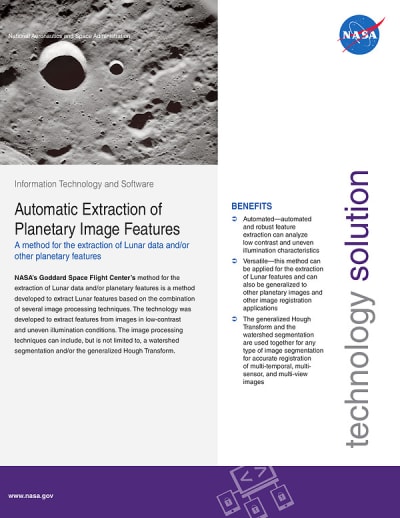
Automatic Extraction of Planetary Image Features
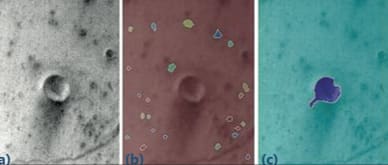 This method extracts lunar data and/or planetary features based on the combination of several image-processing techniques. With the large number of new lunar data that will be collected in the next few years, it is important to implement an automated method to extract these features. Other uses include military synthetic aperture radar images, and medical imaging such as mammograms and MRIs.
Improved Nondestructive Evaluation of Advanced Nonmetallic Structural Composites
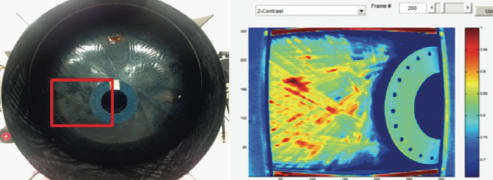 Techniques for post-processing of flash IR thermography data provide efficient and cost-effective enhancements to NDE of nonmetallic structural composites for many applications. Compatible with commercial IR thermography products, this suite of tools provides quantitative and qualitative data analysis capabilities.
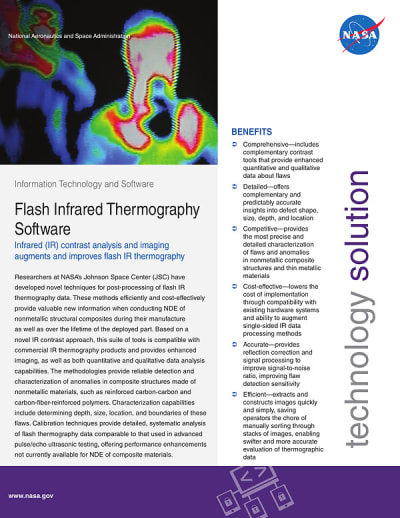
Analyzing System for Global Positioning System (GPS) and General Satellite Tracking
 The GIPSY-OASIS II software substantially improves positioning accuracy for both ground and space applications, providing accuracy to the sub-centimeter level for all GPS users. It maintains real-time positioning data to better than 1 m accuracy, and can readily be applied to virtually any GPS estimation problem, including position and timing determination, and regional and global geodesy solid earth dynamics.
Directed Design of Experiments for Probability of Detection (DOEPOD) Software
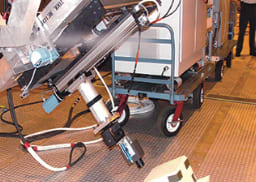 This software enables users of critical inspection systems to validate the capability of the system. The software was designed to validate the capability of inspection systems to find fracture-critical flaws in materials, but it can be applied to systems to locate any type of flaw, as well as to validate the detection capability of personnel.
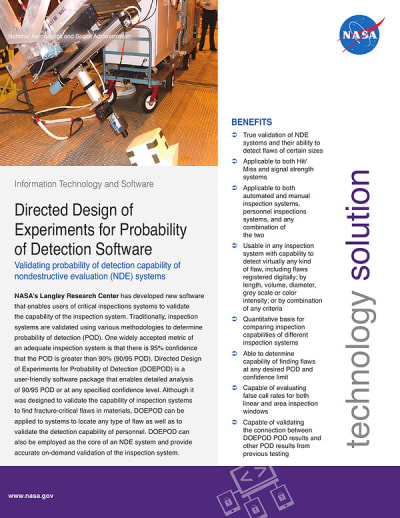
Overview
The document presents an overview of the Directed Design of Experiments for Probability of Detection (DOEPOD) software developed by NASA's Langley Research Center. DOEPOD is designed to validate the capability of nondestructive evaluation (NDE) systems to detect flaws in materials, components, and systems, particularly those that are fracture-critical. The software provides a quantitative measure of the Probability of Detection (POD) and the associated confidence bounds, allowing users to assess the effectiveness of inspection systems without relying on predictive mathematical models.
Key features of DOEPOD include its ability to analyze various types of flaws, which can be characterized by digital, analog, or physical attributes such as length, volume, diameter, and color intensity. The software is applicable to both automated and manual inspection systems, making it versatile for different inspection methodologies. It can also validate the detection capabilities of personnel conducting inspections.
The document emphasizes the benefits of using DOEPOD, including true validation of NDE systems, the ability to evaluate false call rates, and the capability to compare the inspection capabilities of different systems quantitatively. It supports both Hit/Miss and signal strength testing, providing a comprehensive approach to inspection validation.
DOEPOD is not limited to traditional inspection data; it can also be applied in various fields such as industrial inspection, medical imaging, logistics, and education. This broad applicability underscores the software's potential to enhance quality assurance processes across multiple industries.
Additionally, the document highlights NASA's Technology Transfer Program, which aims to ensure that the agency's technological advancements benefit the public and contribute to economic growth. Through partnerships and licensing agreements, NASA seeks to bring its innovations to market, creating jobs and improving the quality of life for U.S. citizens.
In summary, the DOEPOD software represents a significant advancement in the validation of inspection systems, offering a reliable and user-friendly tool for ensuring the detection of critical flaws. Its development aligns with NASA's mission to leverage technology for the greater good, making it a valuable asset for various sectors.







