There are locations that are either too hazardous to land and gather data, or not practical to land. Also, data may need to be gathered from multiple (tens to hundreds) locations (sometimes at once). This is not feasible with a single lander or rover. A single lander does not provide any redundancy in case the lander (or rover) is lost during landing, and due to high costs, is not amenable to landing at multiple locations.
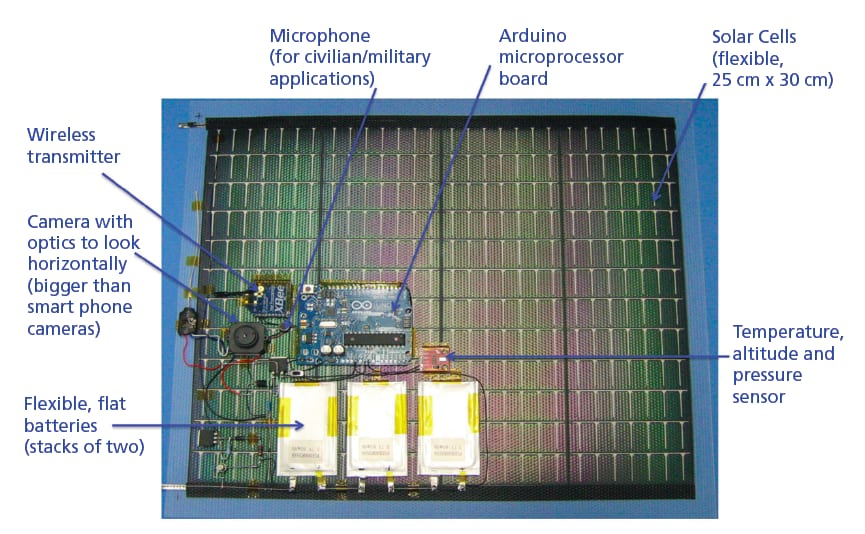
Such a dropped sensor configuration has not been developed before. Reduction in lander complexity, risk, and recurring costs, and simplicity of system testing and validation, are among the benefits of this technology. A further benefit is that by deploying redundant landers, the mission is not dependent on the success of any particular lander; even a high attrition rate of 50% would still provide invaluable data and images that currently cannot be obtained in any other way. Finally, this technology enables certain types of missions for which distributed landers are required.
Among the many potential dual-use benefits and intermediate earthbound applications of such a system are the possibility of delivering measurement equipment by aircraft or drone to hazardous sites, the deployment of a distributed surveillance network in tactical situations, and continuous remote monitoring of the environment over a wide expanse of ocean, glacier, or forest where it may be difficult to land to deploy sensitive instrumentation.
A picture of the early-stage and small-scale prototype of the lander is shown.
This work was done by Hamid Hemmati of Caltech for NASA’s Jet Propulsion Laboratory. NPO-49454
This Brief includes a Technical Support Package (TSP).

Two-Dimensional Dropped Sensor Suite
(reference NPO49454) is currently available for download from the TSP library.
Don't have an account?
Overview
The document is a Technical Support Package for the Two-Dimensional Dropped Sensor Suite (NPO-49454) developed by NASA's Jet Propulsion Laboratory (JPL). It outlines the technological advancements and applications of this sensor suite, which is part of NASA's Commercial Technology Program aimed at making aerospace-related developments accessible for broader scientific, technological, and commercial use.
The Two-Dimensional Dropped Sensor Suite is designed to facilitate the deployment of multiple sensors on planetary surfaces, significantly enhancing data collection capabilities for various scientific missions. The document highlights several key benefits of this technology:
-
Reduced Development Time: The sensor suite simplifies the design and testing processes, allowing for quicker development cycles.
-
Lower Risk and Cost: By eliminating the most complex and expensive phases of landing, the suite reduces overall mission risk. The flat and low-mass design enables stacking of multiple units for efficient transport and deployment.
-
Redundancy: The use of multiple landers means that the mission is not reliant on the success of any single unit. Even with a high attrition rate, valuable data can still be collected.
-
Versatile Applications: The sensor suite is suitable for various missions, including seismic probing and weather monitoring, particularly in challenging environments such as land, ocean, glaciers, or forests.
-
Dual-Use Benefits: The technology has potential applications for both civilian and Department of Defense (DOD) purposes, broadening its impact.
The document also provides contact information for further inquiries regarding research and technology related to the sensor suite, emphasizing JPL's commitment to technology transfer and collaboration.
Overall, the Two-Dimensional Dropped Sensor Suite represents a significant advancement in planetary exploration technology, enabling the collection of data and images that were previously unattainable. This initiative not only enhances scientific understanding of various environments but also demonstrates the potential for innovative technologies to address complex challenges in aerospace exploration. The document serves as a resource for stakeholders interested in the applications and benefits of this cutting-edge technology.