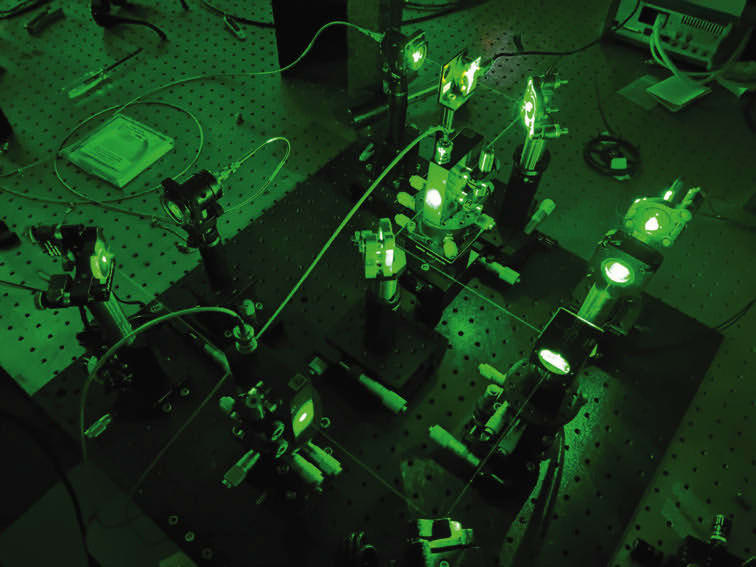
Holographic Camera Sees the Unseen
Northwestern University invented a new high-resolution camera that can see the unseen including around corners and through scattering media such as skin, fog, or potentially even the human skull. Called synthetic wavelength holography, the new method works by indirectly scattering coherent light onto hidden objects, which then scatters again and travels back to a camera. From there, an algorithm reconstructs the scattered light signal to reveal the hidden objects. Due to its high temporal resolution, the method also has potential to image fast-moving objects, such as the beating heart through the chest or speeding cars around a street corner.
The new technology is the first method for imaging around corners and through scattering media that combines high spatial resolution, high temporal resolution, a small probing area, and a large angular field of view. This means the camera can image tiny features in tightly confined spaces as well as hidden objects in large areas with high resolution — even when the objects are moving.
While the method has obvious potential for noninvasive medical imaging, early-warning navigation systems for automobiles, and industrial inspection in tightly confined spaces, the researchers believe potential applications could include space exploration or underwater acoustic imaging.
Visit Here
Carbon Fiber Material Heals with Heat
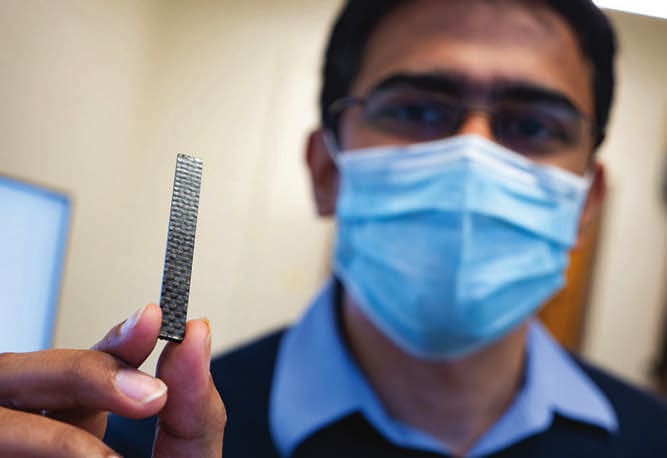
Because of their high strength and light weight, carbon-fiber-based composite materials are gradually replacing metals for advancing all kinds of products and applications, from airplanes to wind turbines to golf clubs. But once damaged or compromised, the most commonly used carbon fiber materials are nearly impossible to repair or recycle.
A University of Washington team created a new type of carbon fiber reinforced material that is as strong and light as traditionally used ones but can be repeatedly healed with heat, reversing any fatigue damage and providing a way to break it down and recycle it when it reaches the end of its life. Either traditional heat sources or radio frequency heating can be used to reverse and postpone its aging process indefinitely.
Visit Here
Private Stations Get NASA Funding
NASA has announced three funded Space Act Agreements totaling $400 million to three groups of companies, including Blue Origin, Nanoracks, and Northrop Grumman to advance development of commercial space stations that could potentially succeed the ISS by the end of the decade. The awards will allow the winning companies to mature the designs of their proposed stations through 2025.
Visit Here
What’s New on Techbriefs.com
The Tech Briefs team congratulates Editorial Director Linda Bell on her retirement after a 27-year long and successful career with the magazine.
A brand-new episode of our Tech Briefs podcast series Here’s an Idea explores how a micro technology could soon have a major impact on medicine. Go here to learn how three different researchers want to use microneedles to support better vaccine delivery. Send your suggestions and comments to
Next Month in Tech Briefs
The February issue includes an Executive Roundtable in which executives from leading sensor manufacturers provide their insights on trends in the industry, new sensing technologies, and applications that are growing in popularity.