

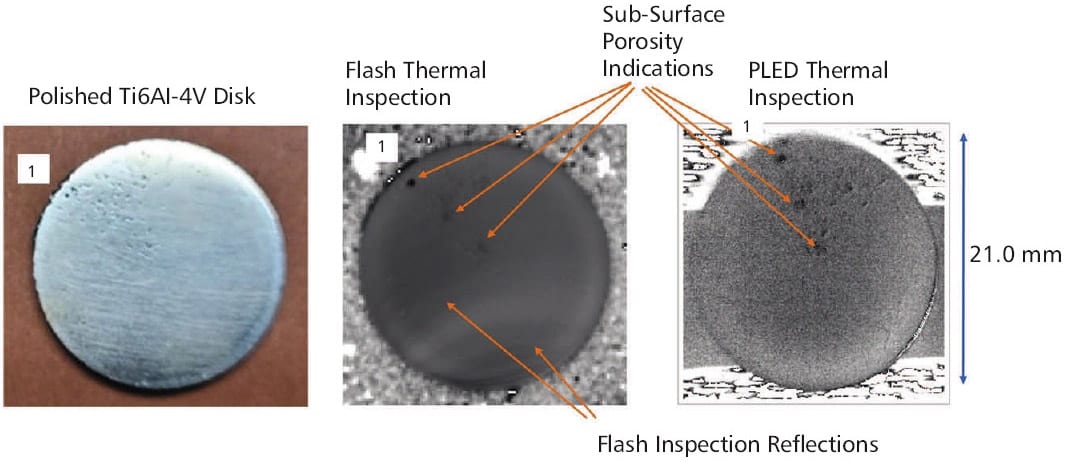
Thermal nondestructive evaluation (NDE) is a widely used method for detecting defects such as cracks, corrosion, and dis-bond layers in metallic and composite structures. Traditional thermal inspection methods rely on a high-intensity, broadband light heat source (e.g., flash lamp, quartz lamp) that generates heat that is absorbed by the material, and an infrared camera captures the transient thermal response to generate inspection data. However, inspecting low emissivity surfaces (such as unpainted aluminum and titanium alloys) poses challenges including high reflection of the heat source light that can cause inaccurate measurement of the surface temperature response, produce false defect indications, and potential sensor damage due to high-intensity reflections.
In response to this challenge, engineers at NASA Langley Research Center have developed a cutting-edge thermal inspection technology that enhances defect detection on low-emissivity surfaces by eliminating false readings caused by infrared reflections. By using a spectrally narrow, visible-band pulsed light emitting diodes (PLED) heat source and optical filters, this system prevents interference with infrared camera measurements, delivering a higher accuracy, improved defect contrast, and more cost-effective alternative to conventional flash thermography.
NASA’s PLED thermal inspection system consists of an array of high- powered LED chips configured to deliver controlled pulses of visible light. The system includes eight LED chip arrays, mounted on an aluminum heat sink and housed in a hood configuration. The inspection hood is specially designed with filters to prevent internal reflections. The LEDs are powered by regulated power supplies and controlled via a computer interface that synchronizes heat pulses with an infrared camera. An acrylic filter is placed over the LEDs to block residual infrared radiation, ensuring that only visible light reaches the target surface.
The system’s infrared camera, operating in the mid-wave infrared (MWIR) range does not detect the visible light and captures the transient thermal response of the material, allowing for precise defect detection. By eliminating the need for high-intensity broadband infrared sources, the PLED system provides a cleaner and more accurate thermal response, particularly for unpainted metals and additively manufactured (AM) components.
Performance validation of the PLED system has demonstrated significant advantages over traditional flash thermography. In tests on aluminum samples with material loss and AM Ti-6Al-4V metal specimens, the PLED system successfully detected defects with superior contrast and no heat source reflections. Principal Component Analysis (PCA) applied to PLED inspection data revealed clearer defect indications compared to flash-based methods, which introduced unwanted artifacts due to transient reflections.
Additionally, the PLED system enabled quantitative thermal diffusivity measurements, offering a new approach to single-sided material characterization. Potential applications include corrosion detection in aerospace components, quality control of AM metal parts, structural health monitoring of industrial materials, and more.
NASA is actively seeking licensees to commercialize this technology. Please contact NASA’s Licensing Concierge at











