

Aerospace Manufacturing - February 2024
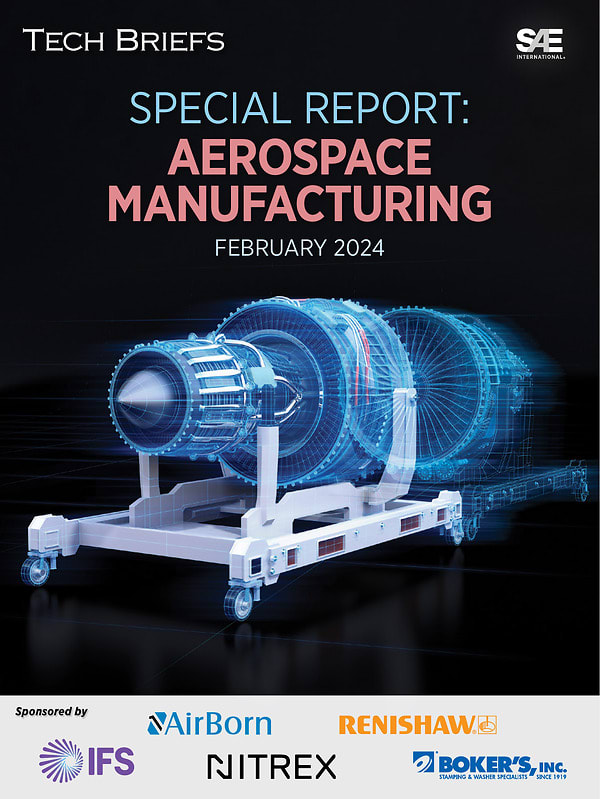
From AI to digital twins to extended reality (XR), an array of new technologies are coming together to shape the future of manufacturing. Read all about it in this compendium of articles from the editors of Tech Briefs and Aerospace & Defense Technology magazines.
Don't have an account?
Overview
The Aerospace Manufacturing Special Report for February 2024 delves into the latest advancements and emerging technologies shaping the aerospace industry. It highlights the critical role of innovation in enhancing productivity and sustainability in manufacturing processes.
One of the key themes of the report is the integration of Artificial Intelligence (AI) and cloud technology, as discussed by Stephen Hooper, Vice President of Design and Manufacturing at Autodesk. He emphasizes that the current challenges of limited capacity and increasing complexity hinder the ability of industries to design and produce essential goods. By leveraging AI and cloud solutions, manufacturers can streamline operations, improve efficiency, and better meet the demands of the market.
The report also features a section on "5 Emerging Technologies in Manufacturing," which outlines significant trends that are transforming the aerospace sector. Among these technologies is the Interconnected Digital Twin (IDT), which is gaining traction across various markets. The IDT allows for real-time monitoring and simulation of manufacturing processes, enabling companies to optimize production and reduce downtime.
Another highlighted area is the potential of distributed metal additive manufacturing, particularly in military supplier strategies. This technology offers the ability to produce complex parts on-demand, reducing lead times and inventory costs, which is crucial for military applications where rapid response is essential.
The report further explores the unlocking of 3D-printed polymers in aerospace and defense, showcasing how these materials can enhance design flexibility and reduce weight in aircraft components. This innovation aligns with the industry's push towards more sustainable manufacturing practices, as lighter components can lead to improved fuel efficiency and lower carbon emissions.
In addition to technological advancements, the report provides practical insights with "Top Productivity Improvement Tips for Manufacturing Turbine Discs." These tips focus on optimizing processes and utilizing advanced manufacturing techniques to enhance the production of critical components in aerospace engines.
The application brief on Dunlop Aerospace Braking Systems illustrates a real-world example of how advanced manufacturing techniques, such as CNC machining and Renishaw probe systems, have improved process consistency and reduced manufacturing time for aircraft wheels and brakes. This case study underscores the importance of investing in modern machinery to meet the growing demands of the aerospace market.
Sustainability is another focal point of the report, with Eryn Devola from Siemens Digital Industries discussing the urgent need for the aerospace sector to re-imagine production methods to minimize environmental impacts. As the industry faces increasing pressure to reduce carbon emissions, sustainable manufacturing practices are becoming essential for long-term viability.
Overall, the Aerospace Manufacturing Special Report for February 2024 provides a comprehensive overview of the current landscape in aerospace manufacturing, emphasizing the importance of innovation, sustainability, and efficiency. By adopting emerging technologies and rethinking production strategies, the industry can better position itself to meet future challenges and demands.









