

Electric Vehicles - July 2024
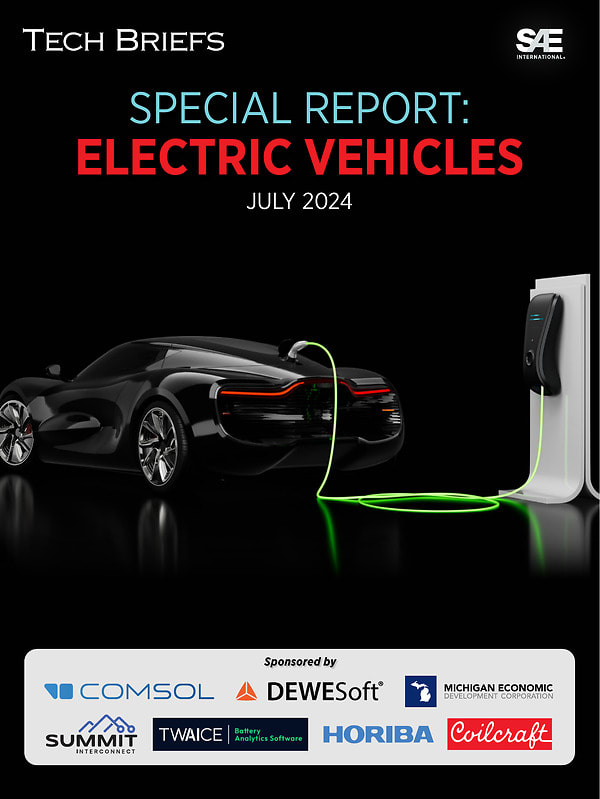
In this collection of articles from the editors of Automotive Engineering and Battery & Electrification Technology, learn about the latest developments in EV power systems, battery recycling, thermal management, eVTOL battery performance, and much more.
Don't have an account?
Overview
The Electric Vehicles Special Report from July 2024 provides a comprehensive overview of the current state and future prospects of electric vehicles (EVs), highlighting key advancements, challenges, and innovations in the industry.
The report begins by noting the significant growth in passenger EV sales, which surged by approximately 25% in the first quarter of 2024 compared to the same period in 2023, as reported by the International Energy Agency (IEA). This growth indicates a shift towards widespread adoption of EVs among consumers. However, the report also points out that the off-highway vehicle segment, which includes heavy-duty machinery used in construction and agriculture, is lagging in electrification. The challenges faced by this segment include the need for larger batteries, robust traction motors, and the installation of necessary charging infrastructure, all of which complicate the transition to electric power.
Modine, a company with over a century of experience in thermal systems for diesel and gasoline engines, is highlighted for its role in advancing EV thermal management systems tailored for off-highway vehicles. The report emphasizes the unique thermal needs of these vehicles, which vary significantly in size and function, necessitating flexible design solutions.
A significant focus of the report is on battery technology, particularly lithium-ion batteries, which are crucial for the performance and reliability of EVs. The report discusses the importance of rigorous testing of battery management systems to enhance range, extend battery life, and ensure safety. As battery architectures evolve, manufacturers are expected to offer vehicles with increased range capabilities, potentially reaching 500 to 600 miles on a single charge, which could attract more buyers hesitant about EV adoption.
The report also addresses the complexities involved in testing multiple lithium-ion battery technologies, emphasizing the need for precise measurement to alleviate range anxiety and ensure the longevity of EVs. The safety and reliability of these batteries are paramount, given their smaller size and higher energy density compared to traditional rechargeable batteries.
In addition to battery advancements, the report touches on the cost considerations associated with EVs. Power-electronics developers are working to balance performance with affordability, which remains a critical concern for potential buyers. The report suggests that as technology progresses, the cost of EVs may decrease, making them more accessible to a broader audience.
Furthermore, the report highlights the emerging field of battery recycling, noting that as the number of used EV batteries increases, companies are actively developing methods to recycle these batteries efficiently. This aspect is crucial for sustainability and reducing the environmental impact of EVs.
In summary, the Electric Vehicles Special Report provides valuable insights into the rapid evolution of the EV market, the challenges of electrifying off-highway vehicles, advancements in battery technology, and the importance of rigorous testing and recycling efforts. As the industry continues to innovate, these developments are expected to play a significant role in shaping the future of transportation.










