

Hydrogen Propulsion & Alternative Fuels - August 2024
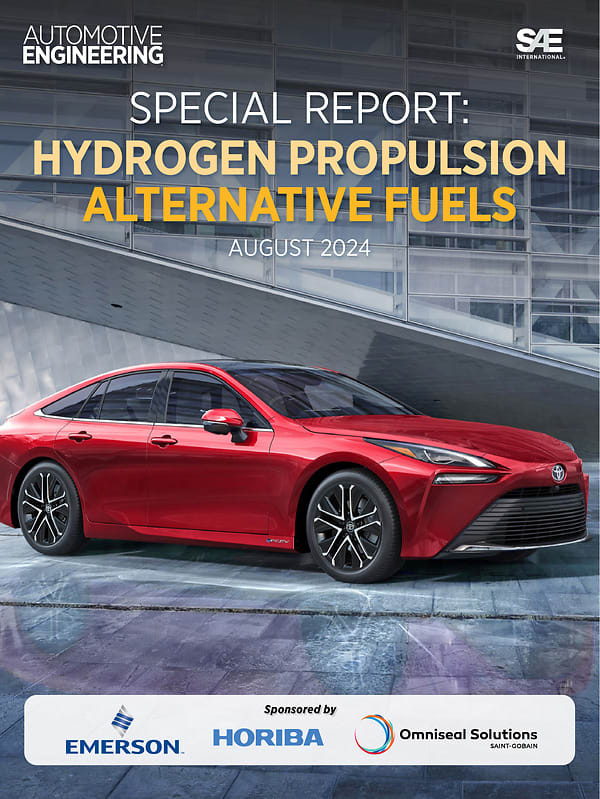
Low carbon fuels promise a greener future, but can they deliver? Read about the latest advances and solutions in this compendium of articles from the editors of Automotive Engineering and Truck & Off‐Highway Engineering.
Don't have an account?
Overview
The Hydrogen Propulsion/Alternative Fuels Special Report from August 2024 provides a comprehensive overview of the current landscape and future potential of hydrogen fuel cell technology and alternative fuels in the automotive and transportation sectors.
The report highlights the growing commitment of major automotive manufacturers, particularly Toyota, which is investing heavily in hydrogen fuel cell technology as a viable zero-emission solution across a wide range of products and vehicle types. The 2024 Toyota Mirai is showcased as a prime example of this commitment, emphasizing the company's belief in hydrogen's role in sustainable mobility.
A significant focus of the report is on the evolving market for alternative fuels, including eFuels and hydrogen. It discusses the potential of low-carbon fuels to provide greener alternatives to traditional fossil fuels, while also addressing the challenges they face in terms of scalability and infrastructure. Christian Schultze from Mazda Motor Europe notes that even in regions with increasing electric vehicle (EV) adoption, eFuels should remain a consideration for future energy strategies.
The report also delves into the commercial vehicle sector, where hydrogen fuel cells are gaining traction as a market-ready solution. GM's Hydrotec division is preparing to deploy fuel cells for work trucks and other transportation modes, highlighting the versatility of hydrogen as a power source. The report suggests that with the current limitations of battery charging infrastructure and the pressing need for corporate carbon-reduction targets, hydrogen is becoming an increasingly attractive option for commercial vehicles.
In addition to hydrogen fuel cells, the report discusses the integration of certified polymers for carbon capture and storage (CCS) with hybrid hydrogen propulsion technologies. This approach aims to enhance carbon capture and emission reduction efforts, representing a holistic strategy for advancing sustainable energy solutions.
The report also covers the optimism surrounding compressed natural gas (CNG) for long-haul trucks, particularly with the introduction of the Cummins X15N engine, which is expected to drive growth in this sector. Bosch's commitment to hydrogen and its role in the broader hydrogen economy is also highlighted, showcasing the supplier's involvement in the production of power modules for fuel-cell trucks.
Furthermore, the report outlines the upcoming Hydrogen and Alternative Fuels Summit 2024, organized by SAE International. This event aims to provide insights into the latest developments in the hydrogen industry, including the utilization of hydrogen fuel cells to reduce energy costs, recent research findings, and the impact of national strategies and regulations on the hydrogen market.
In summary, the Special Report emphasizes the critical role of hydrogen and alternative fuels in the transition to sustainable transportation. It presents a balanced view of the challenges and opportunities within the industry, underscoring the importance of collaboration among manufacturers, researchers, and policymakers to drive the adoption of these technologies for a cleaner, greener future.










