

Robotics - November 2024
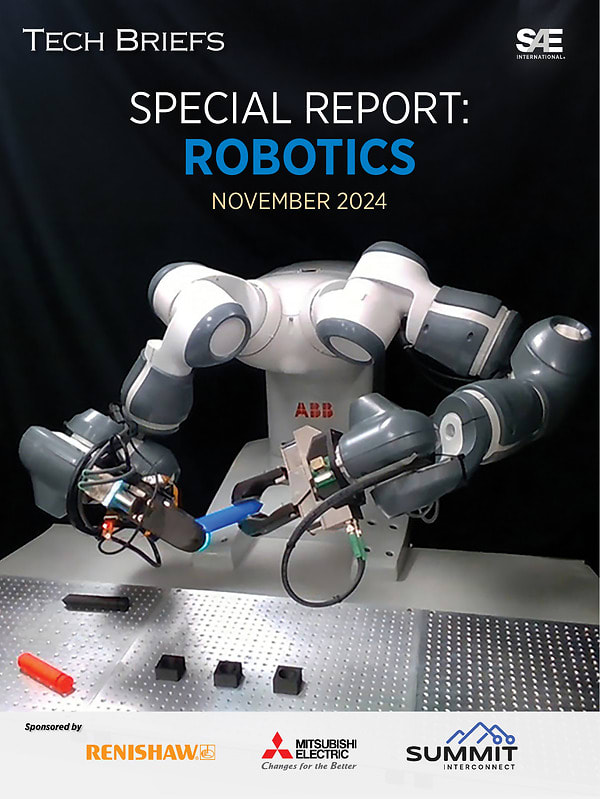
Read about the latest breakthroughs in robots for space exploration, healthcare, factory automation, hazardous waste cleanup, and more in this collection of articles from the editors of Tech Briefs, Medical Design Briefs, and Aerospace & Defense Technology.
Don't have an account?
Overview
The Robotics Special Report for November 2024 presents a comprehensive overview of the latest advancements and innovations in the field of robotics, highlighting various applications, technologies, and future prospects.
Key Features:
-
Robotics Virtual Twins: The report discusses the concept of virtual twins, which offer a simulation-based approach to real-time operations. This technology allows for enhanced monitoring and control of robotic systems, improving efficiency and reducing downtime.
-
In-Space Manufacturing: A significant focus is on in-space manufacturing of self-replicating machines, exploring the potential for creating autonomous systems that can build and maintain themselves in extraterrestrial environments. This includes the use of 3D printing and automated production processes, which could revolutionize space exploration and resource utilization.
-
Robotic Innovations: The report features several innovative robotic technologies:
- Robotic Hip Exoskeletons: Designed to assist stroke patients in regaining mobility, these exoskeletons represent a significant advancement in rehabilitation robotics.
- Continuum Robots: Inspired by the dexterity of natural organisms like octopuses, these robots are characterized by their flexibility and ability to adapt their shape dynamically, making them suitable for complex tasks in unpredictable environments.
- Pick-and-Place Solutions: MIT researchers have developed a new approach called SimPLE, which enhances the precision and flexibility of robotic pick-and-place operations, addressing limitations in current solutions.
-
Applications in Hazardous Environments: The report highlights the role of robotics in safely managing hazardous tasks, such as nuclear waste clean-up. Robots can operate in environments that are dangerous for humans, ensuring safety and efficiency in critical operations.
-
Generative AI in Robotics: The potential impact of generative AI on robotics is explored, suggesting that AI could transform how robots are designed, programmed, and operated, leading to more intelligent and adaptable systems.
-
Manufacturing and Automation: The report discusses the integration of collaborative robots (cobots) in manufacturing, which enable automated stacking and other processes, enhancing productivity and reducing labor costs.
-
Magnetic Encoders: These devices are essential for stabilizing control in self-balancing robotic vehicles, showcasing the importance of precision engineering in robotics.
Conclusion: The Robotics Special Report encapsulates the rapid advancements in robotics technology and its applications across various sectors, including healthcare, space exploration, and manufacturing. With innovations like virtual twins, continuum robots, and the integration of AI, the future of robotics promises to enhance efficiency, safety, and capabilities in numerous fields. As these technologies continue to evolve, they hold the potential to significantly impact industries and improve quality of life, paving the way for a more automated and intelligent future.











