

Unmanned Aerial Vehicles & Systems - April 2025
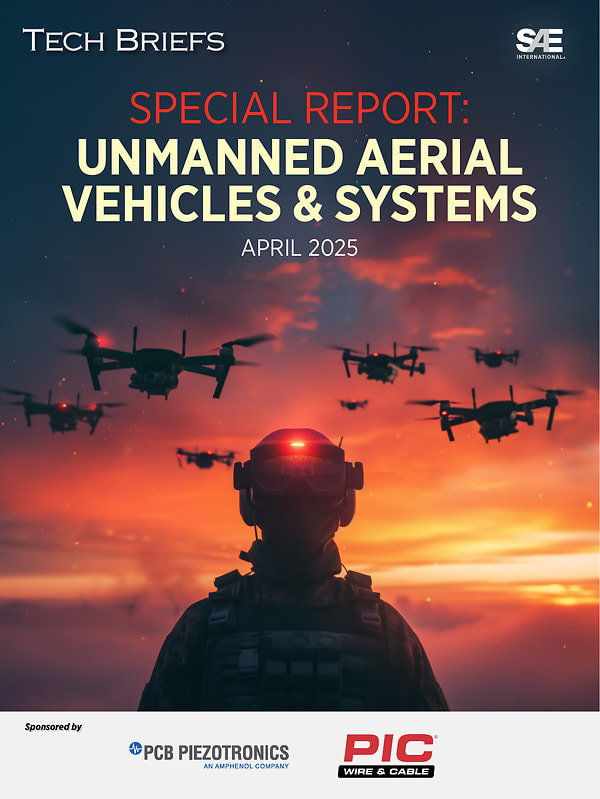
How next‐gen edge computers will shape drone warfare…first tests of a drone‐killing RF weapon…AI‐trained vehicles adjust to extreme turbulence on the fly. Read about these and other developments in this compendium of articles from the editors of Tech Briefs and Aerospace & Defense Technology magazines.
Don't have an account?
Overview
The Unmanned Aerial Vehicles & Systems Special Report from April 2025 provides a comprehensive overview of the advancements and applications of drones and unmanned aerial systems (UAS) in modern warfare and civilian use. The report highlights the increasing significance of drones in defense and security operations, particularly in light of recent conflicts such as the one in Ukraine, where their combat potential has been fully realized.
One of the key features discussed is the evolution of next-generation edge computers that are integral to drone operations. These advanced embedded systems enable real-time decision-making and the deployment of artificial intelligence (AI), providing a significant operational advantage on the battlefield. The report emphasizes the need for these edge computers to be rugged and reliable, capable of withstanding harsh environments and meeting military-grade standards such as MIL-STD-810 and MIL-STD-461. This ensures that they can function effectively in high-tempo combat situations while adhering to size, weight, and power (SWaP) constraints inherent in UAS platforms.
The report also covers the development of innovative weapons systems, such as the British Army's Radio Frequency Directed Energy Weapon (RFDEW). This system can neutralize drone swarms using radio waves, offering a cost-effective alternative to traditional missile-based air defense systems. The RFDEW can engage targets up to 1 km away at a minimal cost per shot, showcasing the potential for automated systems that can be operated by a single individual and mounted on military vehicles for enhanced mobility.
In addition to military applications, the report touches on the civilian sector, particularly the push for advanced air mobility (AAM). This includes the development of air taxis and other aerial transport solutions aimed at alleviating ground traffic congestion and improving urban mobility. The integration of AI and advanced computing technologies is crucial for the success of these initiatives, as they allow for efficient navigation and operation in complex urban environments.
The report also discusses the challenges faced by drone manufacturers, particularly in terms of power constraints and the need for smaller, more efficient processors. The application of AI models, such as Google's Perceiver IO, is highlighted for its ability to reconstruct information from limited data, making it suitable for deployment on smaller, less powerful computers.
Overall, the Unmanned Aerial Vehicles & Systems Special Report presents a forward-looking perspective on the role of drones in both military and civilian contexts. It underscores the importance of technological innovation in shaping the future of aerial systems, emphasizing the need for robust, efficient, and adaptable solutions that can meet the demands of modern warfare and urban transportation. As the landscape of aerial mobility continues to evolve, the report serves as a valuable resource for understanding the implications of these advancements on security, defense, and everyday life.









