

Automotive Test & Simulation - May 2025
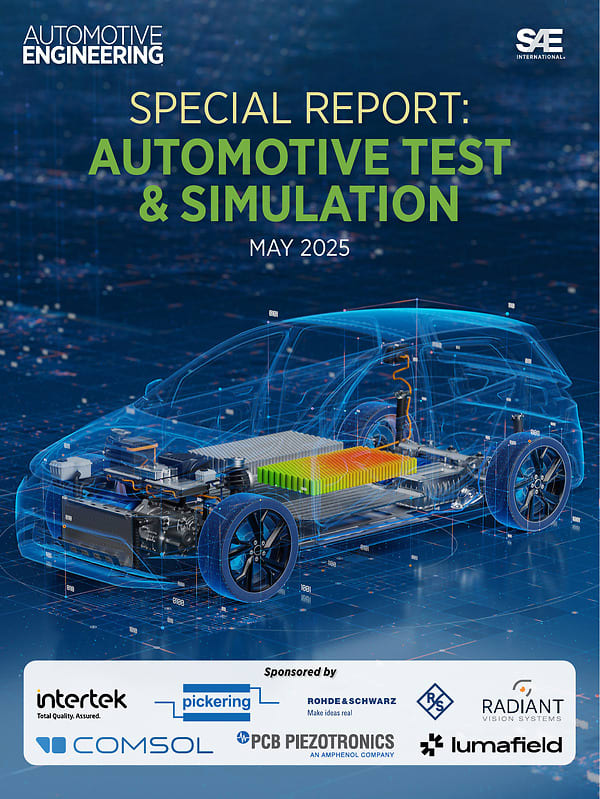
How test equipment is evolving to keep up with EV batteries...why AI-powered engineering matters in auto design and lightweighting...driving toward zero defects in today's intelligent vehicles. Read about these and other advances in this compendium of articles from the editors of Automotive Engineering and Truck & Off-Highway Engineering.
Don't have an account?
Overview
The "Automotive Test & Simulation Special Report" from May 2025 delves into the latest advancements in automotive testing, particularly focusing on electric vehicles (EVs) and the integration of artificial intelligence (AI) in engineering workflows. This report highlights the evolving landscape of automotive design and testing, emphasizing the need for innovative solutions to meet the demands of modern vehicles.
One of the key themes of the report is the importance of AI-powered engineering workflows. These workflows enable teams to gain real-time insights into critical aspects of electric vehicles, such as the state of charge (SoC) of batteries. By utilizing AI, engineers can achieve continuous monitoring of battery performance, which is crucial for ensuring safety and efficiency in EVs. The report underscores how AI can help reduce the weight of essential components, thereby enhancing overall vehicle performance and sustainability.
The report also addresses the evolution of test equipment designed to keep pace with the rapid advancements in EV battery technology. As the automotive industry shifts towards electrification, the need for sophisticated testing methods becomes paramount. The report discusses how modern test equipment is being developed to ensure that EV batteries meet safety and performance standards, ultimately fostering consumer trust in these technologies.
Another significant focus is on the role of AI in enhancing safety testing for EVs. The report highlights how AI can supercharge the development of safe, high-performing EV batteries, which is essential for building confidence among consumers and stakeholders. By leveraging AI, manufacturers can streamline the testing process, identify potential issues early, and ensure that vehicles are safe for public use.
The report also touches on the historical context of automotive design and manufacturing, noting that traditional methods have remained largely unchanged for a long time. However, the introduction of AI and advanced simulation tools is revolutionizing this landscape, allowing for more efficient and effective design processes. Engineers who may not be programming experts can now utilize user-friendly software with visual dropdowns to configure and adapt tests from a supplied library, making the testing process more accessible.
In addition to these technological advancements, the report discusses the importance of collaboration among engineering teams. By adopting AI-driven tools, teams can work more cohesively, share insights, and make informed decisions in real-time, ultimately leading to better outcomes in vehicle design and performance.
Overall, the "Automotive Test & Simulation Special Report" provides a comprehensive overview of the current state of automotive testing and simulation, with a strong emphasis on the role of AI in shaping the future of electric vehicles. It highlights the need for continuous innovation in testing methodologies and equipment to ensure that the automotive industry can meet the challenges posed by electrification and evolving consumer expectations. As the industry moves forward, the integration of AI and advanced simulation tools will be crucial in driving competitive innovation and ensuring the safety and performance of next-generation vehicles.











