

Inside this issue
Overview
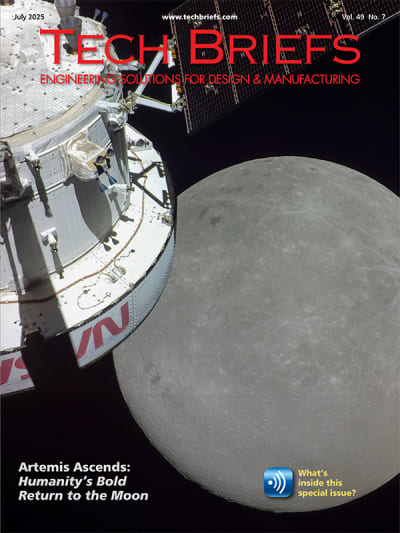
The July 2025 issue of Tech Briefs focuses on NASA's Artemis program, which marks a significant milestone in humanity's return to the Moon. This special multimedia edition highlights various aspects of lunar exploration, technological advancements, and the future of space mobility.
Key Features:
-
Artemis Program Overview: The issue emphasizes the importance of the Artemis program as a foundational effort to expand human exploration beyond Earth. It discusses how Artemis not only aims to return humans to the Moon but also serves as a stepping stone for future missions to Mars and beyond.
-
Orion Spacecraft: Central to the Artemis missions is the Orion spacecraft, which is designed to transport astronauts, serve as an orbital lab, and function as a crew return module. The magazine details the technological improvements of Orion compared to past crewed spacecraft, such as Apollo's command module. These advancements include enhanced safety features, increased crew capacity, and improved life support systems.
-
Artemis I Mission: The issue reflects on the successful completion of the Artemis I flight test, which concluded with Orion's splashdown in the Pacific Ocean. This mission was crucial for testing systems and gathering data to ensure the safety and effectiveness of future crewed missions.
-
Gateway Lunar Space Station: Another significant development discussed is the progress on the Gateway, a lunar space station that will orbit the Moon. This international collaboration aims to support long-term lunar exploration and serve as a staging point for missions to Mars.
Lunar Landers and Future Missions: The magazine outlines the upcoming lunar lander missions planned for 2025, which will focus on analyzing lunar soil, testing new technologies, and searching for water ice. These missions are essential for paving the way for future human exploration and the establishment of potential lunar bases.
-
Next-Generation Space Suits: The issue also features advancements in spacesuit technology, particularly the Axiom Extravehicular Mobility Unit (AxEMU), designed for the Artemis III mission. This next-generation spacesuit aims to enhance astronaut mobility and safety during extravehicular activities on the lunar surface.
-
Commercial Partnerships: The magazine highlights NASA's efforts to foster commercial partnerships through programs like the Commercial Lunar Payload Services (CLPS). These collaborations are intended to leverage private sector innovation to support lunar exploration and scientific research.
-
Planetary Defense: In addition to lunar exploration, the issue touches on the European Space Agency's Hera mission, which aims to improve planetary defense strategies by studying the impact crater and surface conditions of the asteroid Dimorphos.
-
Technological Innovations: The magazine showcases various technological innovations that are making space exploration more efficient and cost-effective. This includes high-gain antennas for communication and imaging that can be integrated into smaller, more affordable spacecraft.
-
Interactive Content: The digital edition enhances the reading experience with interactive elements, including videos and podcasts that provide deeper insights into the topics discussed. Readers are encouraged to engage with the multimedia content to better understand the complexities of lunar exploration.
Conclusion:
The July 2025 issue of Tech Briefs serves as a comprehensive resource for understanding the current state and future of lunar exploration through the Artemis program. It highlights the technological advancements, international collaborations, and innovative strategies that are shaping humanity's return to the Moon. As NASA and its partners prepare for a new era of exploration, this issue underscores the significance of these efforts in expanding the boundaries of human knowledge and capability in space.
Features
-
Articles
10 Why Going Back to the Moon Powers Humanity Forward
14 Orion: Paving Humanity’s Path to the Moon
18 NASA Marks Artemis Progress with Gateway Lunar Space Station
22 Engineering the Blue Ghost: From Idea to Moon Landing
-
NASA Spinoff











