

If the title grabs your attention, you are going to have to wait for the explanation. I promise you there is one, but you need to let me tell a story first.
In the early morning hours of January 15, 2025, the Regolith Adherence Characterization-1 (RAC-1) test facility launched into the beautifully clear Florida night. RAC’s destination, the Moon, glowed warmly in the sky. The lift-off began seconds earlier with a roar from Cape Canaveral’s Launch Complex 39A, ironically the same launch pad that was used to put the first human on the Moon. The journey hadn’t begun here, however. It started half a decade earlier.
In November of 2019, Alpha Space, now known as Aegis Aerospace, was put on contract by the NASA Marshall Space Flight Center to design and build a platform that would expand our understanding of lunar regolith’s adherence to modern materials. Lunar regolith is the dust, soil, and broken rock that covers the surface of the Moon. It is the result of thousands of years of meteoroid bombardment and the weathering effects of radiation.
Regolith is sharp and abrasive, presenting a myriad of potential problems for future manned missions to the Moon. In addition, the Moon’s lack of atmosphere causes landing thrusters to kick up plumes of loose regolith that can travel at speeds up to 2 km/s, damaging approaching vehicles and surrounding infrastructure. NASA wanted to better understand how regolith would interact with different materials which could help determine material selection for future lunar missions.
Lunar Surface Test Platform
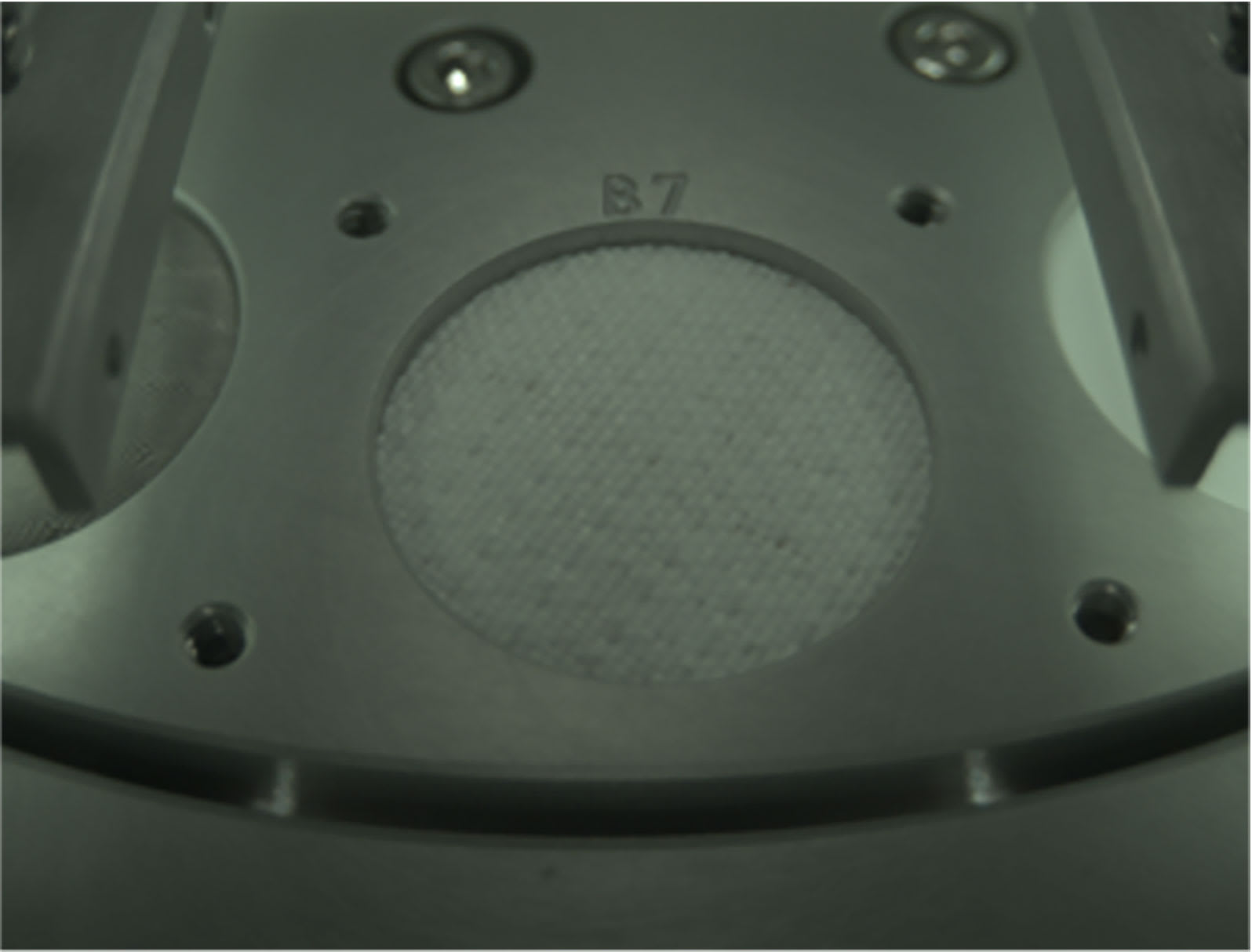
Aegis Aerospace’s RAC-1 was born from the desire to better understand regolith and how it interacts with different materials. The idea was simple: Create a lunar surface test platform that will expose different materials when the regolith is being disturbed such as during landing or when other lander experiments perform post-landing interactions with the lunar surface. After landing, periodically photograph the material samples to determine if the disrupted regolith adheres to the exposed material samples. Then assess the photographs post-mission to understand regolith interactions with the exposed materials throughout the mission.
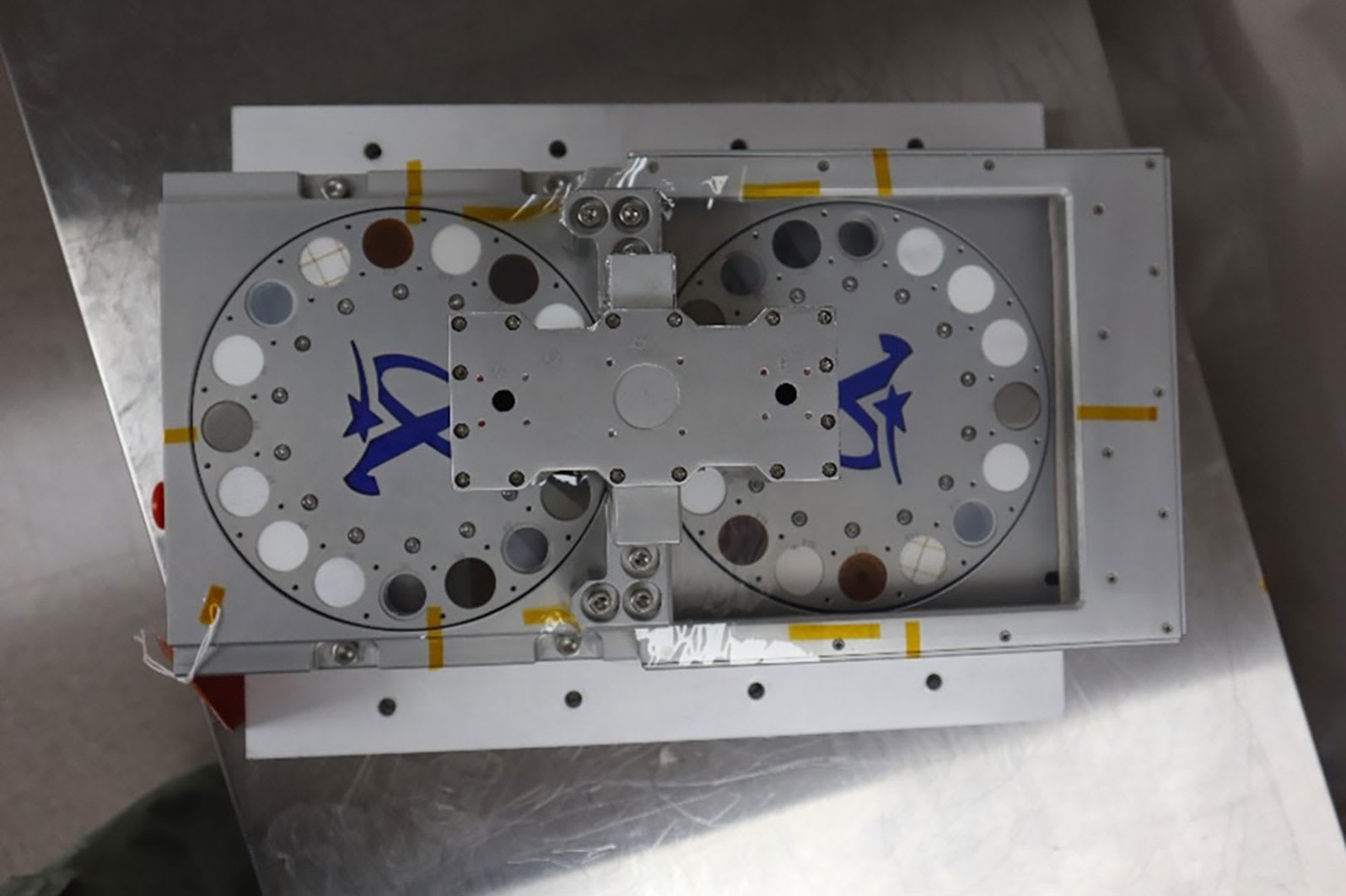
The outcome of these requirements was a RAC test platform containing two identical sample wheels, each of which contained 15 material samples. These samples came from NASA, industry, and academia. The first sample wheel, Wheel A, exposed the samples for the entire mission and Wheel B exposed samples after landing via a sliding cover. This gave NASA scientists a comparison between samples that were subjected to destructive landing plumes and those protected during landing.
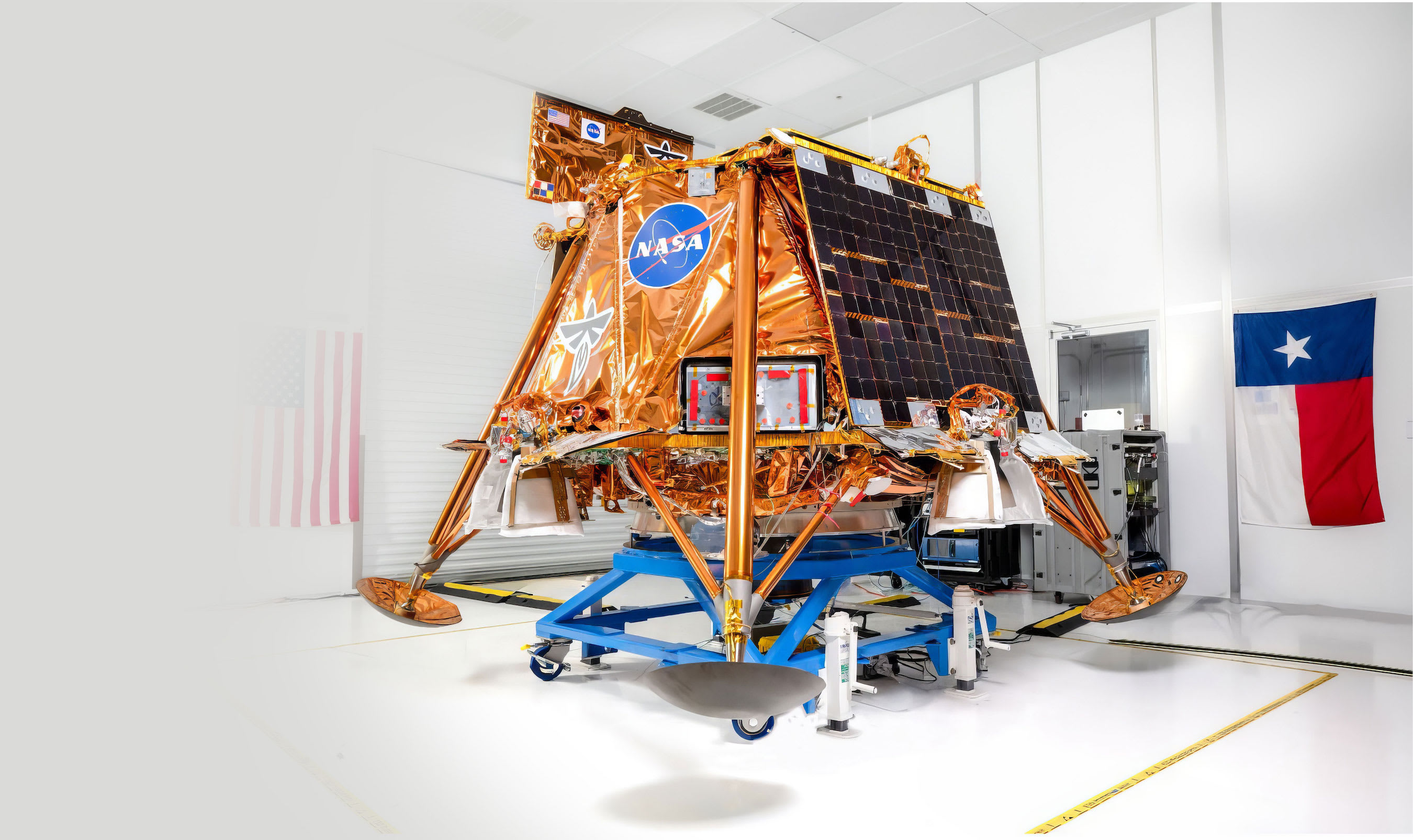
The wheels were mounted to a structure roughly the size of a large shoe box. The structure housed the electronics to power and control the rotation of the wheels and the cameras. Every 24 hours, sample images would be captured by rotating the wheels to place each sample below a set of cameras, similar to an old-fashioned View Master. The entire RAC-1 assembly weighed under 28 lbs. RAC-1 was mounted on the side of the Firefly Blue Ghost lander in early 2024 such that it was approximately 30 inches off the lunar surface, enabling the materials to be exposed to disturbed regolith.
Forty-six days after launch, on March 2, 2025, Blue Ghost Mission 1 successfully touched down on the surface of the Moon. RAC-1 operations started five hours after landing. Photographs of the material samples were taken periodically over time to assess the adherence of regolith to the different material samples. The mission lasted one lunar day, which is the equivalent of 14 Earth days.
All material sample imagery was captured and transmitted back to the Aegis Aerospace Payload Operations Control Center in Houston, TX. The material sample images are currently being assessed, with a final report expected at the end of May. The mission was a resounding success, not only for the Aegis Aerospace RAC-1 team, but also for Firefly, SpaceX, and the nine other experiments hosted on Blue Ghost Mission 1.
A New Era of Commercial Space

RAC-1 is just one of many successful examples of NASA nurturing the commercial aerospace industry. The Aegis Aerospace-developed RAC-1 was flown aboard the Firefly Blue Ghost Mission1 Lander through the Commercial Lunar Payload Services (CLPS) program which was launched on a SpaceX launch vehicle. These are all commercial aerospace companies that successfully delivered and operated an experiment on the Moon. Fifty-five years ago, this would have been predominantly done by NASA. NASA’s aim to return to the Moon through programs such as CLPS is enabling commercial partnerships to carry the torch of progress and enable the new cutting-edge technologies that are necessary for such an endeavor. This is the dawn of a new, commercial era in aerospace history.
Now to the title of this story... as the RAC Principal Investigator, I have had to give many presentations on RAC. The audience ranges from highly experienced engineers to elementary school children. As you might guess, children always make the most memorable comments. While giving a presentation to my niece’s fourth grade class I had to find a way to explain what regolith is. To engage the children, I asked them if they knew what the Moon was made of. My niece was the first to speak up and said, “Everyone knows the Moon is made of cheese.” In hindsight, I should have been prepared for that statement, but I wasn’t. I was able to muddle my way back into explaining what regolith is and I told the children to school their parents on regolith when they got home. Months later, after Firefly’s successful landing of the Blue Ghost lunar lander at Mare Crisium, the image of the Lunar Sunrise was posted. I sent it to my niece. Guess what she said?
This article was written by Matt Carter, Principal Investigator for the Regolith Adherence Characterization-1 (RAC-1) Test Platform, Aegis Aerospace (Houston, TX). For more information, visit here .
Transcript
00:00:00 RAC's purpose to go to the Moon is to understand the environment better. Audience astronauts are going to be living there long term, and so will other humans. And it's important to get the right materials that lasts and are safe in the long run. Hi, I'm Dennis Harris, the lunar payload manager for the Regulus Adherence Characterization Project. I'm based here in Huntsville at Marshall Space Flight Center. RAC is an instrument designed to see how different materials react to dust on the surface of the Moon.
00:00:39 It's got two wheels, 15 samples in each wheel. The samples are made up of various materials. Some are spacecraft material, some are aluminum. Some may be glass, some may be spacesuit material. And what they're going to try to determine is how dust sticks to it. The science out of RAC is to get a long term view of what dust really does, and what materials are best for surface operations, both for the Artemis astronauts and for any spacecraft that might want to land there in the future, because dust can be an issue.
00:01:11 I think the purpose of RAC is to look at the long term effects of dust on different materials, which will drive how the Artemis astronauts interact and live on the surface for years to come. The rock samples are a good collaboration between NASA and the public. Some of the samples are from NASA centers, and some of the samples are from private industry. Commercial Lunar Payload services. NASA and American companies working together.









