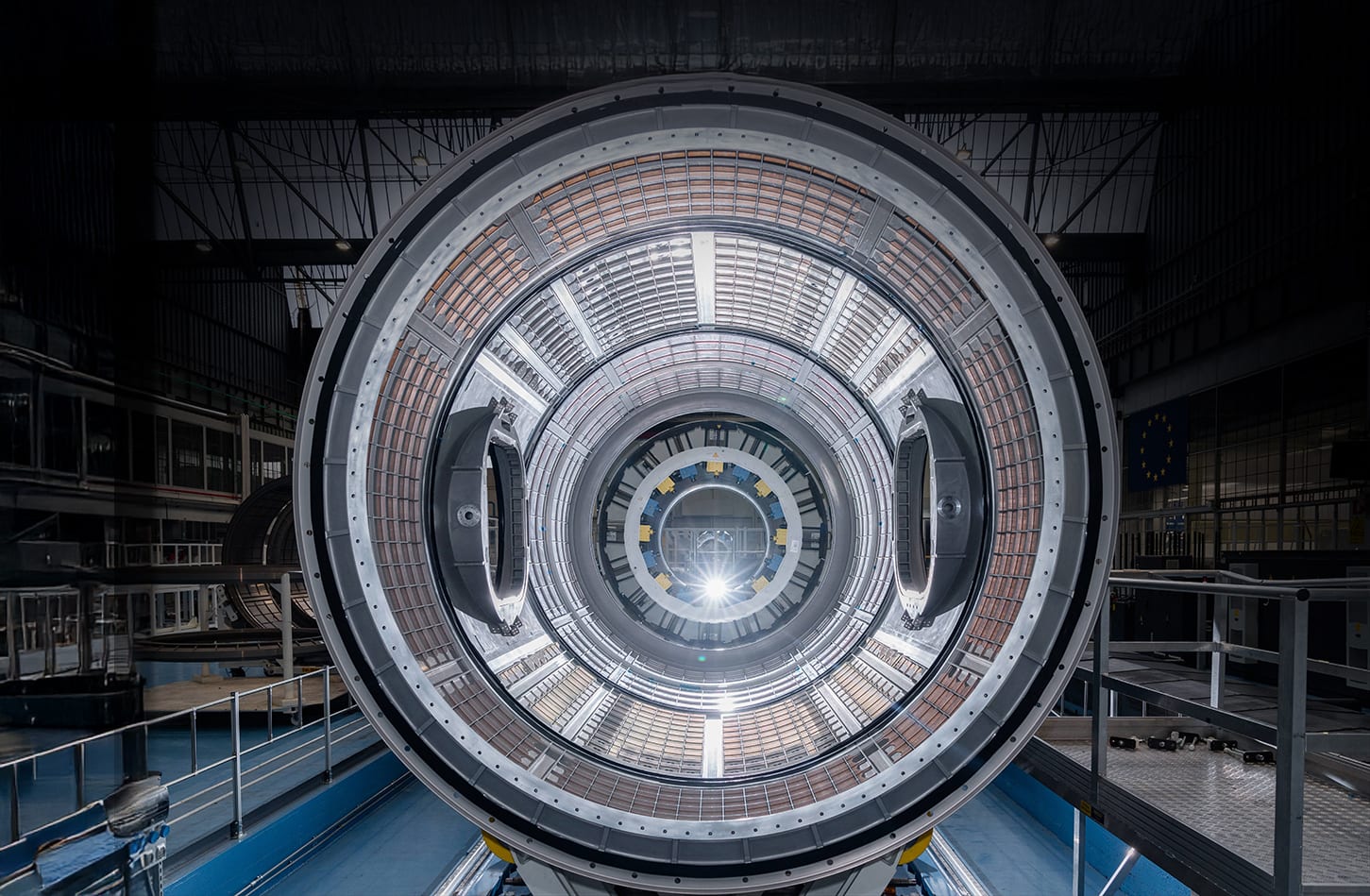
Through the Artemis campaign, NASA will send astronauts on missions to and around the Moon. The agency and its international partners report progress continues on Gateway, the first space station that will permanently orbit the Moon, after visiting the Thales Alenia Space facility in Turin, Italy, where initial fabrication for one of two Gateway habitation modules is nearing completion.
Leaders from NASA, ESA (European Space Agency), and the Italian Space Agency, as well as industry representatives from Northrop Grumman and Thales Alenia Space, were in Turin to assess Gateway’s HALO (Habitation and Logistics Outpost) module before its primary structure was shipped from Italy to Northrop Grumman’s Gilbert, Arizona site in March. Following final outfitting and verification testing, the module will be integrated with the Power and Propulsion Element at NASA's Kennedy Space Craft in Florida.
“Building and testing hardware for Gateway is truly an international collaboration,” said Jon Olansen, Manager, Gateway Program, at NASA’s Johnson Space Center in Houston. “We’re excited to celebrate this major flight hardware milestone, and this is just the beginning — there’s impressive and important progress taking shape with our partners around the globe, united by our shared desire to expand human exploration of our solar system while advancing scientific discovery.”
Integrated Modules
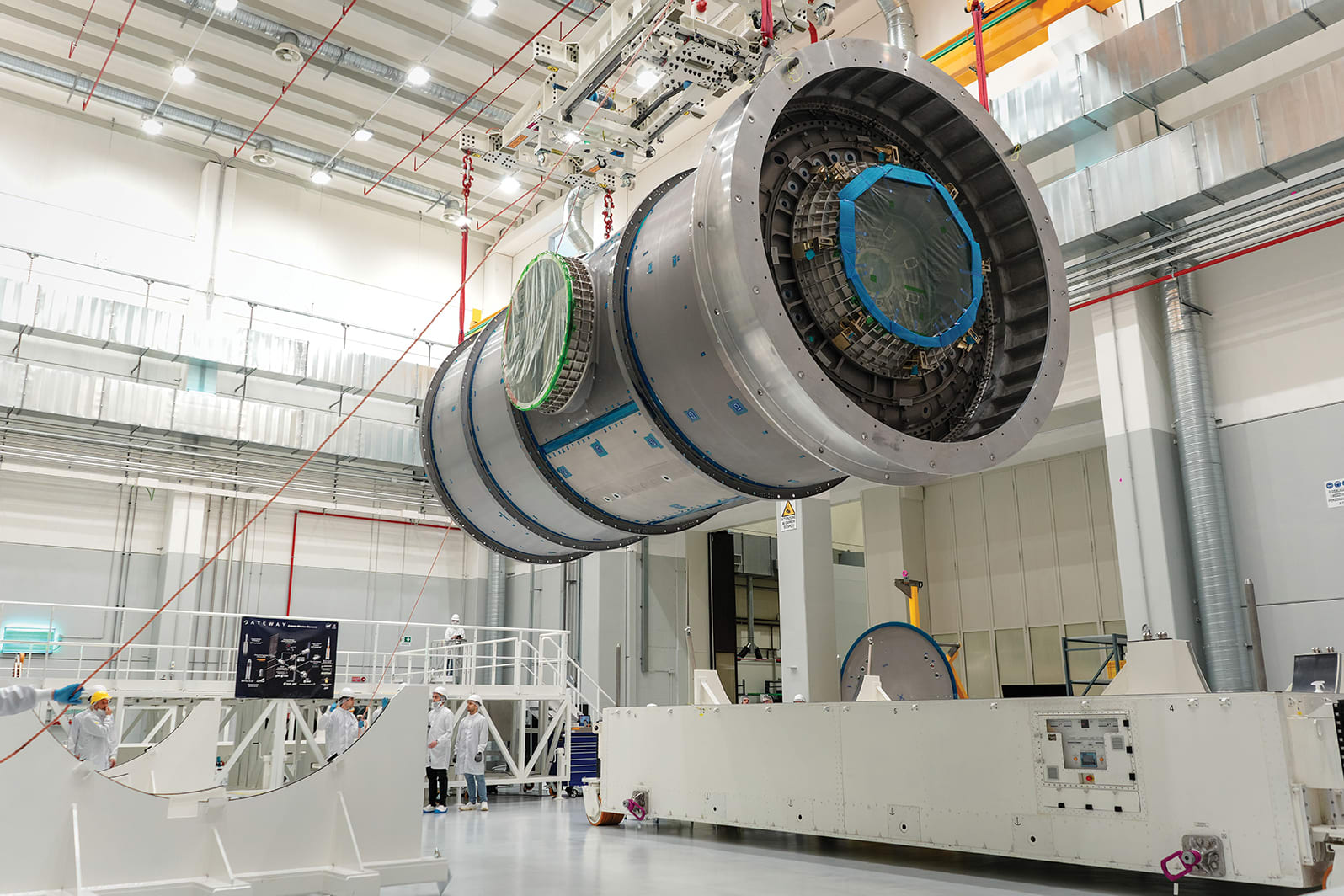
To ensure all flight hardware is ready to support Artemis IV — the first crewed mission to Gateway — NASA is targeting the launch of HALO and the Power and Propulsion Element no later than December 2027. These integrated modules will launch aboard a SpaceX Falcon Heavy rocket and spend about a year traveling uncrewed to lunar orbit, while providing scientific data on solar and deep space radiation during transit.
Launching atop HALO will be ESA’s Lunar Link communication system, which will provide high-speed communication between the Moon and Gateway. The system is undergoing testing at another Thales Alenia Space facility in Cannes, France.
Once in lunar orbit, Gateway will continue scientific observations while awaiting the arrival of Artemis IV astronauts aboard an Orion spacecraft which will deliver and dock Gateway’s second pressurized habitable module, the ESA-led Lunar I-Hab. Thales Alenia Space, ESA’s primary contractor for the Lunar I-Hab and Lunar View refueling module, has begun production of the Lunar I-Hab, and design of Lunar View in Turin.
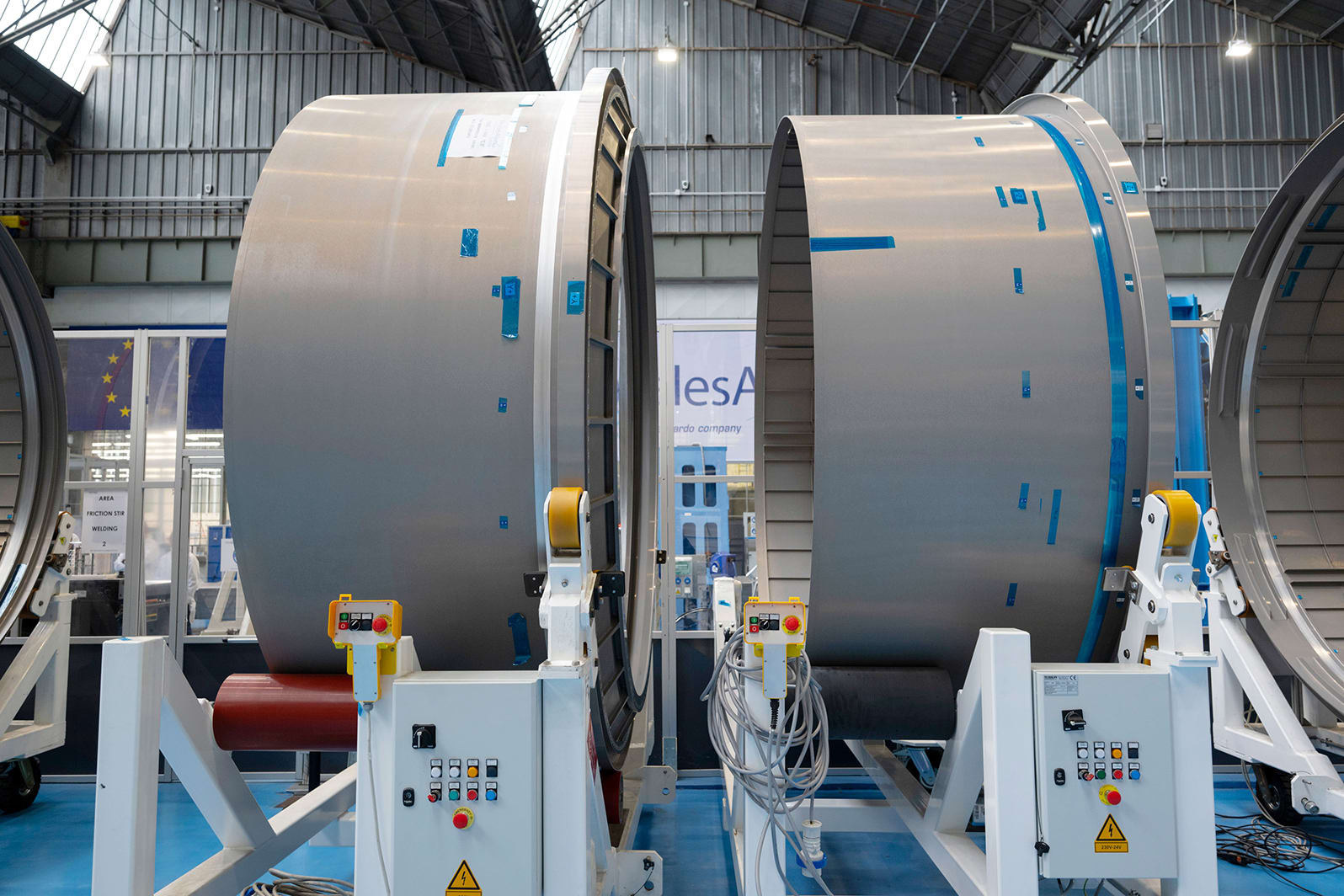
Northrop Grumman and its subcontractor, Thales Alenia Space, completed welding of HALO in 2024, and the module successfully progressed through pressure and stress tests to ensure its suitability for the harsh environment of deep space.
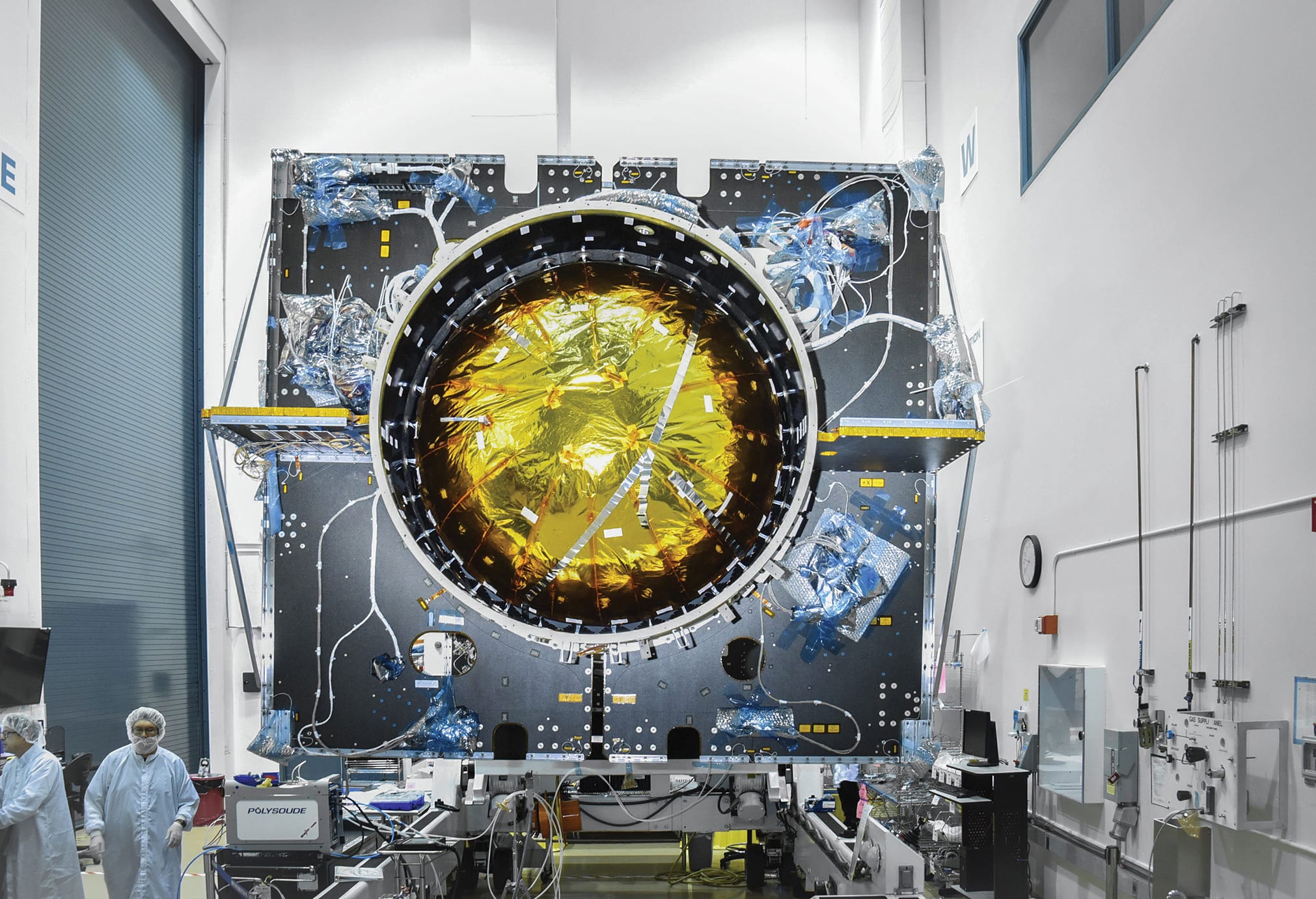
Maxar Space Systems is assembling the Power and Propulsion Element, which will make Gateway the most powerful solar electric propulsion spacecraft ever flown. Major progress in 2024 included installation of Xenon and chemical propulsion fuel tanks, and qualification of the largest rollout solar arrays ever built. NASA and its partners will complete propulsion element assembly, and acceptance and verification testing of next-generation electric propulsion thrusters this year.
Long-Term Exploration
SpaceX will provide both the Starship human landing system that will land astronauts on the lunar surface during NASA’s Artemis III mission and ferry astronauts from Gateway to the lunar South Pole region during Artemis IV, as well as provide logistics spacecraft to support crewed missions.
NASA also has selected Blue Origin to develop Blue Moon, the human landing system for Artemis V, as well as logistics spacecraft for future Artemis missions. Having two distinct lunar landing designs provides flexibility and supports a regular cadence of Moon landings in preparation for future missions to Mars.
CSA (Canadian Space Agency) is developing Canadarm3, an advanced robotics system, and JAXA (Japan Aerospace Exploration Agency) is designing and testing Lunar I-Hab’s vital life support systems, batteries, and a resupply and logistics vehicle called HTV-XG.
NASA’s newest Gateway partner, the Mohammad Bin Rashid Space Centre (MBRSC) of the United Arab Emirates, kicked off early design for the Gateway Crew and Science Airlock that will be delivered on Artemis VI. The selection of Thales Alenia Space as its airlock prime contractor was announced by MBRSC on February 4.
Development continues to advance on three radiation-focused initial science investigations aboard Gateway. These payloads will help scientists better understand unpredictable space weather from the Sun and galactic cosmic rays that will affect astronauts and equipment during Artemis missions to the Moon and beyond.
The Gateway lunar space station is a multi-purpose platform that offers capabilities for long-term exploration in deep space in support of NASA’s Artemis campaign and Moon to Mars objectives. Gateway will feature docking ports for a variety of visiting spacecraft, as well as space for crew to live, work, and prepare for lunar surface missions. As a testbed for future journeys to Mars, continuous investigations aboard Gateway will occur with and without crew to better understand the long-term effects of deep space radiation on vehicle systems and the human body as well as test and operate next generation spacecraft systems that will be necessary to send humans to Mars.
This article was written by Laura Rochon, Public Affairs Specialist, NASA. For more information, visit here .
Transcript
00:00:03 Gateway is in of itself a humongous technological Marvel it is the first space station around the Moon it is going to be a very important part of our future exploration missions we know how to live and work in low earth orbit but now it's time to go further Artemis is going to take us to parts of the Moon that we haven't been to before going
00:00:27 back to the moon has to be an international cooperation the resources and the efforts required to make this happen are just too much for any single nation to to go on their own there's the old saying that if you want to go fast you go alone if you want to go for a long time you go together and so it's going to take a humankind effort to go to the moon and then use
00:00:53 that as a stepping stone to go to Mars to be able to go and do lunar surface exploration missions and do sustainable missions able to do long duration missions go to the Moon to stay rather than just to visit like we did dur in Apollo we need a space station and Gateway set station the international Crews and the international astronauts that will
00:01:11 perform these missions will be the first humans that are making their home in deep space I think about all that we've learned from the International Space Station as a low earth orbit laboratory gatewell will be an extension of that and continue that Legacy of Science and discovery we are going to be learning about deep space exploration when we're in low earth orbit we're
00:01:36 protected when we are around the Moon we don't have that protection so it is going to affect everything we have the very unique ability at Gateway to study that radiation Gateway sounds so science fiction but it's real and we're building it and science will never be the same subscribe for more space
00:02:10 [Music]