

Unmanned Aerial Vehicles & Systems - October 2025
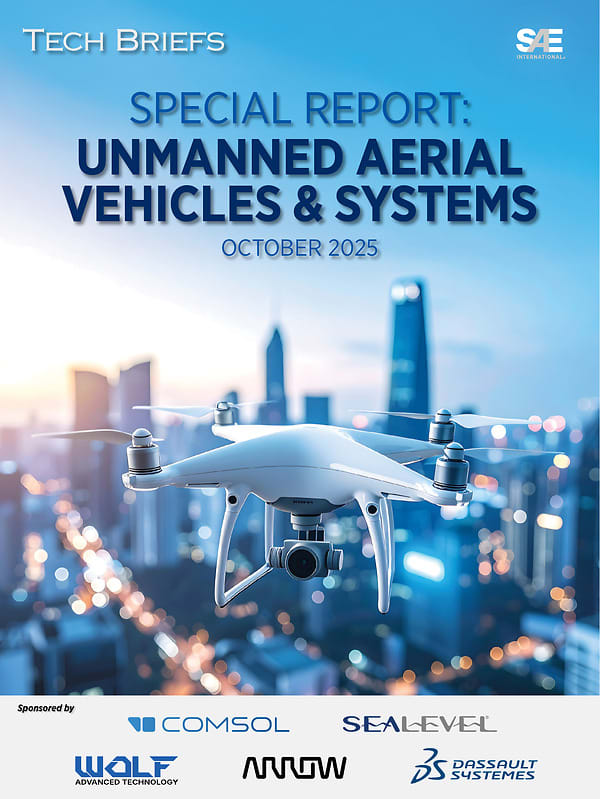
Lasers vs. drones: military demonstrates new tech…high-‐flying uncrewed solar aircraft aces key test…the next frontier for autonomous UAVs. Read about these and other developments in this compendium of articles from the editors of Tech Briefs and Aerospace & Defense Technology magazines.
Don't have an account?
Overview
The October 2025 special report on Unmanned Aerial Vehicles (UAVs) and Systems highlights significant advancements and operational challenges in the field of drone technology. It emphasizes the importance of rapid prototyping and defense demonstrations, particularly through events like the Joint Interagency Field Experimentation (JIFX) conducted by the Naval Postgraduate School. This event showcased the collaboration between emerging technology companies and military stakeholders, resulting in a record number of sorties flown by uncrewed autonomous systems despite adverse weather conditions.
The report discusses the integration of various technologies, including communication and networking, counter-drone systems, cyber security, and precision strike capabilities. Notably, it mentions the first use of a laser weapon system (LWS) at JIFX, which successfully engaged Group 1 UAS, demonstrating the evolving landscape of counter-uncrewed systems.
Additionally, the report addresses the growing use of medium-sized drones across diverse applications, from agriculture to archaeology. It highlights the need for a balance between cost, performance, and weight in UAV design, especially as the demand for drones in commercial sectors, such as logistics, continues to rise. The Federal Aviation Administration (FAA) anticipates a significant increase in registered commercial drones, projecting the number to reach 1 million by 2027.
The document also touches on human-focused research aimed at enhancing the effectiveness of drones in combat through improved human-machine teaming protocols. This research is crucial for ensuring that UAVs can operate effectively in complex environments and support military operations.
Overall, the report underscores the rapid evolution of UAV technology and its implications for military modernization and commercial applications. It highlights the collaborative efforts between industry and military stakeholders to address operational challenges and leverage emerging technologies for enhanced situational awareness, operational efficiency, and strategic advantage. As UAVs become increasingly integral to various sectors, the report calls for continued innovation and investment in this dynamic field.











