

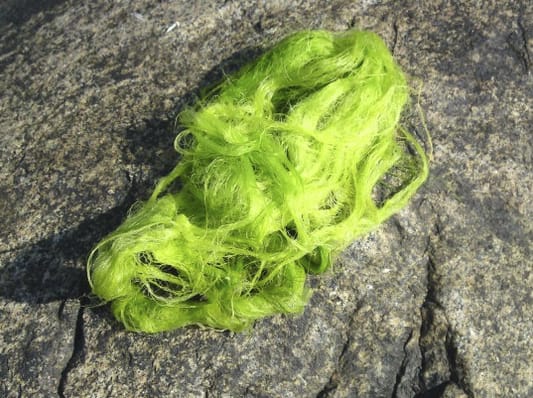
"These algae have a special cellulose structure characterised by a very large surface area," says Gustav Nyström, a doctoral student in Nanotechnology. "By coating this structure with a thin layer of conducting polymer, we have succeeded in producing a battery that weighs almost nothing and that has set new charge-time and capacity records for polymer-cellulose-based batteries."
Despite extensive efforts in recent years to develop new cellulose-based coating substrates for battery applications, satisfactory charging performance was hard to get.
Researcher Albert Mihranyan and professor Maria Strømme at the Nanotechnology and Functional Materials Department of Engineering Sciences at the Ångström Laboratory had been investigating pharmaceutical applications of the cellulose from Cladophora algae for a number of years. This type of cellulose has a unique nanostructure that has been shown to function well as a thickening agent for pharmaceutical preparations and as a binder in foodstuffs. The possibility of energy-storage applications was raised because of its large surface area.
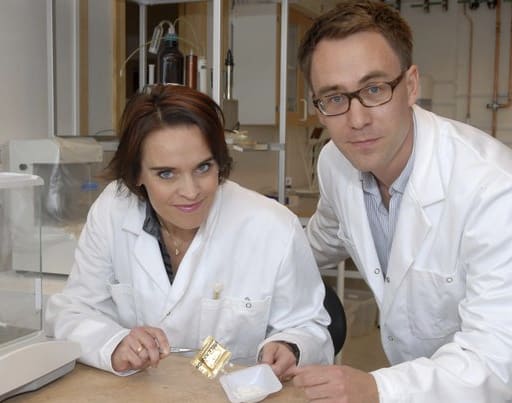
The new electrode material for energy storage applications consists of a nanostructure of algal cellulose coated with a 50 nm layer of polypyrrole. Batteries based on this material can store up to 600 mA per cm3, with only 6 per cent loss through 100 charging cycles.
"This creates new possibilities for large-scale production of environmentally friendly, cost-effective, lightweight energy storage systems," says Strømme.











