

NASA Spinoff
Public Safety
Spinoff: Public Safety
High-Pressure Systems Suppress Fires in Seconds
NASA Technology
Much deserved attention is given to the feats of innovation that allow humans to live in space and robotic explorers to beam never-before- seen images back to...

Spinoff: Public Safety
Alloy-Enhanced Fans Maintain Fresh Air in Tunnels
NASA Technology
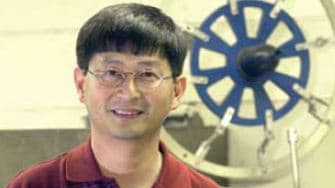
The Partnership for Next Generation Vehicles (PNGV) is not a NASA initiative to develop powerful new rockets and spacecraft, even though it may sound like one....
Spinoff: Public Safety
Radiometers Optimize Local Weather Prediction
Originating Technology/NASA Contribution
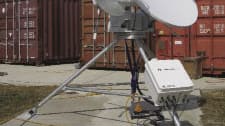
One of the greatest dangers to aircraft—playing a role in numerous destructive and fatal accidents around the world—comes in the form of...
Spinoff: Public Safety
Rocket-Powered Parachutes Rescue Entire Planes
Originating Technology/NASA Contribution
When Boris Popov was 8 years old, he took one of his mother’s sheets and some thread, made a parachute, climbed a tree, and jumped. The...

Spinoff: Public Safety
Energy-Efficient Systems Eliminate Icing Danger for UAVs
Originating Technology/NASA Contribution
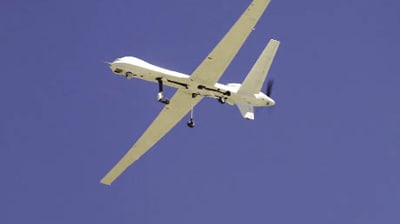
One of the more remarkable developments in aviation in recent years has been the increasing deployment of unmanned aerial...
Spinoff: Public Safety
Technologies Advance UAVs for Science, Military
Originating Technology/NASA Contribution
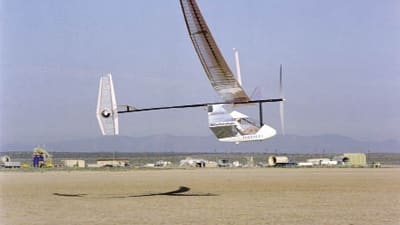
Greek mythology tells of the inventor Daedalus using wings of his own fashioning to escape from imprisonment on the island of Crete. In...
Spinoff: Public Safety
Inflatable Antennas Support Emergency Communication
Originating Technology/NASA Contribution
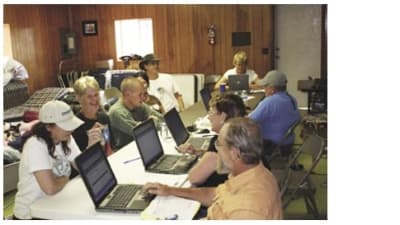
Space exploration requires reliable and efficient communication technology. One device currently under development is the inflatable...
Spinoff: Public Safety
Smart Sensors Assess Structural Health
Originating Technology/NASA Contribution
The materials used to make airplanes and space shuttles do not last forever. That is why NASA frequently inspects launch vehicles, fuel tanks, crew...

Spinoff: Public Safety
Hand-Held Devices Detect Explosives and Chemical Agents
Originating Technology/NASA Contribution
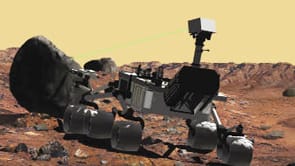
Smaller, with enhanced capabilities. Less expensive, while providing improved performance. Energy efficient, without sacrificing...
Spinoff: Public Safety
Terahertz Tools Advance Imaging for Security, Industry
Originating Technology/NASA Contribution
On January 16, 2003, the Space Shuttle Columbia launched on mission STS-107. At T plus 82 seconds, with the orbiter rocketing...

Spinoff: Public Safety
Sensors Provide Early Warning of Biological Threats
Originating Technology/NASA Contribution
The Centers for Disease Control and Prevention (CDC) estimates there are between 4 and 11 million cases of acute gastrointestinal...

Spinoff: Public Safety
Robots Save Soldiers’ Lives Overseas
Originating Technology/NASA Contribution
NASA intends to return people to the Moon, but this time to stay. Future plans include living quarters, scientific laboratories, a permanent lunar...

Spinoff: Public Safety
Circuits Enhance Scientific Instruments and Safety Devices
Originating Technology/NASA Contribution
Since its founding in 1958, NASA has pioneered the use of different frequencies on the electromagnetic spectrum—including...

Spinoff: Public Safety
Apollo-Era Life Rafts Save Hundreds of Sailors
Originating Technology/NASA Contribution
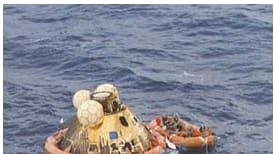
The space shuttle is unique among spacecraft in that it glides back to Earth and lands like an airplane, usually touching ground near where...
Spinoff: Public Safety
Tough Textiles Protect Payloads and Public Safety Officers
Originating Technology/NASA Contribution
Special textiles have been mission-critical components for successful space missions since the early years of NASA’s first...

Spinoff: Public Safety
Advanced X-Ray Sources Ensure Safe Environments
Originating Technology/NASA Contribution
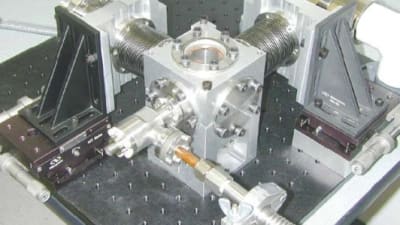
Successfully sustaining life in space requires closely monitoring the environment to ensure the health of the crew....
Spinoff: Public Safety
Polymer Fabric Protects Firefighters, Military, and Civilians
Originating Technology/NASA Contribution
Insulating and protecting astronauts from temperature extremes, from the 3 K (-455 °F) of deep space to the...

Spinoff: Public Safety
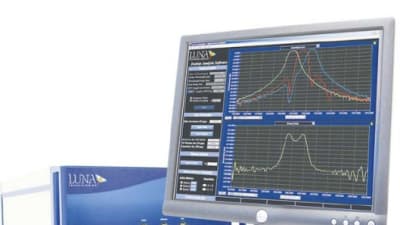
Fiber Optic Sensing Monitors Strain and Reduces Costs
Originating Technology/NASA Contribution
In applications where stress on a structure may vary widely and have an unknown impact on integrity, a common...
Spinoff: Public Safety
Space Suit Technologies Protect Deep-Sea Divers
Originating Technology/NASA Contribution
Working on NASA missions allows engineers and scientists to hone their skills. Creating devices for the high-stress rigors...

Spinoff: Public Safety
Plants Clean Air and Water for Indoor Environments
Although one of NASA's goals is to send people to the far reaches of our universe, it is still well known that people need Earth. We understand that humankind's existence relies on its...

Spinoff: Public Safety
Infrared Imaging Sharpens View in Critical Situations
Originating Technology/NASA Contribution
The Microgravity Combustion Science group at NASA's Glenn Research Center studies how fire and combustible liquids and gasses behave...

Spinoff: Public Safety
Chemical-Sensing Cables Detect Potential Threats
Originating Technology/NASA Contribution
As fleets of aircraft age, corrosion of metal parts becomes a very real economic and safety concern. Corrosive agents like moisture, salt,...

Spinoff: Public Safety
A Brighter Choice for Safety
Emergency exit signs can be lifesavers, but only if they remain visible when people need them. All too often, power losses or poor visibility can render the signs ineffective. Luna Technologies...

Spinoff: Public Safety
Images Revealing More Than a Thousand Words
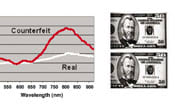
A unique sensor developed by ProVision Technologies, a NASA Commercial Space Center housed by the Institute for Technology Development, produces hyperspectral images with cutting-edge...
Spinoff: Public Safety
Development Of A Digital Image Measurement System
Originating Technology/NASA Contribution
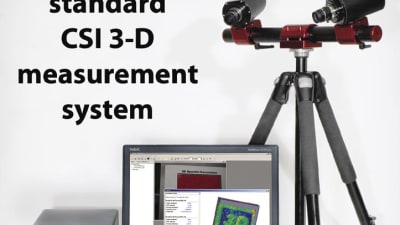
An unexpected tragedy took place on April 28, 1988, when the roof of an Aloha Airlines 737 aircraft ripped open at 24,000 feet, killing a...
Spinoff: Public Safety
Forecasting Weather With A Wave Of The Hand
Originating Technology/NASA Contribution
Cybernet Systems Corporation, of Ann Arbor, Michigan, originally developed its gesture recognition technology for the U.S. Department of...

Spinoff: Public Safety
Sizing Up The Situation
Originating Technology/NASA Contribution
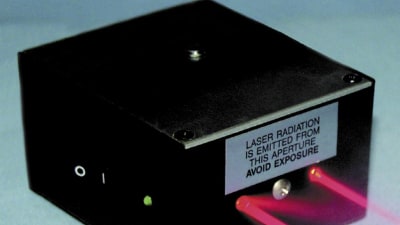
Hailstorm damage to the Space Shuttle's External Tank inspired a NASA innovation with extensive photography applications. In order to measure the defects caused by...
Spinoff: Public Safety
Leaving A Print On Safety
Originating Technology/NASA Contribution
Pattern-recognition technologies developed by NASA to identify spacecraft and other objects in space have helped in the development of new, biometrics-based...

Spinoff: Public Safety
Superior Sensor Making Sense In Military, Medicine
Originating Technology/NASA Contribution
A fiber-optic voltage sensor developed a decade ago for NASA's aircraft and space power systems has been the building block for a string...

Spinoff: Public Safety
Spreading The Word On Safety
Originating Technology/NASA Contribution
Beginning with the Apollo Program in the early 1960s, the NASA White Sands Test Facility (WSTF) has supported every U.S. human exploration space flight...

Top Stories
 Blog: Design
Aerial Microrobots That Can Match a Bumblebee's Speed
 Blog: Energy

My Opinion: We Need More Power Soon — Is Nuclear the Answer?
 Blog: Electronics & Computers

Turning Edible Fungi into Organic Memristors
 Blog: Semiconductors & ICs

Revolutionizing the Production of Semiconductor Chips
 Blog: Robotics, Automation & Control

Microscopic Swimming Machines that Can Sense, Respond to Surroundings
 Quiz: Energy

Webcasts
 Upcoming Webinars: Software

E/E Architecture Redefined: Building Smarter, Safer, and Scalable Vehicles
 Upcoming Webinars: Power

Hydrogen Engines Are Heating Up for Heavy Duty
 Upcoming Webinars: Transportation

Advantages of Smart Power Distribution Unit Design for Automotive & Transportation
 Upcoming Webinars: Transportation

Quiet, Please: NVH Improvement Opportunities in the Early Design Cycle
 Upcoming Webinars: Transportation

A FREE Two-Day Event Dedicated to Connected Mobility
 On-Demand Webinars: Motion Control

Next-Generation Linear and Rotary Stages: When Ultra Precision Movement Is a Must