

Inside this issue
Supplements

Overview
The December 2012 issue of NASA Tech Briefs presents a comprehensive overview of advancements in various technological fields, including Imaging Technology, Embedded Technology, and Motion Control and Automation Technology. This edition highlights innovative solutions and products that are making significant impacts in their respective areas.
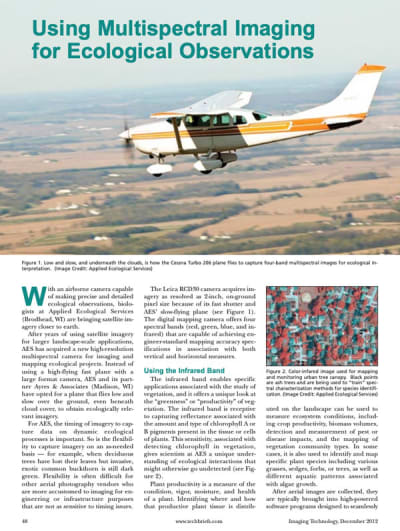
One of the standout features of this issue is the focus on imaging technology, particularly the use of airborne cameras for ecological observations. Biologists at Applied Ecological Services in Brodhead, Wisconsin, are utilizing a high-resolution multispectral camera to capture detailed ecological data. This technology allows for precise monitoring of environmental changes and enhances the ability to analyze ecological systems, bridging the gap between satellite imagery and ground-level observations. The implications of this technology are vast, as it can aid in conservation efforts, land management, and ecological research.
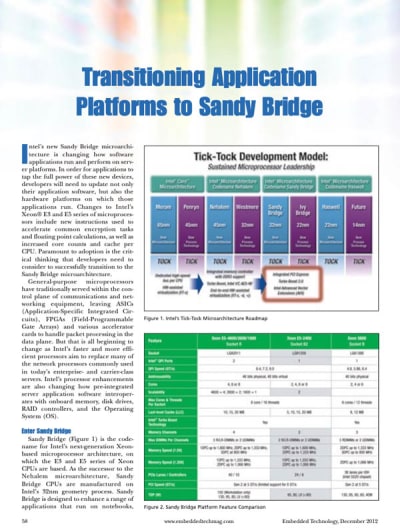
In addition to imaging advancements, the magazine also covers developments in embedded technology. This area focuses on the integration of computing systems into various devices, enhancing their functionality and efficiency. The issue discusses the latest trends in embedded systems, including the growing importance of software in hardware design and the need for robust security measures in embedded applications. As industries increasingly rely on interconnected devices, the demand for innovative embedded solutions continues to rise.
Motion control and automation technology are also prominently featured in this edition. The magazine explores the latest advancements in motion control systems, which are crucial for a wide range of applications, from robotics to manufacturing. The issue highlights new products and techniques that improve precision and efficiency in motion control, showcasing how these technologies are transforming industries by enabling automation and enhancing productivity.
Furthermore, the magazine includes a section dedicated to the NASA Software of the Year award, which recognizes outstanding software products developed for NASA missions. This year, the award focuses on a pattern generator designed for testing digital boards, emphasizing the importance of reliable testing tools in the development of aerospace technologies. Readers are encouraged to vote for their favorite product of the year, fostering engagement and community involvement in recognizing technological achievements.
The issue also features special supplements that delve deeper into specific technological areas, providing readers with a more focused understanding of current trends and innovations. These supplements cover a range of topics, from the latest imaging techniques to advancements in automation technology, ensuring that readers are well-informed about the cutting-edge developments shaping the future of technology.
Throughout the magazine, readers will find a user-friendly navigation system that allows for easy access to various sections, including a table of contents, zoom features, and search capabilities. This design enhances the reading experience, making it simple for users to find the information they need.
In summary, the December 2012 issue of NASA Tech Briefs serves as a valuable resource for professionals and enthusiasts in the fields of imaging, embedded systems, and motion control technology. By showcasing innovative solutions and highlighting the latest trends, this edition not only informs readers about current advancements but also inspires future developments in these critical areas of technology. The combination of ecological applications, embedded system advancements, and motion control innovations illustrates the dynamic nature of technology and its potential to address complex challenges in various industries.
Features
-
Application Briefs
Image Sensors Enable Curiosity to Capture High-Definition Images From Mars
Thermoelectric Cooler Helps Maintain Curiosity’s Temperature
-
Who's Who
Dr. Carlos Calle, Lead Scientist, Electrostatics and Surface Physics Lab, Kennedy Space Center, FL
Tech Briefs
-
Physical Sciences
4D Light Field Imaging System Using Programmable Aperture
Membrane Shell Reflector Segment Antenna
Radio Frequency Plasma Discharge Lamps for Use as Stable Calibration Light Sources
Device and Container for Reheating and Sterilization
High-Speed Transport of Fluid Drops and Solid Particles via Surface Acoustic Waves
Compact Autonomous Hemispheric Vision System
A Distributive, Non-Destructive, Real-Time Approach to Snowpack Monitoring
Ka-band Digitally Beamformed Airborne Radar Using SweepSAR Technique
Multi-Beam Approach for Accelerating Alignment and Calibration of HyspIRI-Like Imaging Spectrometers
-
Manufacturing & Prototyping
Archway for Radiation and Micrometeorite Occurrence Resistance
Process for Patterning Indium for Bump Bonding
Composite With In Situ Plenums
Pneumatic System for Concentration of Micrometer-Size Lunar Soil
-
Software
Description and User Instructions for the Quaternion_to_orbit_v3 Software
Extended Testability Analysis Tool
Software Modules for the Proximity-1 Space Link Interleaved Time Synchronization (PITS) Protocol
Rapid Diagnostics of Onboard Sequences
-
Information Sciences
Numerical Simulation of Rocket Exhaust Interaction With Lunar Soil
Motion Imagery and Robotics Application (MIRA): Standards-Based Robotics
Particle Filtering for Model- Based Anomaly Detection in Sensor Networks
-
Mechanics & Machinery
-
Electronics & Computers
Pattern Generator for Bench Test of Digital Boards
Feedback Augmented Sub-Ranging (FASR) Quantizer
670-GHz Down- and Up-Converting HEMT-Based Mixers
Real-Time Distributed Embedded Oscillator Operating Frequency Monitoring
Lidar Electro-Optic Beam Switch with a Liquid Crystal Variable Retarder
Products
-
Applications











