Aurora Flight Sciences delivered a completed Space Suit Simulator (S3) to NASA following the successful completion of a Phase II Small Business Innovation Research (SBIR) effort.
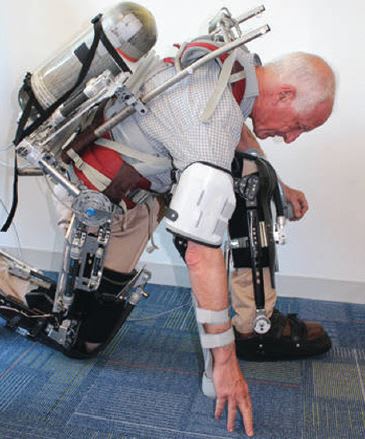
Using actual spacesuits is problematic, however, due to the expense, bulk, weight in Earth’s gravity, and difficulty in donning and doffing. Aurora developed the low-profile, lightweight spacesuit simulator to provide high-fidelity emulation of NASA’s Extravehicular Mobility Unit, the EMU.
“An astronaut experiences resistance from the spacesuit primarily in his or her joints, such as the knees, hips, and shoulders. We have developed an exoskeleton that includes actively controlled resistive elements at each of the lower body joints,” said Dr. Jessica Duda, Aurora’s Principal Investigator for the project. “By using active control, we are also able to calibrate the joint torques for current or future spacesuits.”
The current EMU requires very high metabolic costs (fatigue and calories burned) due to the energy required to bend the pressurized limbs. Future suit designs will focus on reducing joint torques. The S3 provides a means of measuring the metabolic costs of various joint torque configurations to aid in developing an optimized design.
Space Suit Simulator (S3)
Aurora Flight Sciences
Manassas, VA
703-369-3633
www.aurora.aero
For Free Info Click Here