

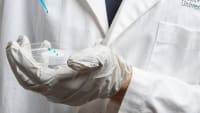
Researchers have developed a self-cleaning surface that can repel all forms of dangerous bacteria. The new plastic surface — a treated form of conventional transparent wrap — can be shrink-wrapped onto door handles, railings, IV stands, and other surfaces that can be magnets for bacteria such as MRSA and C. difficile. The treated material is also ideal for food packaging, where it could stop the accidental transfer of bacteria such as E. coli, salmonella, and listeria from raw chicken, meat, and other foods.
Inspired by the water-repellent lotus leaf, the new surface works through a combination of nanoscale surface engineering and chemistry. The surface is textured with microscopic wrinkles that exclude all external molecules. A drop of water or blood, for example, simply bounces away when it lands on the surface. The same is true for bacteria. The surface is also treated chemically to further enhance its repellent properties, resulting in a barrier that is flexible, durable, and inexpensive to reproduce.
{youtube} https://www.youtube.com/watch?v=DLgM2W6dm5A {/youtube}
The researchers tested the material using two of the most troubling forms of antibiotic-resistant bacteria: MRSA and pseudomonas. The effectiveness of the surface was verified by capturing electron microscope images showing that virtually no bacteria could transfer to the new surface.
For more information, contact Associate Professor Leyla Soleymani at
Transcript
00:00:00 A team of researchers at Canada's McMaster University has developed a self-cleaning surface that can repel all forms of bacteria, preventing the transfer of antibiotic-resistant superbugs and other dangerous bacteria in settings ranging from hospitals to kitchens. The new plastic surface - a treated form of conventional transparent wrap - can be shrink-wrapped onto door handles, railings, IV stands and other surfaces that can be magnets for bacteria such as MRSA and C. difficile. According to CDC report, more than 2.8 million antibiotic-resistant infections occur in the U.S. each year, and more than 35,000 people die as a result. So, this invention could play an important role in saving a lot of people. The treated material is also ideal for food packaging, where it could stop the accidental
00:01:07 transfer of bacteria such as E. coli, Salmonella and listeria from raw chicken, meat and other foods, as described in a paper published by the journal ACS Nano. Inspired by the water-repellent lotus leaf, the new surface works through a combination of nano-scale surface engineering and chemistry. The surface is textured with microscopic wrinkles that exclude all external molecules. For example, a drop of water or blood, simply bounces away when it lands on the surface. The same is true for bacteria. The surface is also treated chemically to further enhance its repellent properties, resulting in a barrier that is flexible, durable and inexpensive to reproduce. The researchers tested the material using two of the most troubling forms of antibiotic-resistant
00:02:09 bacteria: MRSA and Pseudomonas.









