

Power Electronics - November 2023
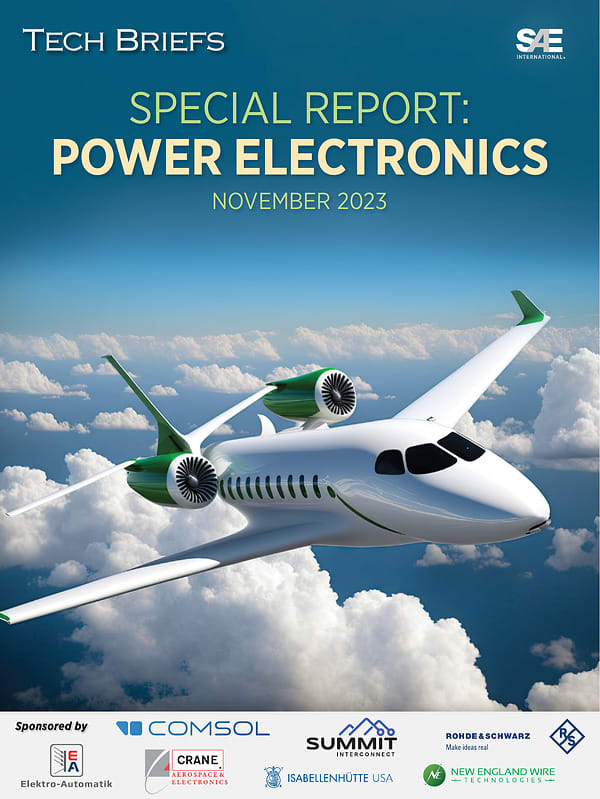
This compendium of recent articles from the editors of Tech Briefs and Aerospace & Defense Technology looks at the latest advances in power electronics and energy storage for applications ranging from electric aircraft and cars to consumer electronics and smart city technology.
Don't have an account?
Overview
The November 2023 Special Report on Power Electronics delves into the transformative advancements in energy storage and electric transportation, highlighting the ongoing shift towards electrification across various sectors. This report emphasizes the critical role of innovative technologies in decarbonizing the transportation landscape, particularly in aviation and automotive industries.
One of the key features of the report is the exploration of electric aviation, which is likened to the early stages of the electric vehicle (EV) revolution. The report underscores the importance of collaboration among stakeholders in the electric aviation sector to ensure a successful transition to sustainable air travel. It discusses the potential for electric aircraft to significantly reduce carbon emissions, thereby contributing to global decarbonization efforts.
The report also addresses the advancements in battery technology, particularly the dramatic reduction in the cost of lithium-ion batteries over the past decade. This cost reduction, coupled with improvements in performance—such as increased driving range and faster recharge times—has made electric vehicles a viable alternative to traditional gasoline-powered cars. The U.S. Department of Energy’s Argonne National Laboratory is highlighted for its strategic planning in facilitating this transition, which encompasses technology needs, infrastructure support, workforce transitions, safety regulations, and energy justice.
In addition to electric vehicles, the report discusses the development of new battery technologies, including a prototype calcium metal rechargeable battery capable of 500 charge-discharge cycles, marking a significant milestone for practical use. Other innovations mentioned include advancements in solar cells, water-based batteries, and solid-state thermal transistors, all contributing to the broader goal of enhancing energy storage capabilities.
The report also features insights from Jain and his team, who are working on a modular power box designed for smart cities. This new power box aims to reduce costs, minimize electrical losses, and improve safety and aesthetics while incorporating smart features for online monitoring of energy usage and system health. The challenges of adapting electrical distribution systems to smaller enclosures are also discussed, particularly the need to mitigate electromagnetic forces.
Overall, the Special Report on Power Electronics presents a comprehensive overview of the current state and future potential of electrification in transportation. It highlights the multifaceted approach required to navigate this transition, emphasizing the importance of technological innovation, infrastructure development, and collaborative efforts among various stakeholders. As the world moves towards a more sustainable energy landscape, the advancements in power electronics and energy storage technologies will play a pivotal role in shaping the future of transportation and reducing reliance on fossil fuels.











