

Medical Robotics - September 2024
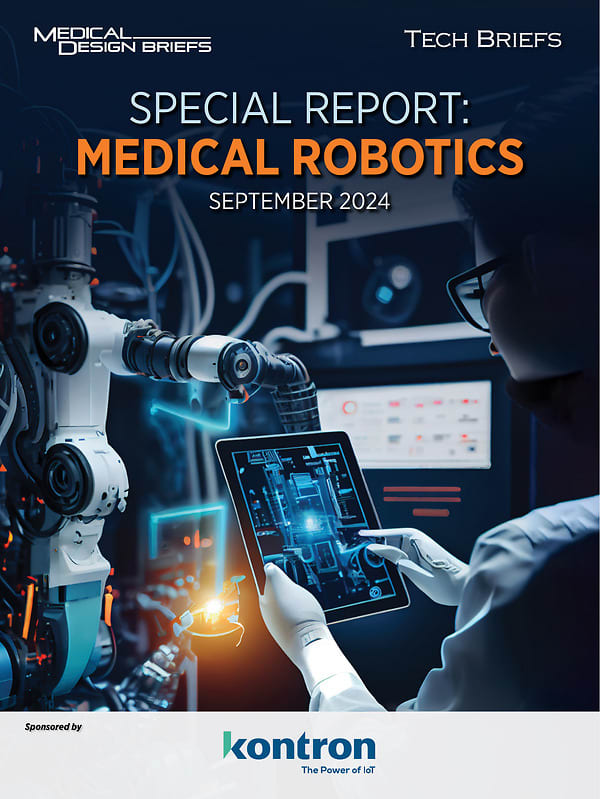
This free report from the editors of Medical Design Briefs explores how advances in robotics and AI are improving surgery, patient care, treatment, and device manufacturing.
Don't have an account?
Overview
The Medical Robotics Special Report from September 2024 explores the significant advancements and transformative impact of robotics in the healthcare sector. As the demand for minimally invasive surgery (MIS) continues to rise, the adoption of robotic systems has become increasingly prevalent. The report emphasizes the crucial roles that artificial intelligence (AI) and machine learning play in enhancing the precision and safety of these robotic devices, enabling remote surgeries, and providing real-time assistance during operations.
One of the key features of the report discusses how medical robotics is revolutionizing healthcare by improving surgical outcomes and patient recovery times. Robotic-assisted surgery systems allow for greater precision, reduced trauma, and quicker recovery compared to traditional surgical methods. The report highlights a miniaturized robotic-assisted surgery system that exemplifies these advancements, showcasing its potential to transform surgical practices.
In addition to surgical applications, the report delves into the field of orthopedics, where robot-driven manufacturing is streamlining the production of orthopedic devices. This innovation not only enhances the quality of the devices but also improves the efficiency of the manufacturing process, ultimately benefiting patients who require orthopedic interventions.
The report also features several tech briefs that highlight cutting-edge research and developments in medical robotics. For instance, a microneedle patch is being developed to help individuals control robotic exoskeletons, which could significantly enhance mobility for those with physical disabilities. Another brief discusses advancements in soft robotics, focusing on a wearable device designed to improve walking for individuals with Parkinson’s disease. These innovations illustrate the potential of robotics to assist in rehabilitation and enhance the quality of life for patients.
Furthermore, the report addresses the integration of AI in assistive robotics, which is advancing the capabilities of robotic systems to support individuals with various needs. The use of AI allows for more intuitive interactions between humans and robots, making assistive devices more effective and user-friendly.
Another notable innovation discussed is a shape-shifting robotic catheter that aims to make heart surgery safer. This technology represents a significant leap forward in cardiac procedures, potentially reducing complications and improving patient outcomes.
The report also touches on the collaborative efforts between robotics experts and healthcare professionals to optimize the deployment of robotic systems in clinical settings. By identifying technical requirements and safety considerations, these collaborations ensure that robotic technologies are effectively integrated into healthcare workflows.
Overall, the Medical Robotics Special Report provides a comprehensive overview of the current landscape of medical robotics, highlighting the ongoing research, innovations, and applications that are shaping the future of healthcare. As these technologies continue to evolve, they promise to enhance surgical precision, improve patient care, and ultimately transform the way healthcare is delivered. The report serves as a valuable resource for understanding the potential of robotics in addressing the challenges faced by the healthcare industry today.











