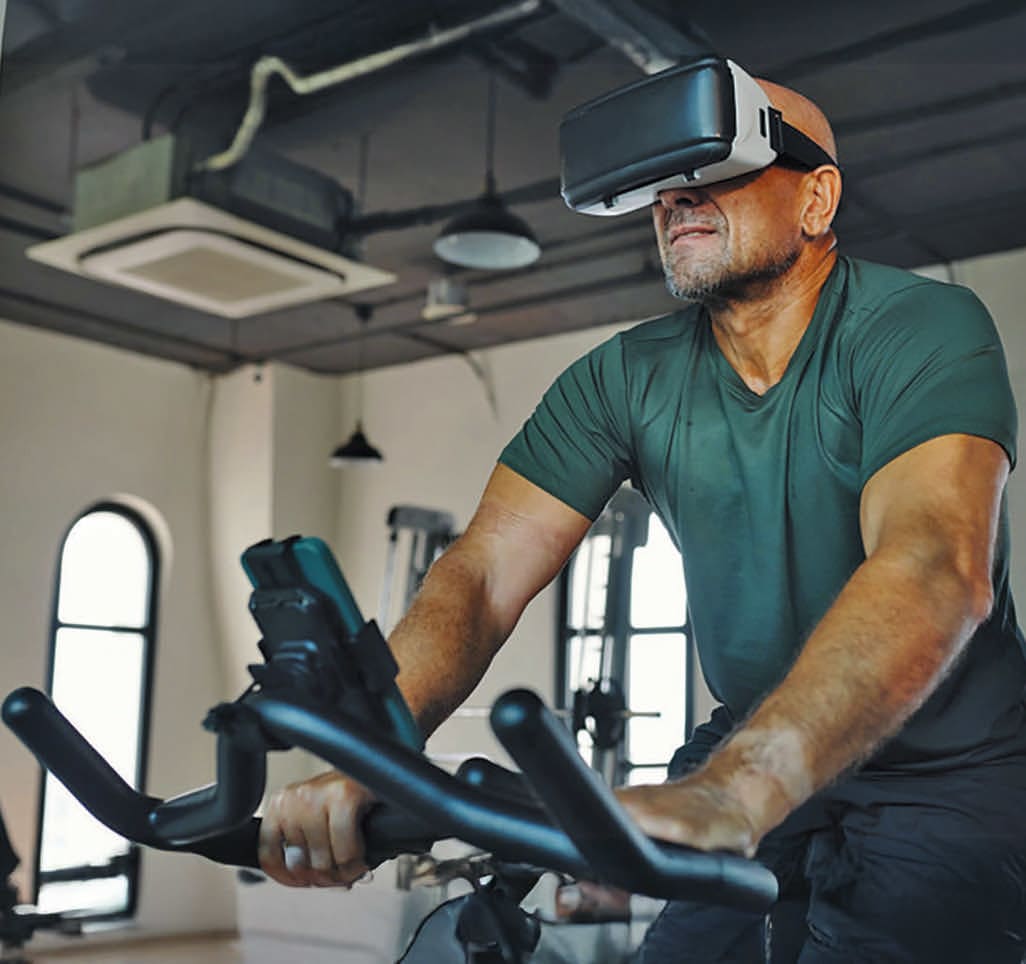
Virtual reality (VR) video games that combine screen time with exercise are a great way to get fit, but game designers face a major challenge — adherence to ‘exergames’ is low, with most users dropping out once they start to feel uncomfortable or bored.
Dr. Dominic Potts, lead author of a new study into harnessing cutting-edge sensor technology to keep exercisers motivated, said: “When it comes to physical exercise in all forms, motivation and exercise adherence are huge problems. With exergaming, we can address this issue and maximize a person’s enjoyment and performance by adapting the challenge level to match a user’s abilities and mood.
“Exercise games that are completely adaptive will sense a person’s emotions and give them more ‘rewards’ when they’re struggling and more obstacles when they’re ready for a new challenge,” said Potts.
Game designers have long aspired to develop more personalized exergames — i.e. programs that tune in to a person as they work out, adapting to their struggles and ambitions of the game unfolds — however, finding a trustworthy method for measuring a user’s evolving emotional state has proven elusive.
The Bath team has made a breakthrough by employing a novel range of sensors — which could be embedded in VR headsets and wearable devices such as smartwatches — to track physical changes experienced by an exerciser as they work out.
In the new study, 72 participants were involved in a VR static bike race while the Bath scientists used a specific combination of sensors to measure pupil size, facial expressions, heart rate, levels of sweating, skin inflammation, and electrodermal activity (which measures the skin’s ability to conduct electricity, reflecting stress levels).
Data was collected through the sensors while racers worked out in four distinct VEs, where each environment was designed to induce a specific emotion (happiness, sadness, stress, and calmness). Participants moved through these VEs at three different exercise intensities.
For each workout, the researchers were able to paint an accurate picture of a user’s emotional state, matching the game’s level of difficulty and the nature of the VE with the physiological changes experienced by the user, as picked up by their sensors.
Drawing from this research, eight guidelines have been formulated for creators of VR exergame, aimed at enhancing the emotional engagement of users.
For more information, contact Vittoria D’Alessio at