When I was doing research for my previous opinion piece on Agriculture 4.0, I was struck with how any different kinds of innovative smart technologies are already being used in agriculture to produce important outcomes.
There are three main things that have to be in place for smart agriculture — Agriculture 4.0 — to take off. There needs to be remotely controllable machinery; a network of various sensing technologies; and large amounts of — freely available — data. (The first two are already here, but the freely available data is still a work in progress.) And there has to be a way that these three can be integrated with each other.
Precision Agriculture
The seeds of something called “precision agriculture” were planted in 1988 when GPS was made accessible to the public. Before then, farmers were able to keep track of some information about their crops, but GPS enabled them to create accurate maps of their fields so they could pinpoint data to specific locations.
A formal definition was eventually established by the International Society of Precision Agriculture : “Precision Agriculture is a management strategy that gathers, processes, and analyzes temporal, spatial, and individual plant and animal data and combines it with other information to support management decisions according to estimated variability for improved resource use efficiency, productivity, quality, profitability, and sustainability of agricultural production.”
Industry 4.0
Industry 4.0 grew in stages. Early on, factory systems began to be automated using programmable logic controllers (PLCs), which could be programmed to control machinery in ways that grew to be more sophisticated over time. Industry 4.0 only became possible once PLCs and other devices in the factory could start to communicate with each other, to form networks.
Agriculture 4.0
In a similar way, Agriculture 4.0 is building upon precision agriculture. And it has structures similar to Industry 4.0 — it bears a strong family resemblance.

After decades of work as an EE, SAE Media Group’s Ed Brown is well into his second career: Tech Editor.
“I realized, looking back to my engineering days and watching all of the latest and greatest as an editor, I have a lot of thoughts about what’s happening now in light of my engineering experiences, and I’d like to share some of them now.”
Sensors in the field can collect data on soil conditions, weather, and crop health. Machine learning models can then analyze them, predict the best times for planting and harvesting, forecast crop yields, and identify potential problems like diseases or water shortages. The models can even be trained to identify distinct patterns that indicate leaks in irrigation systems, such as fluctuations in water flow or pressure, allowing for their early detection and helping prevent both water wastage and potential crop damage through real-time monitoring and analysis. They can wirelessly transmit data that measure everything from chlorophyll levels to plant water status, along with multispectral imagery.
Unmanned aerial vehicles equipped with cameras can capture images of a field, allowing software to build precise maps. The maps can then be used to correlate crop health with topography and optimize crop inputs such as water, fertilizer, and herbicides — a process called variable rate application.
Robots equipped with advanced sensors can plant seedlings. Robotic weeders can use vision-based systems to detect and remove unwanted plants; robotic harvesters can select and pick only ripe fruits and vegetables; they can use artificial intelligence to distinguish between weeds and crops to selectively apply herbicides.
Artificial Intelligence
AI-driven systems can analyze data from multiple sources, including weather forecasts, soil sensors, and aerial photos, to help consultants monitor crop health and soil conditions. These systems can process aerial imagery from drones or satellites, or both, to detect changes in chlorophyll content, canopy density, and crop growth patterns, which can indicate potential issues like disease or nutrient deficiencies and water stress.
To evaluate the condition of the soil, AI models can analyze the data that soil sensors provide, which includes soil moisture, pH, and nutrient levels. They can predict the best times for planting and harvesting, forecast crop yields, and identify potential problems like diseases or water shortages.
Crop consultants can use AI-powered decision support system (DSS) technologies to provide precise recommendations for farming operations. These recommendations are based on data inputs, such as crop history, weather patterns, and soil conditions.
Whether it’s optimizing water usage during irrigation or recommending the right time for pesticide application, these systems help consultants to guide farmers toward making data-driven, environmentally friendly decisions.
Putting Smart Farming to Work
In the off seasons when cash crops are not planted, cover crops are often grown to protect the soil. Imaging is useful even for the cover crops — to learn their composition, whether legumes, grasses, or broadleaves, for example. Although the farmer knows what and where they have planted, once there is a mixture, nature dictates who wins and who loses — you don't know just by what you’ve planted, which area of the field is dominated by which. And species-level knowledge of cover crops is useful because, for example, legumes in the mix will supply nitrogen to a cash crop, while other cover crops in the mix will not.
So, if a farmer has created a precision map of their fields, it will help them decide how much nitrogen fertilizer is needed in a given location. If they know where in their fields nitrogen-generating cover crops were, they can reduce the amount of nitrogen they have to add. That helps in two ways: The farmer can spend less money for nitrogen inputs and there is less nitrogen in the soil to contaminate groundwater and estuaries.
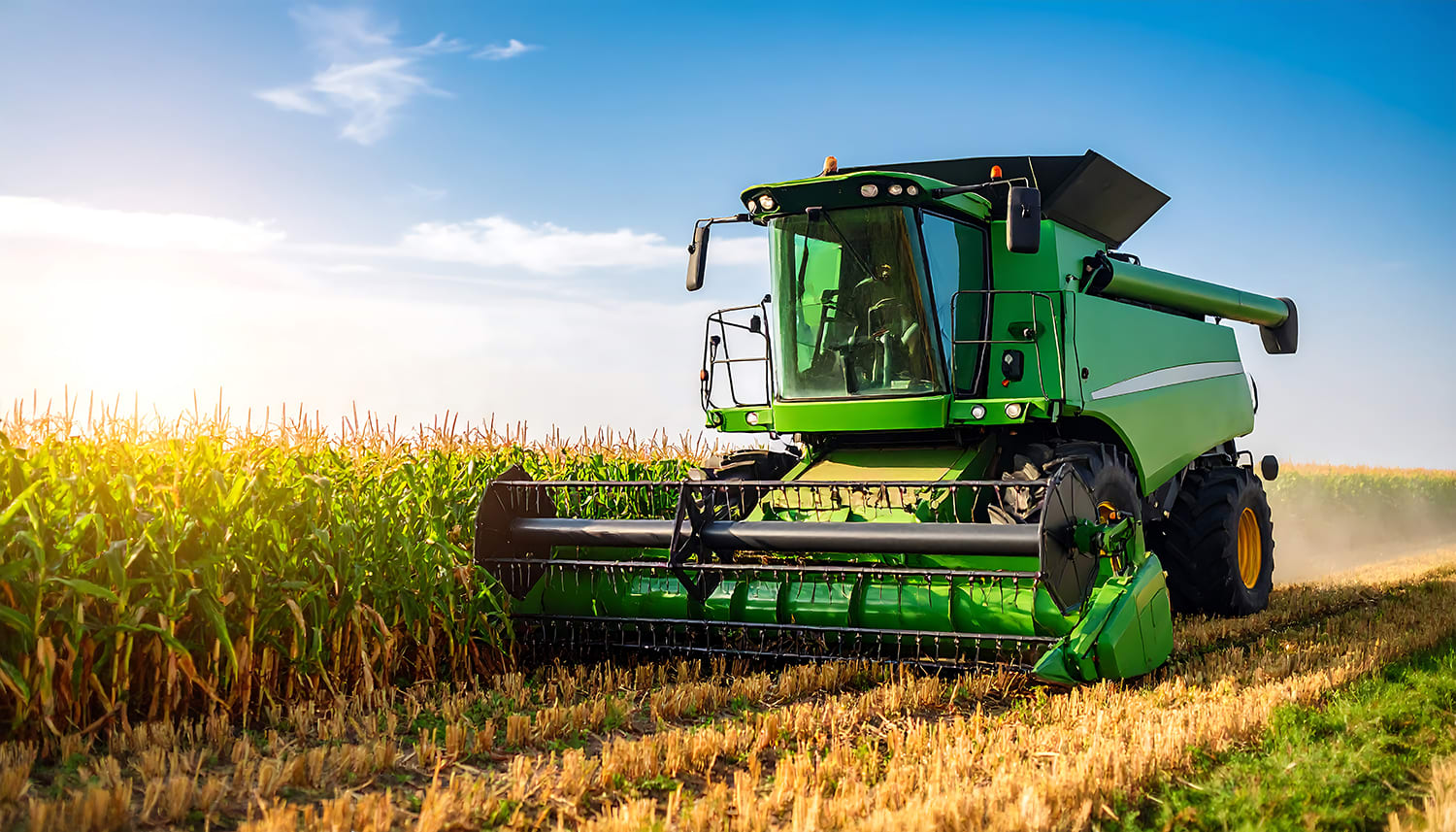
Smart combine harvesters can play a very important role in Agriculture 4.0. Since they traverse entire fields while doing their normal work, adding smart features to them is a no-brainer. Most modern combine harvesters come equipped with features such as GPS navigation systems, yield monitoring sensors, automated steering, and real-time data analytics.
Sensors that measure the amount of grain passing through the combine provide real-time data about yield per unit area, allowing farmers to identify which areas in their fields are more productive and which are underperforming. These variations in yield can be addressed with variable crop inputs, such as fertilizers or irrigation, tailored to the specific conditions of different areas of the field.
Sustainability
Agriculture 4.0 can also contribute to environmental sustainability by enabling extremely localized control of farming practices. And, for farmers, sustainability is not just about preserving a healthy environment for others — the natural environment is the source of their livelihoods. An extreme example of what can happen when there is little attention paid to sustainability is the U.S. dust bowl, a disaster that ruined formerly fertile soils over several states during the 1930s — nearly 2.5 million people were dispossessed.
What’s Next?
Since precision agriculture is already a reality, the key to growing Agriculture 4.0 is the free flow of data. It should not be siloed by farmers, or equipment manufacturers/dealers, or consultants.