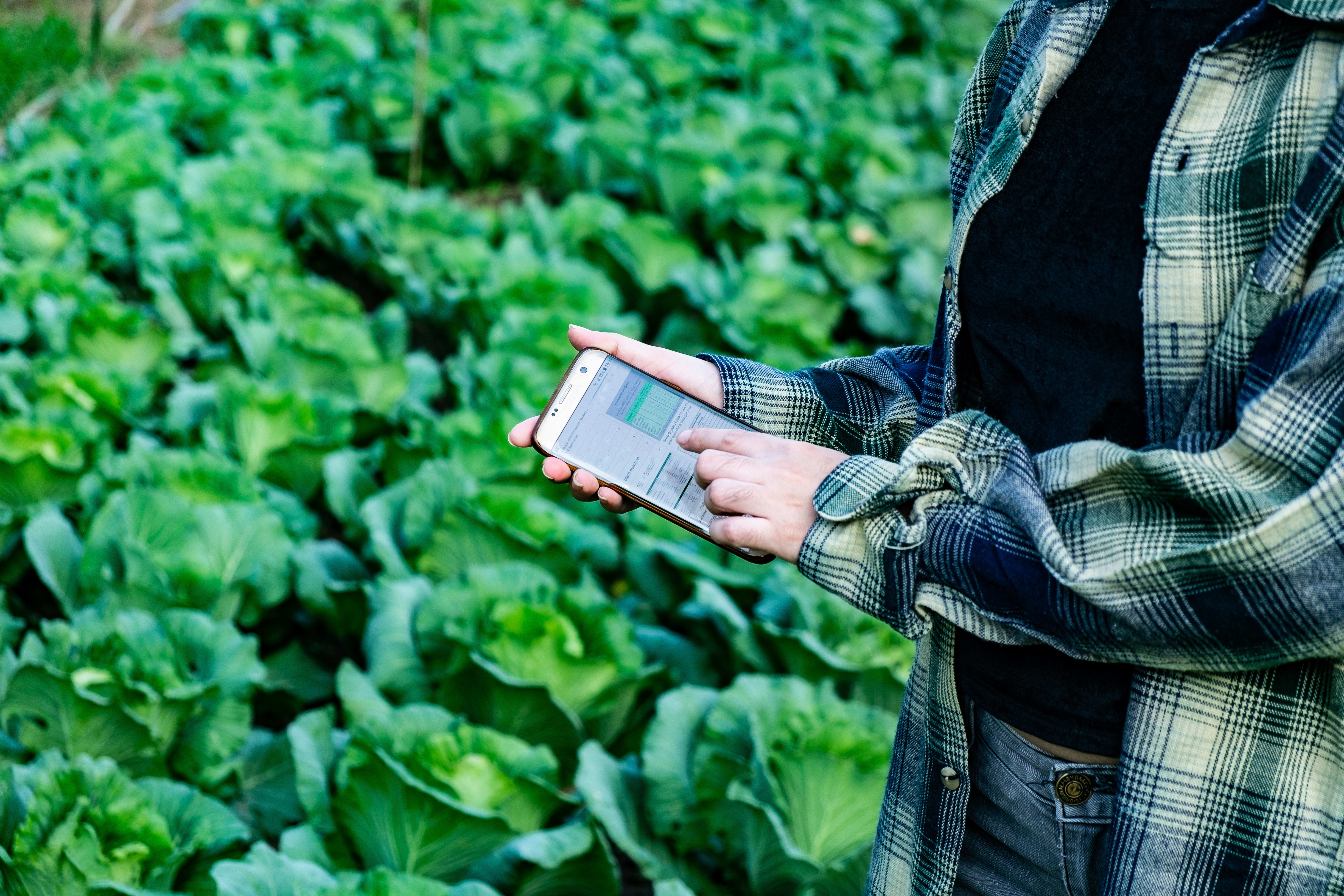
When I think about the IoT and AI, agriculture is not the first thing that comes to my mind. But when I was deciding on my next opinion piece, I remembered an interview I did in the summer of 2024 with Professor Chris Reberg-Horton of North Carolina State University’s Plant Sciences initiative. He described the enormous undertaking of building a database of hundreds of thousands of images of different kinds of crops under differ kinds of conditions, and then uploading them to their Nvidia Grace Hopper supercomputer, which uses the images to train AI for use on farms, large and small, anywhere in the world.
He said something to me then that I promised myself I would write about: “We have a bunch of engineering students in the building and they're oftentimes unaware of all these tasks in agriculture. They've heard about the self-driving cars, and a lot of them may have worked in medical imagery, which has been a huge growing area, but they’ve never even thought about agriculture. But that's what we're going to need for this revolution.”

After decades of work as an EE, SAE Media Group’s Ed Brown is well into his second career: Tech Editor.
“I realized, looking back to my engineering days and watching all of the latest and greatest as an editor, I have a lot of thoughts about what’s happening now in light of my engineering experiences, and I’d like to share some of them now.”
After all, agriculture fulfills the most fundamental of all human needs, so why wouldn’t we want to use the most advanced technology for it?
I found some interesting context for this question in an article by Adarsha Neupane and Vidya Samadi of the Clemson University Agricultural Sciences Department. They point out something I had never thought about (this is an example of an engineer’s ignorance about agriculture): that in the 18th century all farming was small farming. On small farms, the farmer, working with hand-held tools, was intimately familiar with every square inch of their land and could tend to whatever they saw. But in the modern era, because of mechanization, even small farms are larger — and the largest farms can be huge. The average farm size in the U.S. is about 446 acres, and the average size of the largest farm is about 2,900 acres. So, human “eyes-on-the-ground” need to be replaced by networks of sensors.
According to the Clemson article, “As the world population is expected to reach 9.6 billion by 2050, farmers must find new solutions to produce more food and improve quality to meet this growing demand. Traditional farming methods alone will not suffice. To meet this challenge, we're turning to a Digital Agricultural Revolution" — which I hereby name Agriculture 4.0. I think this is an appropriate name because it’s very similar in form, if not in the exact details, to Industry 4.0 — the so-called fourth industrial revolution. It’s all about gathering data, analyzing it, and applying what has been learned to control the process and to provide useful information. Farmers, perhaps even more than any other users of the IoT, need all the information they can get. There are many factors that influence a farm’s output and a fair number of these, such as weather and disease, are beyond the farmer’s control. So, the more information they get, the better they can decide how to optimize their day-to-day operations and, just as importantly, enable informed decision-making about things like what crops to plant where and when. Information can be sent to the cloud to combine physical data with factors such as market conditions to plan strategy for the next planting season and beyond.
Feedback from the fields about things like plant health, soil condition, weeds — amount, type, and location — are invaluable for controlling machinery, much like in an automated factory. Also, like in a factory, operations can be completely autonomous, utilize robots, and include humans in the loop where needed. And this will not be limited to large farms. According to U.S. Department of Agriculture researcher Dr. Steven Mirsky , “The future will be, are you a one-robot farm or are you a 20-robot farm.”
Plowing Forward
According to the Clemson article, “By leveraging real-time data, predictive analytics, and automation, these tools enable farmers to optimize resources, improve yields, and reduce waste, all while enhancing the sustainability and resilience of agricultural practices …. However, significant challenges remain in transitioning these technologies from research labs to widespread adoption in commercial agriculture and farm systems. …. Overcoming these barriers will require collaborative efforts from policymakers, technology developers, research institutions, and the agricultural community.”
As an aside, this raises a problem I have thought about for a long time — engineers think up great technologies to solve real problems, but it is often very difficult to convince potential users that it is worth the investment of time and dollars. And to be honest, in purely financial terms, it may not produce immediate returns. But, how about the non-financial returns of feeding people and saving the environment?