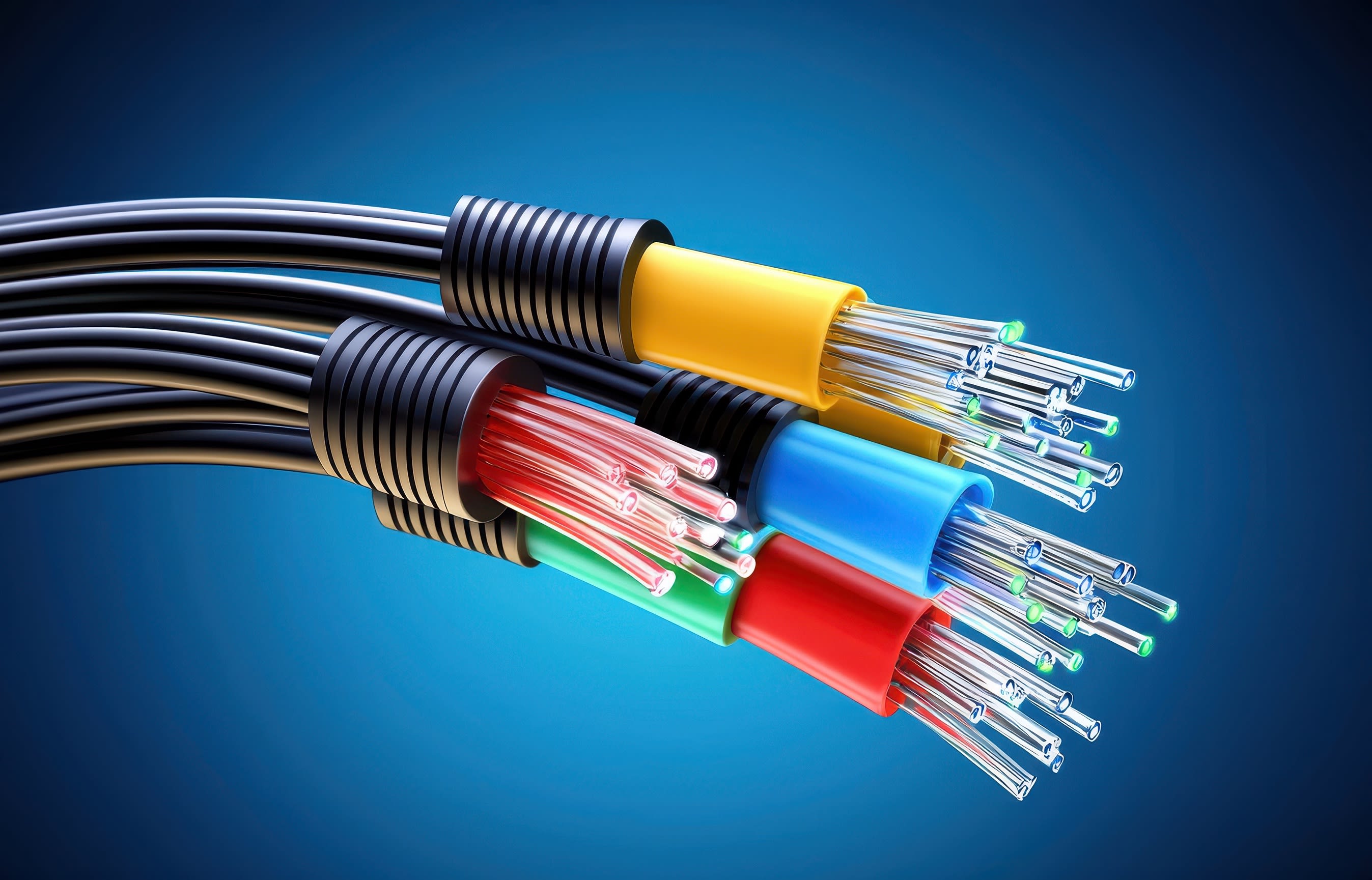
Without reliability and signal integrity, aerospace communications risk severe signal degradation and reduced security, posing risks to both personnel and mission-critical data. These challenges are particularly critical for applications that depend on military aircraft, satellite communications, and unmanned aerial vehicles (UAVs). As global demand for real-time data continues to surge, communication infrastructure requires regular maintenance and upgrades to maintain secure and reliable performance.
Hybrid communication technologies are emerging as an effective solution in aerospace applications, merging the traditional use of radio frequency (RF) coaxial cables with the benefits of fiber optics, offering protection against electromagnetic interference (EMI) while improving weight and space constraints.

RF cables are traditionally used for shorter connections, such as connecting base operations with antennas and radios. Fiber optic (FO) cables offer a unique set of advantages for long-distance communication, serving as the lightweight and space-efficient backbone for satellite and UAV ground stations, which often have space constraints.
Each technology has its own advantages and limitations in aerospace communications, but a hybrid RF-over-Fiber (sometimes abbreviated RFoF) approach offers a best-of-both-worlds solution for aircraft and ground stations alike. This approach merges the capabilities of RF and fiber technologies by converting RF signals into optical signals for transmission, then back to RF at the destination.
Leveraging fiber enables a cleaner signal that travels further with greater protection. Hybrid RF-over-Fiber systems mitigate and balance any technical concerns and challenges inherent to standalone RF or fiber systems, including signal jamming and interception.
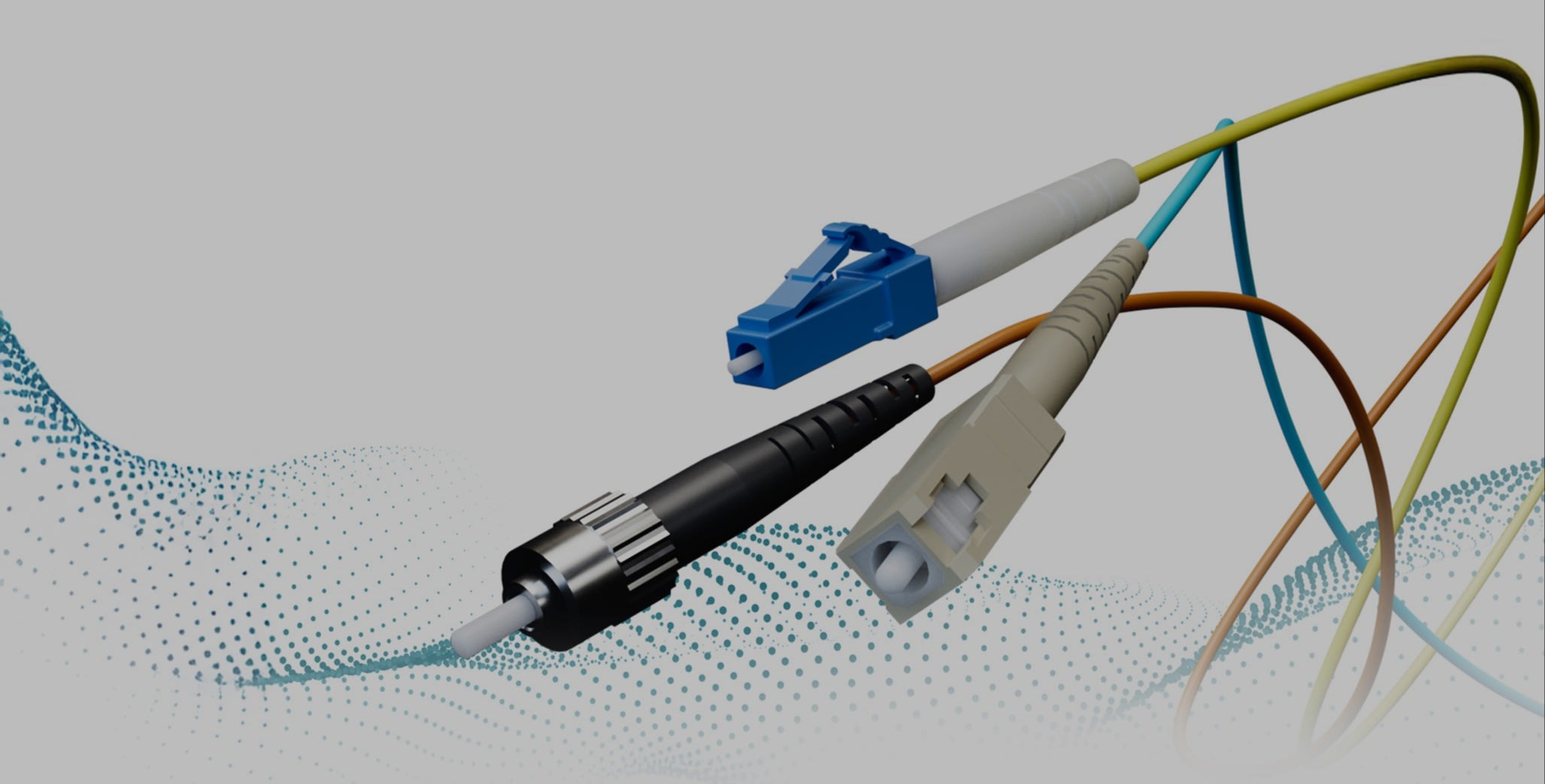
With the expansion of 5G infrastructure and other high-bandwidth communication networks, the hybrid RF-over-Fiber industry is projected to grow at a global compound annual growth rate (CAGR) of 7.9 percent by 2029 (according to a MarketsandMarkets 2023 analysis), reaching a projected $981 million. Before exploring the details of hybrid applications, it’s important to first understand the individual functions of RF and fiber cables and how each contributes to hybrid amplification in aerospace systems.
RF vs. Fiber Optics
RF coaxial cables date back to the birth of broadcasting in the 1930s. Their use expanded during World War II, when reliable transmission of radio frequency signals was critical for military communications and radar systems. RF coaxial cables, which are made of copper, are best known for their ability to transmit high-frequency electrical signals with minimal loss and interference.
These cable assemblies work well for short-range needs, power and signal applications, as well as in environments where coaxial infrastructure is already established. In aerospace settings, RF coaxial cables are highly durable and can withstand extreme temperatures and vibrations, helping to ensure reliable signal transmissions when aircraft encounter harsh environments with intense mechanical stress, rapid altitude changes, radiation and more.
Over the past few decades, fiber optic cables have become a transformative technology with a wide range of industrial applications. The same holds true in aerospace, where light travels through glass or plastic fibers to transmit critical data between aircraft and ground control. Electrical signals are converted into light by transmitters, enabling high-speed communication of large amounts of data.
Fiber optic assemblies are especially useful in aerospace applications because of their immunity to electromagnetic interference (EMI), which ensures consistent signal quality, stable data transmission, and enhanced communication reliability. In addition, fiber optic cables are lightweight, compact and exceptionally durable, helping to address strict space and weight limitations inherent to aerospace design, while also withstanding harsh environmental conditions that would normally degrade traditional cabling systems.
While RF coaxial cables are highly durable and capable of delivering dependable performance, they can experience signal degradation or attenuation over long transmission distances. This often necessitates the use of additional amplification equipment or repeaters that take up valuable space and add weight to aerospace applications.
Traditional RF copper cables are also quite vulnerable to lightning strikes and EMI, which can disrupt communications and compromise critical operations. In contrast, hybrid RF-over-Fiber solutions are specifically engineered for the demanding environmental and performance standards of aerospace operations, offering UV-resistant and ruggedized components that maintain stable signal performance across diverse conditions.
Hybrid Applications in Aerospace
While both RF and fiber cables perform well in their respective applications, transmitting RF signals optically offers significant advantages to operators such as reduced signal loss, conserved space and enhanced data security. By converting traditional RF signals into optical form, aerospace systems can deliver cleaner RF signals over longer distances, benefiting from the low attenuation and protective characteristics that fiber optics provide.
As a lightweight alternative that addresses the limitations of copper cabling in harsh environments, RF-over-Fiber technology also helps aerospace applications conserve space through streamlined wiring and efficient weight management — both critical factors for achieving optimal performance. In aerospace, true performance depends on secure communication, which can only be ensured by mitigating EMI.
In UAVs and aircraft, maintaining a secure connection with ground communication stations is essential for transmitting control commands, sensitive data and other critical information without communication dropouts or data corruption. Similarly, in satellite communications, RF-over-Fiber significantly reduces signal loss, enabling clean, strong transmissions over much longer distances between space and Earth — thanks largely to its inherent EMI immunity.
Future Outlook
Although RF-over-Fiber systems are engineered and ruggedized to withstand harsh environments, aerospace systems remain vulnerable to environmental stressors that can degrade the performance of components over time. Maintaining signal integrity requires consistent testing and preventative maintenance of key equipment, including connectors, transceivers and related components to futureproof communication infrastructure. As the adoption of RF-over-Fiber technology continues to grow, this hybrid approach represents the future of aerospace communications by offering the bandwidth, security, and reliability needed to meet the industry’s evolving demands.
This article was written by Diana Nottingham, Fiber Optics Product Line Manager, Infinite Electronics (Irvine, CA). For more information, visit here .