Light-Powered Soft Lens

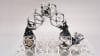
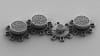
A team of biomedical engineers at Georgia Tech has unveiled a breakthrough in adaptive optics: a bio-mimetic, light-powered soft lens that mimics the human eye’s ability to refocus and adjust to varying light conditions. Inspired by the human eye’s response to light, lead author Corey Zheng, a Ph.D. candidate in the Wallace H. Coulter Department of Biomedical Engineering, developed a lens system that uses light-activated artificial muscles to control focal length. When illuminated, these muscles contract and stretch the lens, enabling precise optical adjustments without electronics or batteries. The photoresponsive hydrogel soft lens (PHySL) is constructed entirely from soft, bio-safe materials. At the core of the design is a thermally responsive hydrogel — a water-absorbing polymer commonly found in products like contact lenses — infused with graphene, which converts light into heat, triggering shape changes that act as artificial muscles. The research opens new possibilities for soft robotics, biomedical imaging, and autonomous vision systems.
Contact: BME Communications
404-385-0124
This email address is being protected from spambots. You need JavaScript enabled to view it.
Insulation Material

Physicists at CU Boulder have designed a new material for insulating windows that could improve the energy efficiency of buildings worldwide — and it works a bit like a high-tech version of Bubble Wrap. The team’s material, called Mesoporous Optically Clear Heat Insulator, or MOCHI, comes in large slabs or thin sheets that can be applied to the inside of any window. The group’s MOCHI material is a silicone gel with a twist: The gel traps air through a network of tiny pores that are many times thinner than the width of a human hair. Those tiny air bubbles are so good at blocking heat that you can use a MOCHI sheet just 5 millimeters thick to hold a flame in the palm of your hand. According to the researchers, MOCHI is long-lasting and is almost completely transparent. That means it won’t disrupt your view, unlike many insulating materials on the market today. The researchers see a lot of uses for this clear-but-insulating material. Engineers could design a device that uses MOCHI to trap the heat from sunlight, converting it into cheap and sustainable energy.
Contact: Daniel Strain
302-492-1411
This email address is being protected from spambots. You need JavaScript enabled to view it.
Monolithic 3D Chip

Researchers have created a new kind of 3D computer chip that stacks memory and computing elements vertically, dramatically speeding up how data moves inside the chip. Unlike traditional flat designs, this approach avoids the traffic jams that limit today’s AI hardware. The prototype already beats comparable chips by several times, with future versions expected to go much further. Just as important, it was manufactured entirely in a U.S. foundry, showing the technology is ready for real-world production. Unlike most of today’s chips, which are mostly flat and 2D, this prototype is built to rise upward. Ultrathin parts are stacked like floors in a tall building, and vertical wiring works like many fast elevators that move huge amounts of data quickly. With a record setting number of vertical connections and a tightly woven layout that places memory and computing units close together, the design avoids slowdowns that have limited progress in flat chips. In hardware tests and simulations, the 3D chip beats 2D chips by roughly an order of magnitude.