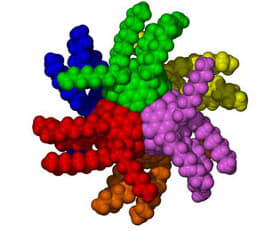
The PNNL researchers developed a new liquid called biphasic fluid with rapid expansion and contraction capabilities, which the new conversion system will use. When exposed to heat brought to the surface from water circulating in moderately hot, underground rock, the thermal-cycling of the biphasic fluid will power a turbine to generate electricity.
To aid in efficiency, the scientists added nanostructured metal-organic heat carriers - or MOHCs - which boost the power generation capacity to near that of a conventional steam cycle. PNNL Laboratory Fellow Pete McGrail cited PNNL's nanotechnology and molecular engineering expertise as an important factor in the development.
"Some novel research on nanomaterials used to capture carbon dioxide from burning fossil fuels actually led us to this discovery," says McGrail. "Scientific breakthroughs can come from some very unintuitive connections."
"By the end of the calendar year, we plan to have a functioning bench-top prototype generating electricity," McGrail predicts.
Watch McGrail describe the process in the video below.
Transcript
00:00:11 so as as typical what we do we have a a bright idea here in here in the laboratory what we do is submit then a proposal to a particular funding agency or private company and so we submitted this idea about capturing more energy from geothermal resources uh with this biphasic fluid and fortunately for for us that proposal was funded in the amount of $1.2 million what our plan to
00:00:36 do is that first we'll go in and develop some of the nanop particles that make up this biphasic fluid we'll measure the properties of uh those nanop particles and then from there our plan is to uh build essentially a test Loop in the laboratory this would be a small scale but fully operational uh geothermal system so we put all these pieces together and at the end and what we hope
00:01:01 is that we'll have a a new material essentially a new uh energy producing cycle that will enable us to exploit these uh low temperature uh geothermal sources for a more economical power production for