

Société de Conseil et de Prospective Scientifique (SCPS), located in Rosny-sous-Bois, France, developed a technology that allows the nickel-zinc battery system to work as close as possible to its theoretical performance, with a long cycle life.
Nickel-zinc battery systems have been known for over 100 years, but only recently has the technology been made viable and competitive with other commercially available rechargeable battery systems. The main battery systems on the market can be grouped into three families:
- Systems with acid electrolyte: Lead acid batteries (PbPbO2)
- Systems with alkaline electrolyte: Nickel-cadmium batteries (NiCd), Nickel-metal hydrid batteries (NiMH), Nickel-zinc batteries (NiZn)
- Systems with organic electrolyte: Lithium batteries: lithium-ion (Li-ion) and Li-metal-polymer (LiMP)
PbPbO2 and NiCd present deficiencies in terms of technical performances and environmental-friendliness, due to the presence of heavy metals. LiMP batteries have a relatively short cycle life and weak level of power. Li-ion contains volatile organic compounds that are difficult to recycle; NiMH uses rare earths able to store hydrogen, which are very difficult to recycle; and LiMP contains vanadium oxide, a toxic compound. Lithium systems also have an issue with safety, as there is a risk of explosion or fire during manufacture, use, and recycling at the end of life.
NiZn is plentiful, non-toxic, and has completely recyclable components. Until recently, NiZn had never been able to correctly cycle its negative zinc electrode, driving it to strong capacity losses and to short circuit.
SCPS analyzed the causes of the problems, relative to progressive and fast shape modifications of the negative zinc electrode:
- the spreading in all the cell of the zinc anode active material, dissolved during discharges into soluble zincates,
- the loss of the electrical characteristics of the anode when discharged, and
- the rapid loss of the necessary porosity of the zinc anode, after recharges.
The most critical issue to solve in the battery was the behavior of the zinc anode. The zinc anode developed by SCPS is a plasticized electrode, characterized essentially by the combination of two key elements:
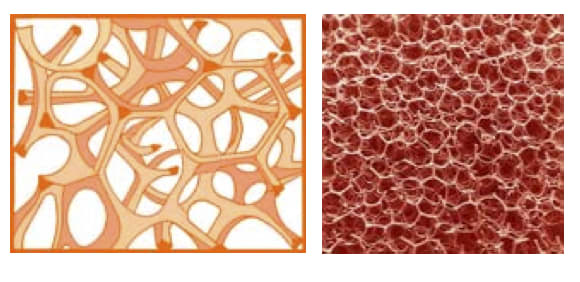
- a copper foam collector, forming a dense and very conductive network within the anodic active material, and
- a powder of associated additives, distributed through the zinc anode, having a combined action that eliminates any undesired shape evolution of the electrode.
These anodic components, and the association with a specially system-adapted positive nickel electrode, allow for the resolution of previous NiZn problems, and enable NiZn to be suited for energy and power applications (with its concentrated electrolyte, and its monolayer microporous separator). SCPS' NiZn battery works as a maintenance-free system and is safe in all conditions of use.
For more information, visit SCPS .
This Brief includes a Technical Support Package (TSP).
The Nickel-Zinc Secondary Battery
(reference GDM0006) is currently available for download from the TSP library.
Don't have an account?
Overview
The document discusses advancements in battery technology, particularly focusing on the Nickel-Zinc (NiZn) battery, as a response to the limitations of traditional battery systems like lead-acid and nickel-cadmium batteries. These older technologies are criticized for their technical performance issues and environmental concerns due to the presence of heavy metals. In contrast, the NiZn battery, developed over the past thirty years, offers several advantages that make it suitable for various applications.
The document identifies three main markets for NiZn batteries: industrial applications, hybrid electric vehicles (HEVs), and portable power applications. In industrial markets, NiZn batteries are ideal for applications requiring battery cycling, high mass energy, and maintenance-free operation, such as telecommunications uninterruptible power supplies (UPS), electricity storage for renewable energy, and electric vehicles. The emphasis is on the need for reliable performance in isolated areas where maintenance may be challenging.
For HEVs, the NiZn battery is highlighted for its combination of high performance and moderate cost, which is crucial as the demand for electric autonomy increases. The document notes the importance of safety in battery use, especially in the event of accidents, and the legal obligations for recycling all vehicle components.
In the portable power sector, the focus is on applications that require high energy capacity and cost-effectiveness, such as domestic equipment, toys, and non-professional power tools. The NiZn battery's ability to handle deep discharges at high rates makes it particularly suitable for these uses, where long calendar life is also a priority.
The document emphasizes that the NiZn battery addresses growing concerns related to safety, environmental impact, and modern mobility needs. It outlines the financial potential of these markets, estimating significant growth opportunities in industrial, HEV, and portable applications, while noting that traditional lead-acid batteries are expected to decline in relevance.
Overall, the document presents the NiZn battery as a promising solution to meet the evolving demands of energy storage, driven by technological advancements and increasing environmental regulations.











