
NASA Spinoff
Transportation
Spinoff: Transportation
Experiments Result in Safer, Spin-Resistant Aircraft
NASA Technology
James M. Patton Jr. completed a whopping 8,000 spin turns throughout his career at NASA. As a research pilot at Langley Research Center, Patton and his...

Spinoff: Transportation
Heat Shield Paves the Way for Commercial Space
NASA Technology
Comets are beautiful, and apparently it’s a youthful kind of beauty, because they look about the same from the time they were born. Often referred to as dirty...

Spinoff: Transportation
Interfaces Visualize Data for Airline Safety, Efficiency
NASA Technology
It was Henry Ford who said, “Anyone who stops learning is old, whether at 20 or 80. Anyone who keeps learning stays young.” Following such an adage,...

Spinoff: Transportation
Shuttle Repair Tools Automate Vehicle Maintenance
NASA Technology
Successfully building, flying, and maintaining the space shuttles was an immensely complex job that required a high level of detailed, precise engineering. After...
Spinoff: Transportation
Wireless Sensors Pinpoint Rotorcraft Troubles
NASA Technology
Helicopters present many advantages over fixed-wing aircraft: they can take off from and land in tight spots, they can move in any direction with relative ease, and...

Spinoff: Transportation
Anti-Icing Formulas Prevent Train Delays
NASA Technology
In the winter of 2009, Washington, DC, workers faced the prospect of a difficult commute due to record-setting snowfalls. But thousands of the city’s Metrorail riders...
Spinoff: Transportation
Pressure-Sensitive Paints Advance Rotorcraft Design Testing
NASA Technology
The rotors of certain helicopters can spin at speeds as high as 500 revolutions per minute. As the blades slice through the air, they flex, moving into the wind and back out, experiencing pressure changes on the order of thousands of times a second and even...
Spinoff: Transportation
Speech Recognition Interfaces Improve Flight Safety
NASA Technology
“Alpha, Golf, November, Echo, Zulu.” “Sierra, Alpha, Golf, Echo, Sierra.” “Lima, Hotel, Yankee.”
It looks like some strange word game, but...

Spinoff: Transportation
Polymers Advance Heat Management Materials for Vehicles
NASA Technology
For 6 years prior to the retirement of the Space Shuttle Program, the shuttles carried an onboard repair kit with a tool for emergency use: two tubes of...

Spinoff: Transportation
Cameras Improve Navigation for Pilots, Drivers
NASA Technology
After 10 months of traveling through deep space to Mars, the Phoenix Lander finally approached its destination. The last 7 minutes of the spacecraft’s 423...

Spinoff: Transportation
Modeling Programs Increase Aircraft Design Safety
NASA Technology
“Flutter” may sound like a benign word when associated with a flag in a breeze, a butterfly, or seaweed in an ocean current. When used in the context of...
Spinoff: Transportation
Integrated Design Tools Reduce Risk, Cost
NASA Technology
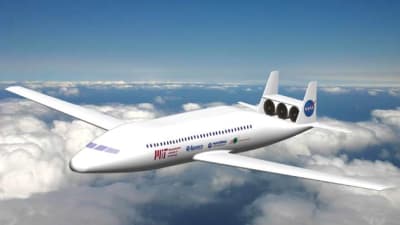
As NASA designs new spacecraft for its science missions and begins designs for the next generation of human spaceflight vehicles, it also works to revolutionize Earth’s...
Spinoff: Transportation
Advisory Systems Save Time, Fuel for Airlines
NASA Technology
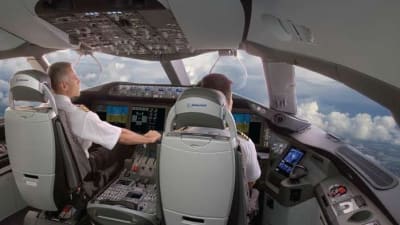
Heinz Erzberger never thought the sky was falling, but he knew it could benefit from enhanced traffic control. Throughout the 1990s, Erzberger led a team at Ames...
Spinoff: Transportation
Fly-by-Wire Systems Enable Safer, More Efficient Flight
NASA Technology
In 1961, not long after NASA received the imperative from President John F. Kennedy to land a man on the Moon within the decade, then-NASA administrator...

Spinoff: Transportation
Sensor Systems Collect Critical Aerodynamics Data
Originating Technology/NASA Contribution
The next time you blow out a candle, watch how the smoke behaves. You will see that it rises first in an even stream. At a certain point,...

Spinoff: Transportation
Coatings Extend Life of Engines and Infrastructure
Originating Technology/NASA Contribution
Every time a jet engine is started, it goes through a thermal cycle of extreme temperatures, reaching as high as 2,700 °F within the...

Spinoff: Transportation
Programs Model the Future of Air Traffic Management
Originating Technology/NASA Contribution
Try describing the U.S. National Airspace System (NAS), and you will inevitably end up rattling off a series of large numbers. There...
Spinoff: Transportation
Tail Rotor Airfoils Stabilize Helicopters, Reduce Noise
Originating Technology/NASA Contribution
Given the eye-catching nature of space shuttle launches, deep-space imagery, and Mars exploration, it can be easy to forget...
Spinoff: Transportation
Personal Aircraft Point to the Future of Transportation
Originating Technology/NASA Contribution
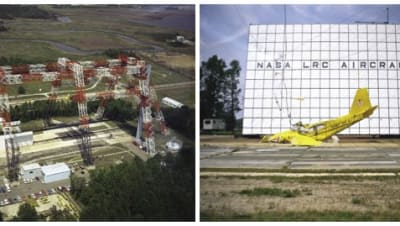
In the late 1970s, general aviation (GA) in the United States was experiencing its heyday. In 1978, as many as 18,000 GA aircraft...
Spinoff: Transportation
Ducted Fan Designs Lead to Potential New Vehicles
Originating Technology/NASA Contribution
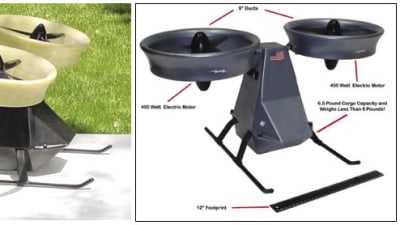
From the myth of Icarus, who flew too close to the Sun on wings made of wax, to the designs Leonardo da Vinci drew of flying machines...
Spinoff: Transportation
Winglets Save Billions of Dollars in Fuel Costs
Originating Technology/NASA Contribution
Anyone who has made a paper airplane knows that folding the wingtips upward makes your plane look better and fly farther, though the...

Spinoff: Transportation
Tools Lighten Designs, Maintain Structural Integrity
Originating Technology/NASA Contribution
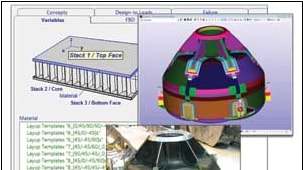
While working on designs for a new high-speed aircraft, a group of software engineers at NASA’s Langley Research Center developed a...
Spinoff: Transportation
Insulating Foams Save Money, Increase Safety
Originating Technology/NASA Contribution
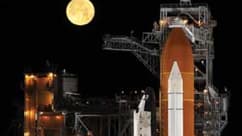
Researchers at the Advanced Materials and Processing Branch at Langley Research Center created a superior polyimide foam as insulation for...
Spinoff: Transportation
Polyimide Resins Resist Extreme Temperatures
Originating Technology/NASA Contribution
Spacecraft and aerospace engines share a common threat: high temperature. The temperatures experienced during atmospheric reentry can reach...

Spinoff: Transportation
Nontoxic Resins Advance Aerospace Manufacturing
Originating Technology/NASA Contribution
A small pile of PETI-330 resinous powder PETI-330 is the first resin created specifically for high-temperature composites formed with resin...

Spinoff: Transportation
Sensors Locate Radio Interference
Originating Technology/NASA Contribution
While many air travelers are accustomed to rules against electronic devices during takeoff and landing, they might not be aware that these devices are...

Spinoff: Transportation
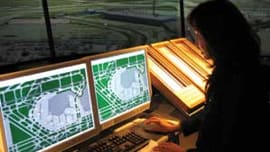
Surface Operations Systems Improve Airport Efficiency
Originating Technology/NASA Contribution
As part of its research to make air travel safer, NASA began collaborating with the Federal Aviation Administration (FAA) in 2005...
Spinoff: Transportation
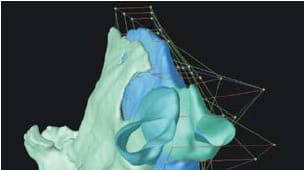
Software Performs Complex Design Analysis
Originating Technology/NASA Contribution
Designers use computational fluid dynamics (CFD) to gain greater understanding of the fluid flow phenomena involved in...
Spinoff: Transportation
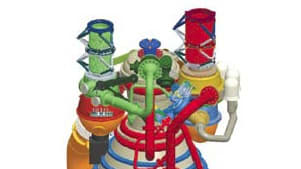
Engineering Models Ease and Speed Prototyping
Originating Technology/NASA Contribution
NASA astronauts plan to return to the Moon as early as 2015 and establish a lunar base, from which 6-month flights to Mars...
Spinoff: Transportation
Aerodynamics Research Revolutionizes Truck Design
Originating Technology/NASA Contribution
The last 35 years have seen a sea change in the design of trucks on America’s highways, reflecting extensive research...

Top Stories
 Blog: Design

Aerial Microrobots That Can Match a Bumblebee's Speed
 Blog: Energy

My Opinion: We Need More Power Soon — Is Nuclear the Answer?
 Blog: Electronics & Computers

Turning Edible Fungi into Organic Memristors
 Blog: Semiconductors & ICs

Revolutionizing the Production of Semiconductor Chips
 Blog: Robotics, Automation & Control

Microscopic Swimming Machines that Can Sense, Respond to Surroundings
 Quiz: Energy

Webcasts
 Upcoming Webinars: Software

E/E Architecture Redefined: Building Smarter, Safer, and Scalable Vehicles
 Upcoming Webinars: Power

Hydrogen Engines Are Heating Up for Heavy Duty
 Upcoming Webinars: Transportation

Advantages of Smart Power Distribution Unit Design for Automotive & Transportation
 Upcoming Webinars: Transportation

Quiet, Please: NVH Improvement Opportunities in the Early Design Cycle
 Upcoming Webinars: Transportation

A FREE Two-Day Event Dedicated to Connected Mobility
 On-Demand Webinars: Motion Control

Next-Generation Linear and Rotary Stages: When Ultra Precision Movement Is a Must