Stories
33
40
0
780
30
Briefs: Electronics & Computers
Demands for improved computer processing power have led researchers to explore both new processes and other materials beyond silicon to produce electronic components....

Briefs: Electronics & Computers
For several decades, improvements in conventional transistor materials have been sufficient to sustain Moore’s Law — the historical pattern of microchip manufacturers...
Briefs: Electronics & Computers
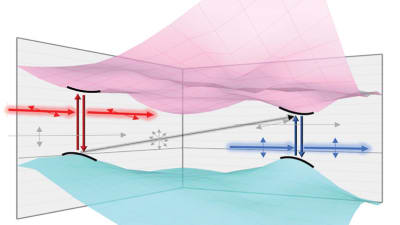
Power electronics used for routing, control, and conversion of electrical power traditionally utilize silicon semiconductors. These systems tend to be bulky, require active cooling, and are inadequate for...

Briefs: Communications
Vanadium dioxide’s unique properties make it ideally suited for outperforming silicon and giving rise to a new generation of low-power electronic devices. This compound can be...

Briefs: Electronics & Computers
Moving from electrical communication to optical communication is attractive to chip manufacturers because it could significantly increase chips’ speed and reduce power consumption, an...

INSIDER: Electronics & Computers
The future of electronic devices lies partly within the “internet of things” – the network of devices, vehicles and appliances embedded within electronics to enable connectivity and data...
INSIDER: Electronics & Computers
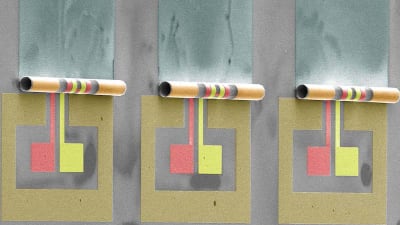
The Internet of Things makes our lives more streamlined and convenient, but the cybersecurity risk posed by millions of wirelessly connected devices remains a huge concern. UC Santa Barbara...

Question of the Week: Electronics & Computers
Would You Wear a 'Mind-Reading' Headset?
A Tech Briefs TV video this week featured AlterEgo, a “mind-reading” wearable headset from MIT's Media Lab.The technology allows a user to silently converse with a computing device, AI assistant, or application without any audible voice or discernible movements. The wearable device captures electrical...
Products: Communications
Assembly Pins
JW Winco, New Berlin, WI, offers GN 2342 RoHS-compliant stainless steel assembly pins with three washer types available that place the bolt in an axial position in its insertion direction. The washer...

Application Briefs: Software
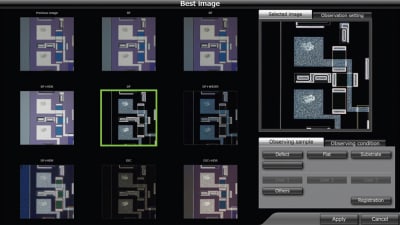
Digital microscopes are being automated and computerized to make them easier to use, display more data with more detail and precision, and expand their areas of application. With traditional...
5 Ws: Photonics/Optics
Who
Users of consumer electronics devices and solar cells, and high-power pulsed laser applications.

NASA Spinoff: Test & Measurement
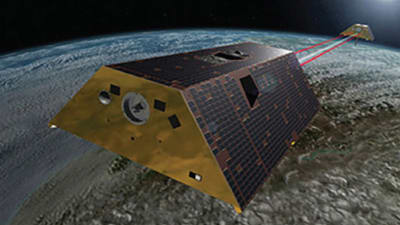
Spinoff is NASA’s annual publication featuring successfully commercialized NASA technology. This commercialization has contributed to the development of products and services in...
Briefs: Sensors/Data Acquisition
Thinning a material down to a single-atom thickness can dramatically change that material’s physical properties. Graphene, the best known two-dimensional (2D) material, has...

Briefs: Electronics & Computers
Novel Radiation Shielding Material for Dramatically Extending the Orbit Life of CubeSats
NASA Langley Research Center has developed an innovative radiation shield made by layering metal materials in the Z-shielding method. It is a new, low-cost, and easy-to-implement method to protect CubeSat electronic circuits from ionizing radiation found in low...
Briefs: Test & Measurement
Technique Measures Temperature of 2D Materials at the Atomic Level
Newly developed two-dimensional (2D) materials such as graphene — which consists of a single layer of carbon atoms — have the potential to replace traditional microprocessing chips based on silicon, which have reached the limit of how small they can get. But engineers have been...
Blog: Electronics & Computers
Answering Your Questions: Is This the End of VME?
A reader asked our expert: What technology will spell the beginning of the end for the VME embedded computing platform?
Blog: Electronics & Computers
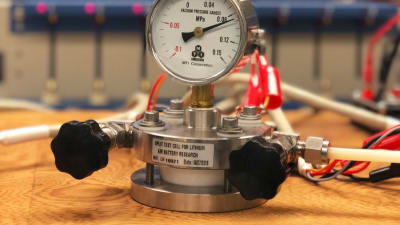
Larry Curtiss answers reader questions about a new kind of lithium-air battery.
Briefs: Aerospace
Highly capable small Unmanned Aerial Vehicles (UAVs) provide substantial business opportunity, especially if allowed to operate in the suburban market. Reliability issues force the use of a safety pilot for each vehicle in...

Briefs: Semiconductors & ICs
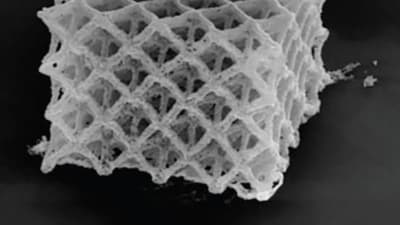
In 3D printing — also known as additive manufacturing — an object is built layer-by-layer, allowing for the creation of structures that would be impossible to manufacture by...
Briefs: Aerospace
High-Energy Lithium Flow Cells with Sulfur Anodes
Li-ion batteries offer considerable advantages such as high gravimetric and volumetric energy densities, and good calendar life and shelf life compared to aqueous systems such as Pb-acid, Ni-Cd, and Ni-MH. Various Li-ion chemistries with different Li-intercalating cathodes have attained significant...
Briefs: Electronics & Computers
Researchers have developed a lithium-ion battery that uses a water-salt solution as its electrolyte — reaching the 4.0- Volt mark for electronics such as laptops — without the fire and explosive...

Blog: Robotics, Automation & Control
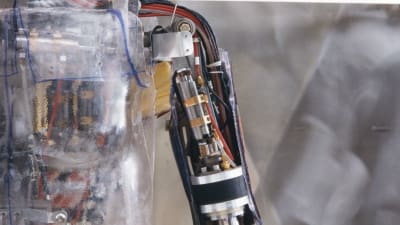
In 1988, a team at Pacific Northwest Laboratories built a mannequin robot. One of the original engineers talked with Tech Briefs about his time making "Manny."
Question of the Week: Electronics & Computers
Will edible electronics catch on?
In this week's Tech Briefs TV video, Rice University scientists demonstrated an ability to embed graphene into paper, cloth, and even your breakfast. Why etch patterns into toast? James Tour, a chemist at Rice University, envisions never-before-seen applications, like embedding electronics as a self-cooking heat...
Blog: Energy
The ‘Create the Future’ Design Contest is Open for Entries
Have a product design idea? The "Create the Future" Design Contest is now open for submissions until July 2, 2018.
Briefs: Materials
In London's St. Paul's Cathedral, a whisper can be heard far across the circular whispering gallery as the sound curves around the walls. Now, an optical whispering gallery mode resonator developed by Penn...
Briefs: Electronics & Computers
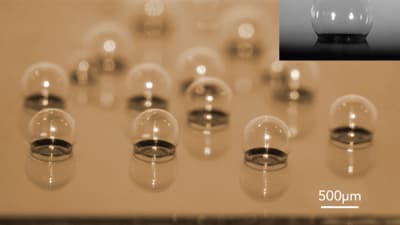
A temperature sensor was developed that runs on 113 picowatts of power — about 10 billion times smaller than a Watt. The technology could enable devices that can be powered by harvesting energy from...
Q&A: Manufacturing & Prototyping
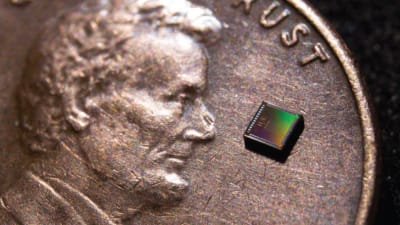
Researchers from NC State have developed a new technique for directly printing metal circuits, creating flexible, stretchable electronics. The technique can...

Technology Leaders: Manufacturing & Prototyping
Exciting new technological innovations are making the planet cleaner, people healthier, food more plentiful, transportation speedier, communication more accessible, and...

5 Ws: Semiconductors & ICs
Who
Manufacturers of smaller and smarter computer chips for consumer electronics such as smartphones and tablets, and 3D chips for brain-inspired computing applications.

Top Stories
 Blog: Power

My Opinion: We Need More Power Soon — Is Nuclear the Answer?
 Blog: AR/AI

Aerial Microrobots That Can Match a Bumblebee's Speed
 News: Energy

 Blog: Electronics & Computers

Turning Edible Fungi into Organic Memristors
 Blog: Robotics, Automation & Control

Microscopic Swimming Machines that Can Sense, Respond to Surroundings
 INSIDER: Sensors/Data Acquisition

Webcasts
 Upcoming Webinars: Automotive

Hydrogen Engines Are Heating Up for Heavy Duty
 Upcoming Webinars: Transportation

Advantages of Smart Power Distribution Unit Design for Automotive...
 Upcoming Webinars: Transportation

Quiet, Please: NVH Improvement Opportunities in the Early Design...
 Upcoming Webinars: Sensors/Data Acquisition

From Spreadsheets to Insights: Fast Data Analysis Without Complex...
 Upcoming Webinars: Test & Measurement

Battery Abuse Testing: Pushing to Failure
 Upcoming Webinars: Transportation