
Stories
38
49
0
810
30
Briefs: Electronics & Computers
Georgia Tech researchers have shown that robots about the size of a particle of dust are capable of precise bidirectional control. By harnessing the power of a magnetic field generated by a...

Special Reports: Materials

Aerospace Manufacturing - May 2022
Demanding applications in the aerospace industry require products and systems that are manufactured using advanced technologies – in additive manufacturing, machining, metrology, and more. To help you keep...INSIDER: Electronics & Computers
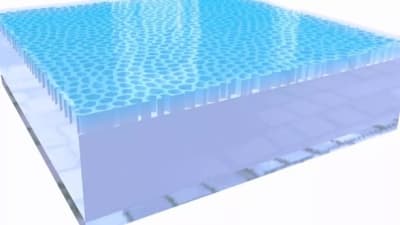
In a paper published in American Chemical Society’s ACS Photonics, a University of Surrey team detailed how they used characteristics of sunlight to design a disordered honeycomb layer to...
INSIDER: Power
In a new study, researchers at the U.S. Department of Energy’s (DOE) Argonne National Laboratory have turned to machine learning to predict the lifetimes of a wide range of different battery...

Podcasts: Sensors/Data Acquisition
A team at Massachusetts Institute of Technology is adding function to fibers. We speak to MIT’s Dr. Yoel Fink about acoustic fabrics.

Special Reports: Robotics, Automation & Control
Advanced Materials & Coatings - May 2022
Breakthroughs in plastics, composites, metals, and other materials technologies are enabling exciting new applications in industries ranging from aerospace to automotive to medical. Read more in this...Facility Focus: Electronics & Computers
Founded in 1876, the University of Colorado Boulder (CU Bolder) is a public research university in Boulder, CO. The College of Engineering and Applied Science at CU Boulder was founded in 1893. With an increased...

Briefs: Materials
Many technical processes only use part of the energy consumed. The remaining fraction leaves the system in the form of waste heat. Frequently, this heat is released into the...

Briefs: Energy
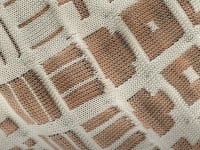
Wearable electronic components incorporated directly into fabrics have been developed that could be used for flexible circuits, healthcare monitoring, energy conversion, and other applications. Graphene...

Briefs: Energy
Decreasing Anode Corrosion in Metal-Air Batteries
Metal-air batteries can be used in a variety of applications ranging from range extenders for electric vehicles to emergency power systems. Metal-sea-water batteries are primarily used for underwater applications ranging from torpedoes to underwater unmanned vehicles. A team of researchers at the...
Briefs: Photonics/Optics
A new composition of germanosili-cate glass created by adding zinc oxide has properties good for lens applications. The new family of zinc germanosilicate glass has a high refractive index comparable to...
Briefs: Materials
Optical limiting — a manner of telecom switching without the use of electronics — is an all-optical method that could improve the speed and capacity of Internet communications. A...
Briefs: Electronics & Computers
Researchers have developed technology to produce next-generation composite glass for lighting LEDs and smartphone, television, and computer screens. The technology was a step forward in perovskite...
Briefs: Nanotechnology
Researchers have developed tiny optical elements from metal nanoparticles and a polymer that could replace traditional refractive lenses to realize portable imaging systems and...
Briefs: Manufacturing & Prototyping
A research team developed a thread made of conductive cellulose that offers practical possibilities for electronic textiles. Sewing the electrically conductive cellulose threads into a...

Briefs: Imaging
A Penn State-led team of interdisciplinary researchers developed a polymer with robust piezoelectric effectiveness, resulting in 60 percent more efficient electricity...

Briefs: Wearables
Graphene — hexagonally arranged carbon atoms in a single layer with superior pliability and high conductivity — could impact the development of future motion detection, tactile sensing,...

Briefs: Automotive
All solid materials, including glass, have a property called elastic stiffness — also known as elastic modulus. It's a measure of how much force per unit area is needed to make...
Briefs: Materials
Elastic polymers, known as elastomers, can be stretched and released repeatedly and are used in applications such as gloves and heart valves, where they need to last a long time without tearing. But...

Briefs: Physical Sciences
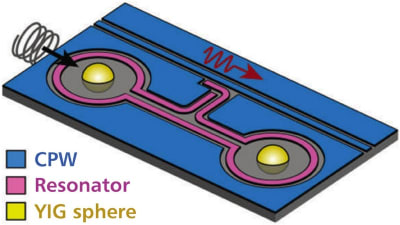
A team of scientists at the U.S. Department of Energy's Argonne National Laboratory, have achieved efficient quantum coupling between two distant magnetic devices, which can host a certain...
Briefs: Defense
Researchers combined additive manufacturing with conventional compression molding to produce high-performance thermoplastic composites reinforced with short carbon fibers. The approach...

Briefs: Medical
Scientists have developed a ceramic-based ink made of calcium phosphate to 3D print bone parts complete with living cells that could be used to repair damaged bone tissue. The 3D printer method is...

Briefs: Medical
Living materials made by housing biological cells within a nonliving matrix have gained popularity as scientists recognize that often the most robust materials are those that...

Briefs: Photonics/Optics
3D printers working in the millimeter range and larger are increasingly used in industrial production processes. Many applications, however, require precise printing on the micrometer scale...

Briefs: Sensors/Data Acquisition
Scientists have developed color-changing, flexible photonic crystals that could be used to develop sensors that warn when an earthquake might strike next. The wearable, robust, and low-cost...

Briefs: Materials
An ultra-sensitive heat sensor was developed that is based on the fact that certain materials are thermoelectric. The electrons in a thermoelectric material move from the cold side to the warm...
Articles: Manufacturing & Prototyping
Behrokh Khoshnevis has always known that 3D printing would make its biggest impact on big structures. While most advances in additive manufacturing...

Application Briefs: Photonics/Optics
Micro-optics and nanostructures are key technologies for the latest optoelectronic components in smartphones, smart glasses and vehicles. Some examples used in consumer...

Application Briefs: Materials
Aspheric lenses let optical system designers improve resolution, reduce the number of lens elements required, and increase system light throughput. Their complex, non-spherical surfaces correct for more...

Top Stories
 Blog: Robotics, Automation & Control

Aerial Microrobots That Can Match a Bumblebee's Speed
 Blog: Electronics & Computers

Turning Edible Fungi into Organic Memristors
 Blog: Manufacturing & Prototyping

Revolutionizing the Production of Semiconductor Chips
 News: Energy

 INSIDER: Electronics & Computers

World’s Smallest Programmable, Autonomous Robots
 INSIDER: Manufacturing & Prototyping

Webcasts
 On-Demand Webinars: Power

E/E Architecture Redefined: Building Smarter, Safer, and Scalable Vehicles
 Upcoming Webinars: Energy

Hydrogen Engines Are Heating Up for Heavy Duty
 Upcoming Webinars: Electronics & Computers

Advantages of Smart Power Distribution Unit Design for Automotive...
 Upcoming Webinars: Automotive

Quiet, Please: NVH Improvement Opportunities in the Early Design...
 Upcoming Webinars: Power

A FREE Two-Day Event Dedicated to Connected Mobility
 Podcasts: Defense

How Sift's Unified Observability Platform Accelerates Drone Innovation