

Stories
35
0
660
30
Briefs: Aerospace
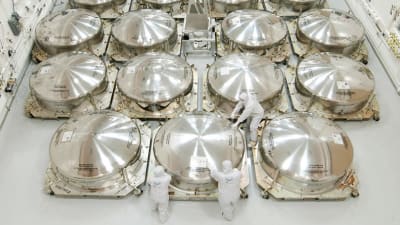
Applications include terahertz medical imaging and communications.
Briefs: Imaging
This system provides low-cost, reliable 3D LiDAR images in nearly any lighting condition.

Briefs: Materials
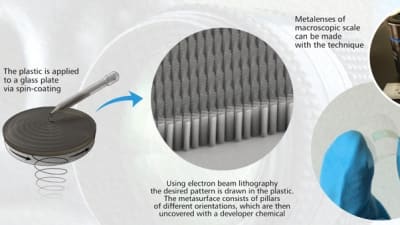
Ultra-thin and flexible metalenses could replace traditional camera lenses.
Briefs: Nanotechnology
The improved rectennas could operate low-power devices such as temperature sensors.

Briefs: Electronics & Computers
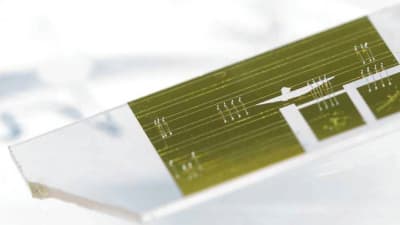
This device fits on a computer chip but can analyze infrared light in the same way as a conventional spectrometer.
Briefs: Wearables
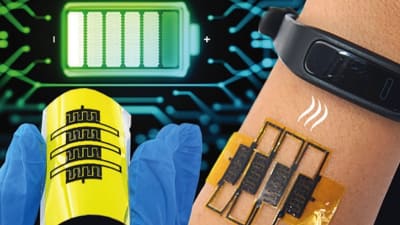
A stretchable system can harvest energy from human breathing and motion.
Blog: Materials
Inspired by the squid's color-changing chromatophore, Rutgers engineers set out to create an artificial one.

INSIDER: Photonics/Optics
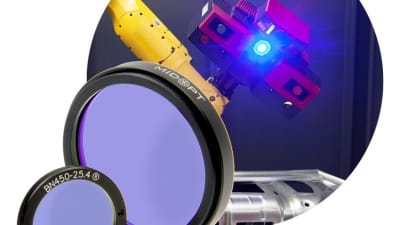
Bandpass Filters
MidOpt® (Palatine, IL) introduced the BP450 Indigo Bandpass and the BN450 Narrow Indigo Bandpass, two new filters designed for multi-application use. The BP450 enhances the viewing of subjects illuminated by a...
INSIDER: Sensors/Data Acquisition
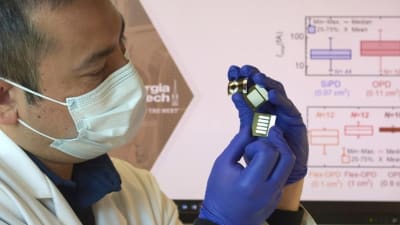
The performance of flexible large-area organic photodiodes has advanced to the point that they can now offer advantages over conventional silicon photodiode...
INSIDER: Sensors/Data Acquisition
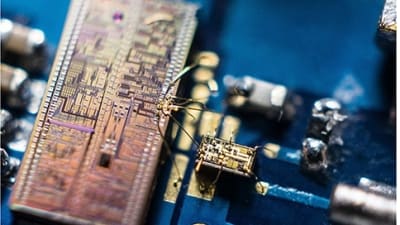
Researchers from the University of Bristol’s Quantum Engineering Technology Labs (QET Labs) and Université Côte d‘Azur have made a new miniaturized light...
INSIDER: Imaging
A phenomenon first detected in the solar wind may help solve a long-standing mystery about the sun: why the solar atmosphere is millions of degrees hotter than the...

Special Reports: Photonics/Optics
Optics & Photonics Innovations - January 2021
An ultrafast camera that takes up to one trillion pictures per second...using light alone to levitate objects and propel spacecraft...the groundbreaking optics enabling the world's most powerful...Briefs: Semiconductors & ICs
Computations are done solely with beams of light.

Products: Electronics & Computers
Radar sensors, cameras, RF processing systems, and more.

Briefs: Test & Measurement
This simple and inexpensive design achieves high-quality ozone measurements.
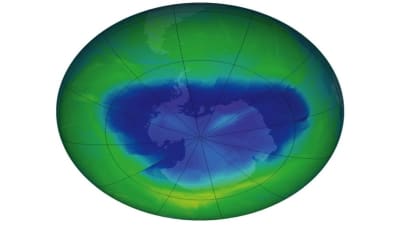
Briefs: Photonics/Optics
The system can recharge the internal battery of devices without invasive surgery or risky penetrative procedures.

Facility Focus: AR/AI
Stanford University’s School of Engineering has been at the forefront of innovation for nearly a century

INSIDER: Manufacturing & Prototyping
Researchers at the University of Nottingham have cracked the conundrum of how to use inks to 3D-print novel electronic devices with useful properties, such as an ability...

Blog: Imaging
Optical interference filters are critical to the overall performance of machine vision applications. So how do you select the right one?

Briefs: Photonics/Optics
Applications include characterizing additively manufactured components and baggage screening.

Briefs: Unmanned Systems
Any high-performance communication systems operating in RF or optical frequencies may benefit from this system.
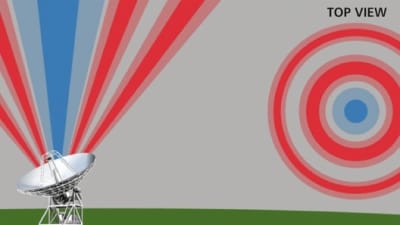
Briefs: Materials
Invisible displays on walls and windows would be bright when turned on but invisible when turned off.

Articles: Photonics/Optics
Compact lasers now offer precise colors.
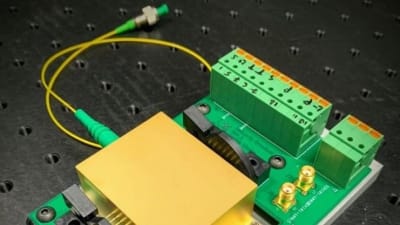
Briefs: Transportation
The camera collects the spatial and spectral information required for self-driving cars, machine vision, corrosion detection, and other applications.
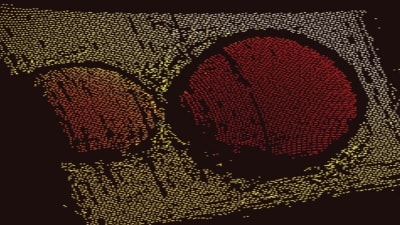
Briefs: Photonics/Optics
This technique for optical data transmission from satellites uses laser arrays to provide fine pointing capability.

Q&A: Sensors/Data Acquisition
See how Dr. Andrei Kolmakov and his team are using low-energy electron beams to 3D-print tiny gel structures in liquids.

Briefs: Materials
Method Tests Microscopic Aeronautical Materials
This process breaks the temperature barrier in small-scale materials testing.
Briefs: Photonics/Optics
This subsystem is used in free-space optical communications and fiber-optic communications.
INSIDER Product: Photonics/Optics
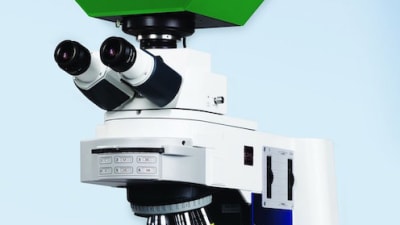
Spectrophotometer for a Microscope
CRAIC Technologies (San Dimas, CA) has introduced the 508 PV™ UV-visible-NIR spectrophotometer for your microscope. The 508 Perfect Vision™ is designed to be added to an open photoport of a...
Top Stories
 Blog: Robotics, Automation & Control
Aerial Microrobots That Can Match a Bumblebee's Speed
 Blog: Electronics & Computers

Turning Edible Fungi into Organic Memristors
 Blog: Manufacturing & Prototyping

Revolutionizing the Production of Semiconductor Chips
 News: Energy

 INSIDER: Electronics & Computers

World’s Smallest Programmable, Autonomous Robots
 INSIDER: Manufacturing & Prototyping

Webcasts
 On-Demand Webinars: Power

E/E Architecture Redefined: Building Smarter, Safer, and Scalable Vehicles
 Upcoming Webinars: Energy

Hydrogen Engines Are Heating Up for Heavy Duty
 Upcoming Webinars: Electronics & Computers

Advantages of Smart Power Distribution Unit Design for Automotive...
 Upcoming Webinars: Automotive

Quiet, Please: NVH Improvement Opportunities in the Early Design...
 Upcoming Webinars: Power

A FREE Two-Day Event Dedicated to Connected Mobility
 Podcasts: Defense

How Sift's Unified Observability Platform Accelerates Drone Innovation