Explore expert resources, technical briefs, and essential news for design engineers working with fiber optics used in a wide range of telecommunication and medical solutions.
Researchers have successfully demonstrated the U.K.’s first long-distance ultra-secure transfer of data over a quantum communications network, including the U.K.’s first long-distance quantum-secured video call. Read on to learn more.
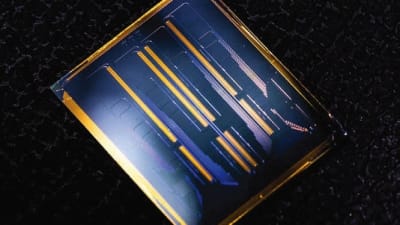
A few years ago, researchers in Michal Lipson’s Columbia Engineering lab noticed something remarkable. They were working on a project to design high-power chips that could...
See the new products, including the VITA 93 QMC Mezzanine Modules from Acromag; fiber-optic sensors of the optoCONTROL CLS1000 series from Micro-Epsilon; AW-Lake's TG Series Gas Turbine Flow Meter; NewTek Sensors' advanced Linear Variable Differential Transformer specifically designed to withstand the extreme environments found in next-gen molten salt reactors; and more.
Known as FOSS (for fiber optic sensing system), NASA’s technology portfolio combines advanced sensors and innovative algorithms into a robust package that accurately and cost-effectively monitors a host of critical parameters in real time. Read on to learn more.
As fast as modern electronics have become, they could be much faster if their operations were based on light, rather than electricity. Fiber optic cables already transport information at the speed of light, but to do computations on that information without translating it back to electric signals will require a host of new optical components. Researchers have now developed such a device. Read on to learn more.
How advanced packaging is transforming mission‐critical electronics…a new era of high‐speed data transmission in defense…fully rugged PCs provide a decisive edge on the battlefield. Read about...
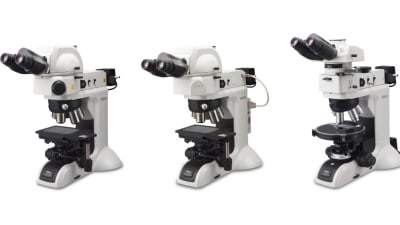
See what's new on the market, including the ZE2531 Isolation Transformer from Coilcraft; Nikon Metrology's three new ECLIPSE microscope models, the LV100NDA LED, LV100ND LED, and LV100N POL LED; Würth Elektronik's expanded STAR-TEC and STAR-TEC LFS snap ferrite families; Walter's new milling grade, PVD-coated Tiger·tec® Gold WSM36G; and more.
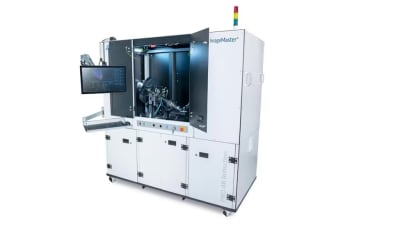
See the new products, including TRIOPTICS' ImageMaster® PRO AR Reflection waveguide testing solution; TOP-TICA’s Clock Laser System; Aerotech Inc.'s HexGen® HEX150-125HL Miniature Hexapod, a six degree-of-freedom precision positioning system; Teledyne e2v's Optimom™ 5D turnkey imaging module; Coherent Corp.'s set of pluggable optical transceivers optimized for use in data centers that incorporate optical circuit switches; and more.
Metabolic imaging is a noninvasive method that enables clinicians and scientists to study living cells using laser light, which can help them assess disease progression and treatment responses. But light scatters when it shines into biological tissue, limiting how deeply it can penetrate and hampering the resolution of captured images. Now, MIT researchers have developed a new technique that more than doubles the usual depth limit of metabolic imaging. Read on to learn more.
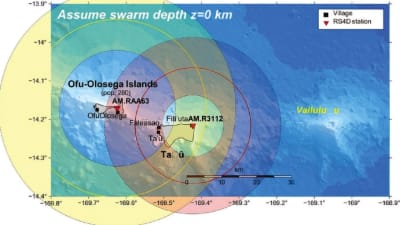
Residents of the Manu’a Islands in American Samoa were feeling the earth shake, raising concerns of an imminent volcanic eruption or tsunami. Scientists from the U.S. Geological Survey used machine learning and a technique called template matching on shaking data recorded from a single seismic sensor located 250 kilometers away to locate the source of the shaking. Read on to learn more.
Researchers have successfully developed a wide-bandwidth, low-polarization semiconductor optical amplifier based on tensile-strained quantum wells. The study, published in the journal Sensors, presents a significant advancement in optical communication technology, addressing the growing demand for higher bandwidth and lower polarization sensitivity. Read on to learn more.
In a paper published in the journal Nature Nanotechnology, a team of Caltech engineers reports building a metasurface patterned with miniscule tunable antennas capable of reflecting an incoming beam of optical light to create many sidebands, or channels, of different optical frequencies. Read on to learn more.
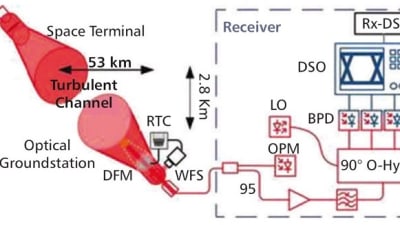
Researchers have achieved data rates as high as 424Gbit/s across a 53-km turbulent free-space optical link using plasmonic modulators — devices that uses special light waves called surface plasmon polaritons to control and change optical signals. The new research lays the groundwork for high-speed optical communication links that transmit data over open air or space. Read on to learn more.
See what's in the product showcase, including VSD’s innovative SV-2000 Flex; Keysight Technologies' N7718C Optical Reference Transmitter; MKS Instruments' Newport™ TLS260B Tunable Light Sources; Analog Modules' Picosecond Pulsed Seed Laser Diode Driver, Model 766A; and more.
Researchers at Chalmers University of Technology have developed an optical amplifier that they expect will revolutionize both space and fiber communication.
The science of transmitting data, voice, and images by the passage of light through thin, transparent fibers, fiber optics play a pivotal role in our daily lives. How much do you know about fiber optics? Find out with this quiz.
See the new products, including TRIOPTICS’ ATS alignment turning stations, VIAVI Solutions' expanded fiber optic test solutions portfolio, LumeDEL's fiberoptic collimating lenses, Teledyne FLIR's Neutrino LC OGI optical gas imaging camera module, and IDS' Sony sensor.
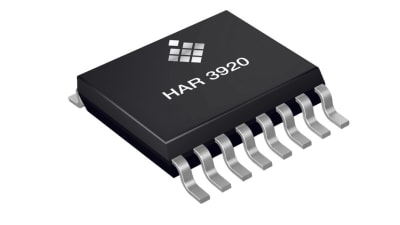
See the new products, including TDK-Micronas' further extended Micronas 3D HAL® position sensor family, AW-Lake’s TRICOR Coriolis Flow Meters, Kistler's new accelerometer series 8740A and 8788A, Melexis' MLX90830, and more.
RMIT University’s Arnan Mitchell and University of Adelaide’s Dr. Andy Boes led an international team to review lithium niobate’s capabilities and potential applications in the journal Science. The team is working to make navigation systems that help rovers drive on the Moon — where GPS is unable to work — later this decade.
An international team of researchers reports on a compact high-brightness mid-IR-driven source combining a gas-filled anti-resonant-ring photonic crystal fiber with a novel nonlinear-crystal. The tabletop source provides a seven-octave coherent spectrum from 340 nm–40,000 nm with spectral brightness 2–5 orders of magnitude higher than one of the brightest synchrotron facilities.
Optical parametric oscillator (OPO) lasers have long been utilized in sophisticated test and measurement applications such as mass spectrometry, photoacoustic imaging, and spectroscopy.
Scientists led by Nanyang Technological University, Singapore (NTU Singapore) have developed a novel method to produce intense and ultra-fast lasers that holds promise for making precise devices that can speed up how quickly trace amounts of pollutants and hazardous gases can be sniffed out.
Scientists from the Institute of Geophysics at ETH Zurich, working together with the Swiss Federal Institute of Metrology (METAS), have found an inexpensive method that enables accurate earthquake measurements even on the ocean floor and in less developed countries.
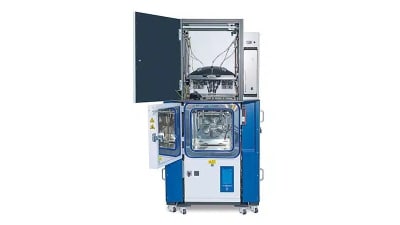
See the new products, including CamTest TempControl from TRIOPTICS,
Semtech Corporation's Transimpedance Amplifiers, Kaman Precision Products' ThreadChecker, Keysight Technologies' oscilloscopes, and more.
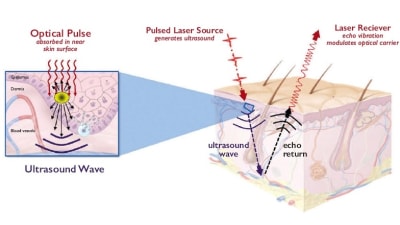
Researchers from MIT Lincoln Laboratory and their collaborators at the Massachusetts General Hospital Center for Ultrasound Research and Translation have developed a new medical imaging device: the Noncontact Laser Ultrasound (NCLUS).
Computing is at an inflection point. Moore’s Law, which predicts that the number of transistors on an electronic chip will double each year, is slowing down...
Researchers have demonstrated an energy-efficient method for transferring larger quantities of data over the fiber-optic cables that connect the nodes. This new technology improves on previous attempts to transmit multiple signals simultaneously over the same fiber-optic cables.