Stories
0
5520
30
Blog: Manufacturing & Prototyping
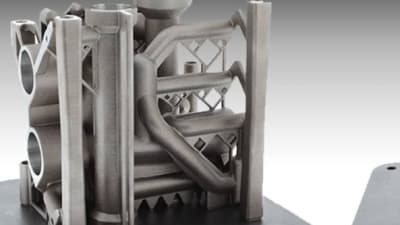
How does testing a metal 3D-printed part compare to testing a casted one? That's the elephant in the room, says industry pro Kevin Brigden.
Question of the Week: Energy
Will Rain Become a Viable Energy Source?
Our lead INSIDER story today demonstrated the power of a droplet energy generator – specifically the system’s ability to light up 100 LEDs with just a small amount of water.
Blog: Energy
An energy breakthrough from the City University of Hong Kong finds power in a single drop of water – up to 140 volts, in fact.

Question of the Week: Electronics & Computers
Will Cooling Coatings Catch On?
This month’s Tech Briefs featured a potential alternative to the air conditioner: A painted-on polymer coating that can cool down a building.
Blog: Robotics, Automation & Control
See what the SuperCam will do when it arrives on Mars in 2021.

Question of the Week: Connectivity
Do the 5G Benefits Outweigh the Risks?
A feature article in this month’s Tech Briefs explored how the fifth-generation mobile network known as 5G will support the creation of increasingly “smart” factories – ones that allow manufacturers to further improve factory automation, human/machine interfaces, and mobility.
Blog: Aerospace
“We’re analyzing rocks from space, atom by atom,” says researcher Jennika Greer.
INSIDER: Medical
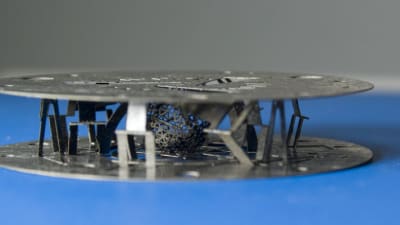
A bulk-machined “Pop-Up” MEMS process was developed for creating mesoscale machines up to several centimeters in dimension.
INSIDER: Robotics, Automation & Control
Rutgers University engineers have developed an automated way to produce polymers, making it much easier to create advanced materials aimed at improving human health. While a human researcher may...
Blog: Sensors/Data Acquisition
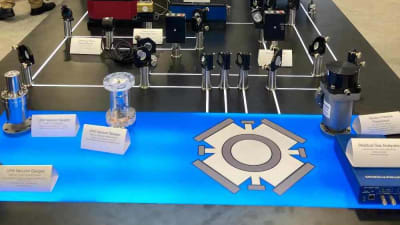
Editor Bruce A. Bennett shares his observations from SPIE Photonics West, including the emergence of LiDAR.
Blog: Photonics/Optics
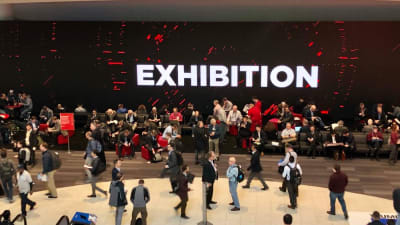
See what caught Bruce A. Bennett's eye during Day 1 of Photonics West 2020 in San Francisco.
Question of the Week: Electronics & Computers
In the Near Future, Will Computers Use Light Instead of Electricity?
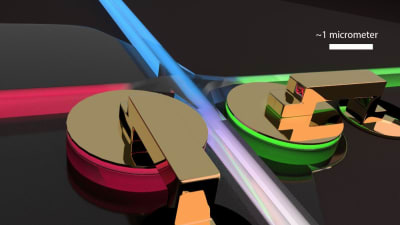
This month in Tech Briefs: Researchers from the National Institute of Standards and Technology have developed an optical switch that routes light from one computer chip to another in just 20 billionths of a second — faster than any other similar device.
Blog: Software
Researchers from the University of Illinois are looking at all the different ways to create a non-pneumatic automotive tire.

INSIDER: Communications
A team of engineers at University of Illinois at Urbana-Champaign has boosted the performance of its previously developed 3D inductor technology by adding as much as three orders...

INSIDER: Electronics & Computers
Nagoya University scientists have succeeded in designing a laser diode that emits deep-ultraviolet light. It emits the world's shortest lasing wavelength, at 271.8 nanometers, under pulsed electric current...

INSIDER: Electronics & Computers
Scientists at Linköping University (Linköping, Sweden) have described a method to manufacture transistors using gallium nitride and aluminum nitride that have the ability to withstand voltages as high...

INSIDER: Sensors/Data Acquisition
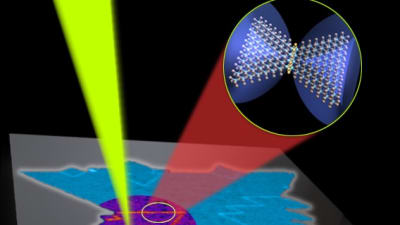
To further shrink electronic devices and to lower energy consumption, the semiconductor industry is interested in using 2D materials, but manufacturers need a quick...
Technology Leaders: Mechanical & Fluid Systems
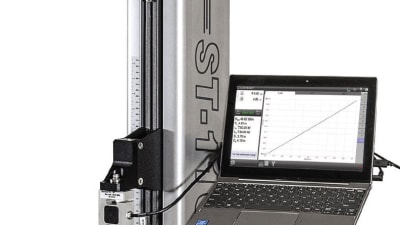
Learn about the latest measurement technology designed to ensure accurate testing of helical compression and extension springs.
NASA Spinoff: Sensors/Data Acquisition
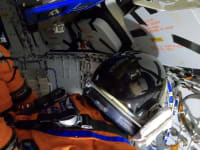
Research in astronaut monitoring leads to virtual reality spinoffs.

Briefs: Manufacturing & Prototyping
3D Printing Technique Produces “Living” 4D Materials
3D/4D printing is merged with a chemical process to produce “living” resin, which has potential for recycling and biomedicine.
Briefs: Imaging
This system places virtual objects within real-world backgrounds on cellphone screens and lets people interact with those objects by hand as if they were really there.

Briefs: Semiconductors & ICs
The functional transistors are integrated with ferroelectric RAM.

Briefs: Materials
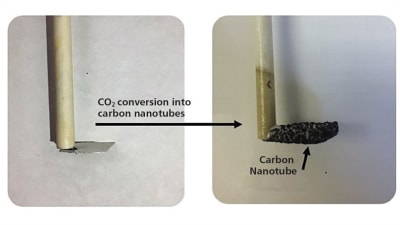
This process turns carbon dioxide into carbon nanotubes with small diameters.
Briefs: Data Acquisition
The switch is a major new step toward building a computer that uses light instead of electricity to process information.
Briefs: Transportation
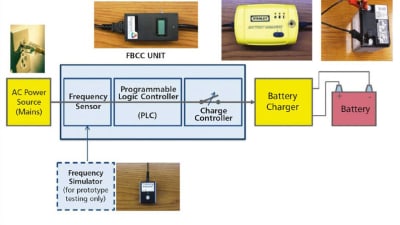
This controller minimizes the burden on the power grid.
Briefs: Test & Measurement
This system autonomously prepares samples for online automated analysis.

Briefs: Mechanical & Fluid Systems
Wraparound Self-Structuring Leaky-Wave Antenna (WSS-LWA)
This system has applications in the smart grid and military.
Briefs: Materials
Bomb Detection Method Detects Peroxide-Based Explosives
The ultra-fast method analyzes a wider range of materials than current thermal-based detection systems.
Top Stories
 Blog: Sensors/Data Acquisition

Going for Gold in Winter Olympic Curling
 Blog: Energy

Batteries that Can Withstand the Cold
 Blog: Lighting

A Stretchable OLED that Can Maintain Most of Its Luminescence
 INSIDER: Design

Advancing All-Solid-State Batteries
 Blog: Data Acquisition

 Blog: Materials

Webcasts
 On-Demand Webinars: Defense

Cooling a New Generation of Aerospace and Defense Embedded Computing...
 Upcoming Webinars: Software

Beyond AI-Copy-Paste Engineering: Advanced AI-Integration Success...
 Upcoming Webinars: Automotive

Battery Abuse Testing: Pushing to Failure
 Upcoming Webinars: Power

A FREE Two-Day Event Dedicated to Connected Mobility
 Upcoming Webinars: RF & Microwave Electronics

Choosing the Right N-Port Strategy: Multiport VNAs vs. Switch...
 Upcoming Webinars: AR/AI