Stories
0
4590
30
Briefs: Manufacturing & Prototyping
The polyimide composites have uses in aerospace, automotive, construction, electronics, mechanical systems, and industrial machinery.

Briefs: Manufacturing & Prototyping
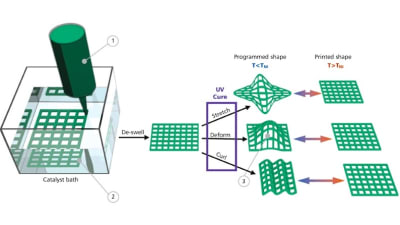
A new method manufactures complex shapeshifters for soft robots and biomedical implants.
Briefs: Materials
Applications include terahertz medical imaging and communications.
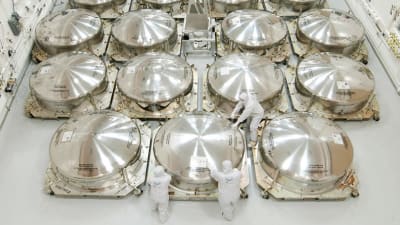
NASA Spinoff: Aerospace
With a technique first used at NASA, researchers are making glasses that can improve your concentration.

Briefs: Materials
This rapid and cost-effective technique yields a uniform etched surface with 99.5 percent emissivity.

5 Ws: Materials
The battery can be used in flexible, stretchable electronics for wearables as well as soft robotics.

Briefs: Materials
Material for Wearable Biosensors
Electrospinning is used to make porous silicone that allows sweat to evaporate.
Briefs: Materials
This system treats light-responsive disorders or deficits such as eating disorders, sleep problems, hormone-sensitive cancers, and cardiovascular disorders.

Briefs: Manufacturing & Prototyping
A new method of linking materials with unique mechanical properties could enable robots made of robots.

Briefs: Energy
A new machine learning algorithm could make smartphones charge faster and increase the time between charges for electric vehicles.

Briefs: Photonics/Optics
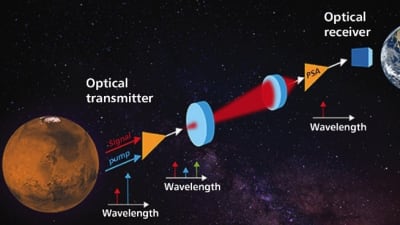
This concept could help break through the present-day data-return bottleneck in deep space missions.
Q&A: Energy
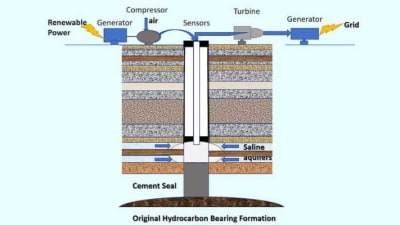
USC researchers found a way to use idle oil and gas wells for energy storage.
Products: Electronics & Computers
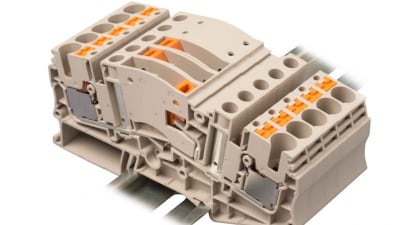
Disconnect terminal blocks, oscillioscope probes, test modules, and more.
Application Briefs: Materials
“The disruption promised by Industry 4.0 has already begun,” says Jason Melcher from the aerospace manufacturing company Ingersoll.

Briefs: Materials
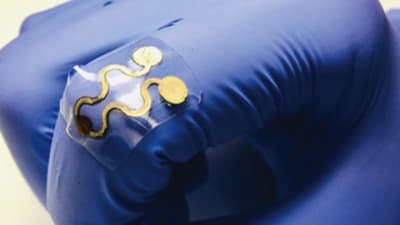
The stretchable sensor has applications in environmental monitoring and healthcare.
Briefs: Sensors/Data Acquisition
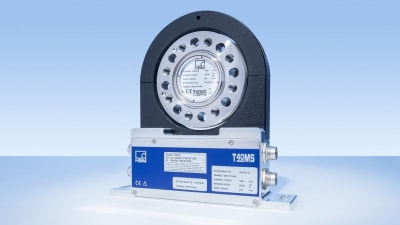
This optical-based device measures position, velocity, and torque.

Briefs: Sensors/Data Acquisition
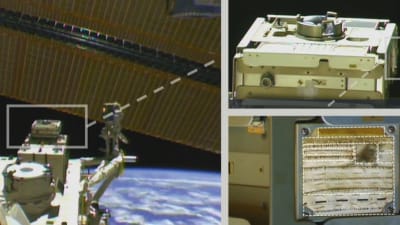
A smart fiber being tested on the International Space Station could be used to develop space dust telescopes and allow astronauts to feel through their pressurized suits.
Briefs: Photonics/Optics
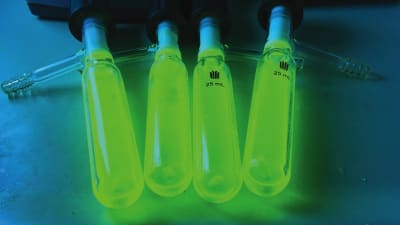
Compared to a LED, the omnidirectional laser light is much brighter and better defined.

Briefs: Sensors/Data Acquisition
Applications include detection of explosives, navigation, and aerospace altitude sensing.

Briefs: Lighting
The material could enable cheaper and more environmentally friendly displays and large-area lighting.
Products: Manufacturing & Prototyping
Industrial robots, motor disconnect switches, position sensors, and more.
Articles: Software
Once confined to the role of machine visualization, modern unified HMI software now delivers better user interfaces, containerization, and remote device management.

Briefs: Materials
A technique enables manufacturing of minuscule robots by interlocking multiple materials in a complex way.

Application Briefs: Motion Control
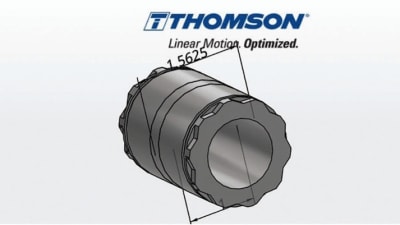
New online tools — coupled with online libraries of pre-selected and tested component specifications — simplify machine design.
Briefs: Wearables
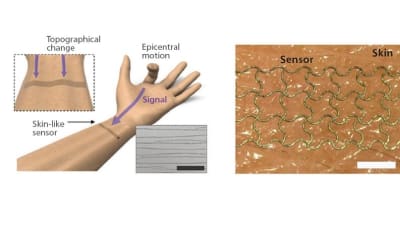
This system can track the motion of the entire body with a small sensory network.
Briefs: Manufacturing & Prototyping
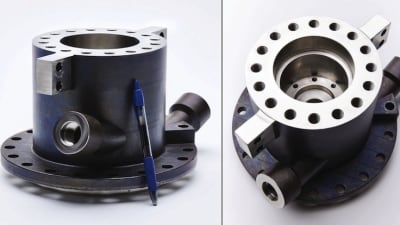
The integrated tool eliminates the need for manual operators or additional custom fixtures.

Articles: Motion Control
When specifying servo motors for applications like a new machine or CNC retrofit, there are many considerations regarding servo motor performance and sizing.

Articles: Mechanical & Fluid Systems
Electronic Device Manufacturers Shouldn’t Fear Custom Connector Solutions — They Should Embrace Them
As 5G arrives, devices will need to expand I/O counts at the controller, as well as overall networking capabilities.

Application Briefs: Mechanical & Fluid Systems
See why Mohawk Innovative Technology, Inc. is excited for the potential of additive manufacturing.
Top Stories
 Blog: Power

My Opinion: We Need More Power Soon — Is Nuclear the Answer?
 Blog: AR/AI

Aerial Microrobots That Can Match a Bumblebee's Speed
 News: Energy

 Blog: Electronics & Computers

Turning Edible Fungi into Organic Memristors
 Blog: Robotics, Automation & Control

Microscopic Swimming Machines that Can Sense, Respond to Surroundings
 INSIDER: Sensors/Data Acquisition

Webcasts
 Upcoming Webinars: Power

Hydrogen Engines Are Heating Up for Heavy Duty
 Upcoming Webinars: Automotive

Advantages of Smart Power Distribution Unit Design for Automotive...
 Upcoming Webinars: Automotive

Quiet, Please: NVH Improvement Opportunities in the Early Design...
 Upcoming Webinars: Test & Measurement

From Spreadsheets to Insights: Fast Data Analysis Without Complex...
 Upcoming Webinars: Automotive

Battery Abuse Testing: Pushing to Failure
 Upcoming Webinars: Connectivity