

All-solid-state electrochemical power cells have been fabricated and tested in a continuing effort to develop batteries for instruments for use in environments as hot as 500 °C. Batteries of this type are needed for exploration of Venus, and could be used on Earth for such applications as measuring physical and chemical conditions in geothermal and oil wells, processing furnaces, and combustion engines.
In the state-of-the-art predecessors of the present solid-state power cells, fully packaged molten eutectic salts are used as electrolytes. The molten-salt-based cells can be susceptible to significant amounts of self-discharge and corrosion when used for extended times at elevated temperatures. In contrast, all-solid-state cells such as the present ones are expected to be capable of operating for many days at temperatures up to 500 °C, without significant self-discharge.
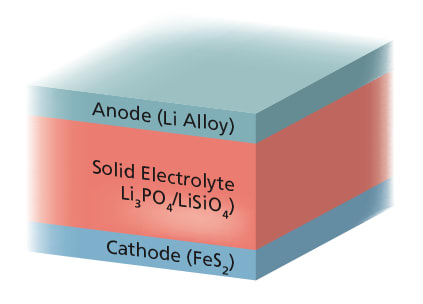
In one test of a cell of this type, a discharge rate of about 1 mA per gram of cathode material was sustained for 72 hours at a temperature of about 460 °C. This is about three times the discharge rate required to support some of the longer duration Venus-exploration mission scenarios.
This work was done by Jay Whitacre and William West of Caltech for NASA's Jet Propulsion Laboratory.
NPO-44396
This Brief includes a Technical Support Package (TSP).
Solid-State High-Temperature Power Cells
(reference NPO-44396) is currently available for download from the TSP library.
Don't have an account?
Overview
The document is a Technical Support Package from NASA's Jet Propulsion Laboratory (JPL) focused on Solid-State High-Temperature Power Cells, specifically designed for use in extreme environments, such as the surface of Venus. The primary goal is to develop a primary battery capable of providing energy for over two months under the harsh ambient conditions found on Venus, which include high temperatures and pressures.
The document outlines two main approaches to achieve high energy density in lithium-based battery systems. The first approach involves using thermal battery chemistry, which incorporates a molten salt electrolyte paired with a high energy density cathode. This system is well understood and can achieve high power densities, although it may face challenges related to packaging and potential fluid or gas issues at elevated temperatures. Additionally, there is a concern about the loss of specific capacity due to the need for robust packaging.
The second approach focuses on the use of novel all solid-state electrolyte (SSE) materials. This method allows for the creation of monolithic, free-standing battery structures that minimize packaging concerns. However, these solid-state systems may be more rate-limited compared to molten salt-based systems. Research and development for both approaches are being conducted at JPL.
The document also includes data on AC impedance from previous studies, indicating an activation energy of 0.51 eV and demonstrating that lithium-ion conductivity improves significantly at temperatures above 400°C. This is crucial for the performance of batteries intended for high-temperature applications.
Key considerations for the battery design include minimizing packaging mass, ensuring physical robustness, and preventing self-discharge before the battery reaches its destination. The emphasis is on long discharge times rather than rapid discharge, which aligns with the mission requirements for sustained energy delivery in extreme conditions.
Overall, the document highlights the innovative efforts at JPL to advance battery technology for space exploration, particularly for missions to Venus, where traditional battery systems would fail due to the extreme environment. The research aims to provide reliable and efficient power solutions that can withstand the challenges posed by such hostile conditions.











