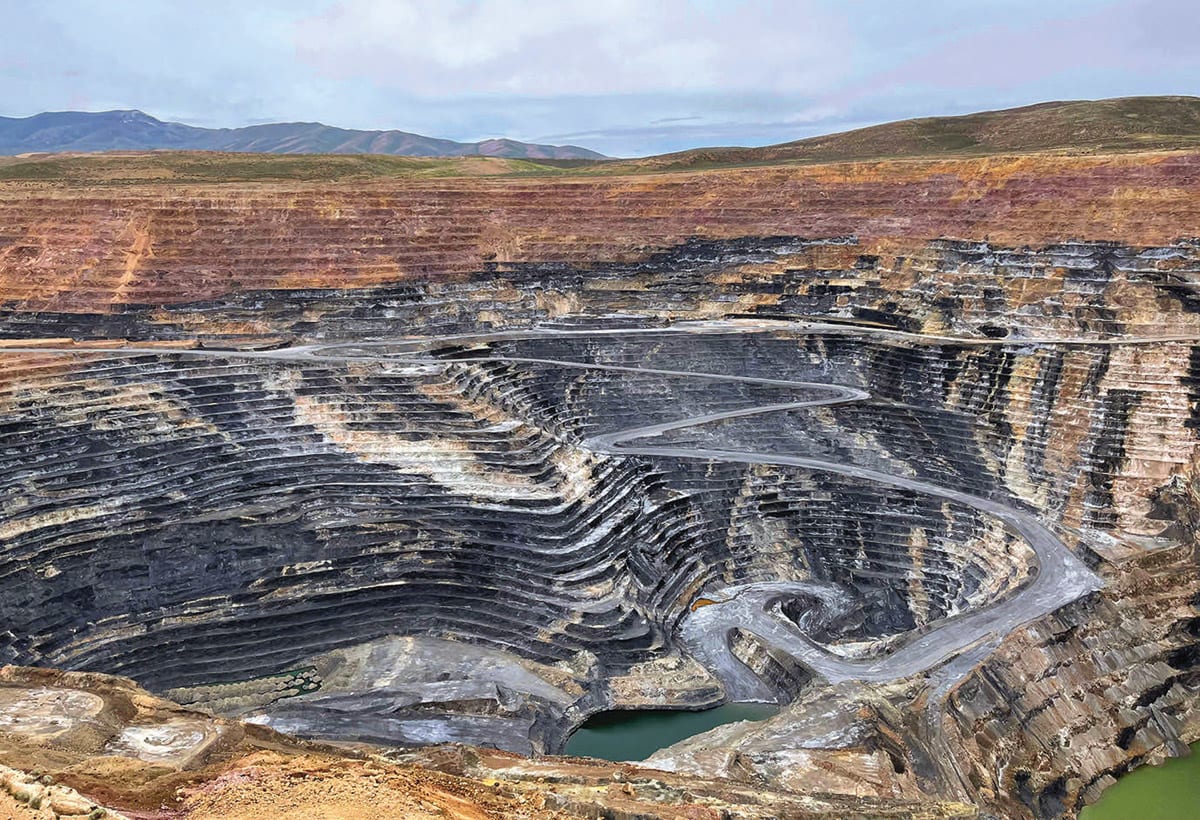
In Penn’s Clean Energy Conversions Lab, researcher Peter Psarras and colleagues are repurposing waste from industrial mines, storing carbon pulled from the atmosphere into newly formed rock. The team sees great environmental potential in mine tailings, the sand and sludge left behind after the sought-after ore gets removed. With samples in the lab, they’re trying to determine just how much calcium and magnesium each contains, how to best carbonate it with CO2, how and where they can store the result, and whether the process is scalable.
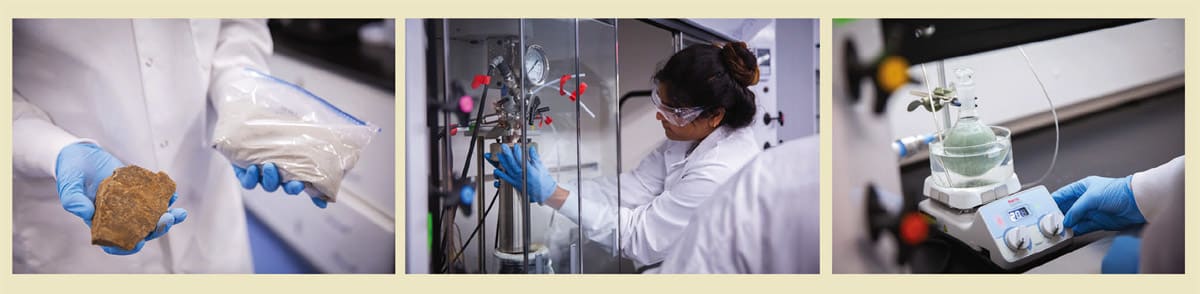
At the highest level, these researchers are shepherding the material from its starting point — rock at the mine — to a sand-like substance, then into a solution, and back to rock. Many intricate steps in between begin by scrutinizing the original material.
“When we receive the tailings, we first test for a couple things. We look for inorganic carbon, so are the tailings taking CO2 out of the air naturally? We don’t expect that to happen, but we want a baseline of what carbon was already in there,” Psarras said. They also check the rock’s size, to determine whether they’ll have to grind it down to the tiny particles they need, and analyze its chemical composition, looking for calcium and magnesium, most importantly, but also other scarcer metals like lithium, cobalt, and nickel.
Here, calcium and magnesium matter most because the process requires alkalinity, which neutralizes the acidic carbon in a reaction that stores CO2 in mineral form. Because the mineral diversity of tailings changes by site, this is a crucial set of steps in the process.
Most people understand carbonation as it relates to fizzy drinks; add carbon dioxide to water and it becomes seltzer. In this process, the team adds CO2 to a pressurized vessel that contains the calcium- or magnesium-rich liquid they created in the previous step. That vessel then goes into a machine that heats and mixes what’s within. The middle product is a solution and when CO2 is pumped into it you get a solid. Beyond keeping carbon out of the atmosphere, that newly formed carbon-storing rock has many potential applications.
One Nevada mine is acting as a test case to help the researchers better understand the true cost of this process and what a business model might entail. Based on the mine tailings analysis they’ve done, the researchers are also creating a database to track how well their technology works for different materials, an attempt at greater standardization. According to them, these technologies will eventually be able to address the critical mineral needs and the carbon management needs that are two of the most pressing environmental and technological challenges of our time.
It’s an exciting time to work in the carbon capture space, said Psarras, adding that their technology could be ready to scale within the next two years and this work could eventually remove millions of tons of CO2 from the atmosphere.
For more information, contact Michelle W. Berger at