

Inside this issue
Overview
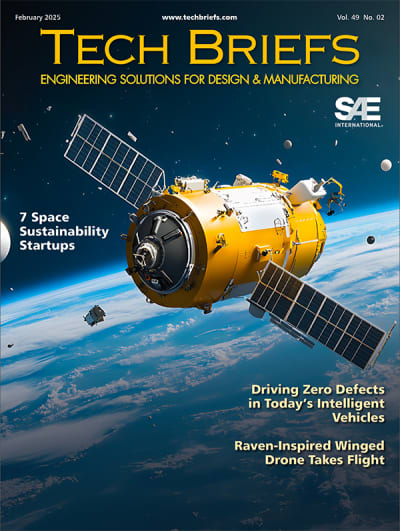
The February 2025 issue of Tech Briefs presents a compelling exploration of cutting-edge technologies and innovations across various fields, with a particular focus on intelligent vehicles and space sustainability. This edition is packed with insightful articles, features, and tech briefs that highlight the latest advancements and trends shaping the future of engineering and technology.
Key Features:
-
Driving Zero Defects in Intelligent Vehicles: This feature delves into the challenges and solutions associated with ensuring the reliability and safety of modern vehicles. As the automotive industry increasingly integrates advanced technologies, the need for zero-defect manufacturing processes becomes paramount. The article discusses innovative approaches to quality control and defect prevention, emphasizing the importance of precision engineering in the production of intelligent vehicles.
-
Raven-Inspired Winged Drone: A fascinating article showcases a new drone design inspired by the flight mechanics of ravens. This bio-inspired approach aims to enhance aerial maneuverability and efficiency. The drone's unique wing structure allows for improved lift and control, making it suitable for various applications, from surveillance to environmental monitoring.
-
Seven Space Sustainability Startups: In an era where space debris poses significant risks to satellites and space missions, this feature highlights seven startups dedicated to sustainability in space. These companies are developing innovative technologies and strategies to mitigate space debris, ensuring the long-term viability of space exploration and satellite operations. The article emphasizes the importance of responsible practices in the rapidly growing space industry.
Tech Briefs on Materials and Coatings: The issue includes several tech briefs that explore advancements in materials science. Notable topics include:
- Nanostitches for Lighter, Tougher Composite Materials: This brief discusses the development of nanostructured materials that enhance the strength-to-weight ratio of composites, making them ideal for aerospace and automotive applications.
- Stretching Diamond for Better Quantum Bits: Researchers are exploring new methods to manipulate diamond structures to improve quantum computing capabilities, highlighting the intersection of materials science and quantum technology.
- New Glass Innovations: A focus on the development of damage-resistant and environmentally friendly glass materials showcases the ongoing efforts to create sustainable and durable products for various industries.
-
Manufacturing and Prototyping Innovations: The magazine features articles on the latest trends in manufacturing, including:
- Building Quantum Computers of the Future: This article discusses the challenges and breakthroughs in quantum computing, emphasizing the need for advanced manufacturing techniques to produce quantum components.
- Real-Time Detection of Additive Manufacturing Defects: Innovations in monitoring and quality assurance during 3D printing processes are explored, showcasing how real-time data can enhance production quality.
-
Optics and Photonics: The issue also covers advancements in optics, including:
- Enhancing Optical Storage Media: A discussion on new techniques to improve data storage technologies, moving beyond traditional methods to increase efficiency and capacity.
- Levitating Objects with Light: This intriguing article explores the potential applications of optical levitation in various fields, from materials handling to scientific research.
-
Mechanical and Fluid Systems: Innovations in mechanical systems are highlighted, including:
- Ocean Platform Motion Control: This article discusses new technologies for stabilizing ocean platforms, which are crucial for offshore energy production and research.
- Cryogenic Technologies: The development of cryogenic oxygen storage modules (COSM) is explored, emphasizing their importance in space missions and other applications requiring efficient storage solutions.
-
Software Innovations: The magazine features advancements in software, including:
- AI Discoveries in Microstructures: A look at how artificial intelligence is being used to discover new microstructures that enhance material properties, showcasing the synergy between AI and materials science.
- Autonomous Vehicle Safety: A new approach to ensuring the safety of autonomous vehicles is discussed, highlighting the role of software in enhancing vehicle reliability and user trust.
Departments and Additional Content: The issue includes various departments such as Q&A, tech briefs, and an advertisers index, providing readers with a comprehensive view of the current landscape in technology and engineering. Additionally, upcoming webinars on topics like 3D printing and custom mold designs are announced, inviting readers to engage further with the content.
In summary, the February 2025 issue of Tech Briefs is a rich resource for professionals and enthusiasts in the fields of engineering and technology. It covers a wide array of topics, from intelligent vehicles and space sustainability to materials science and software innovations, reflecting the dynamic and rapidly evolving nature of these industries. The magazine not only highlights current advancements but also encourages readers to consider the implications of these technologies for the future.
Features
-
Application Briefs
-
Articles
11 7 Space Sustainability Startups
16 A Dicing Proposition: Driving Zero Defects in Today’s Intelligent Vehicles
-
Technology & Society
Tech Briefs
-
Manufacturing & Prototyping
25 Building Quantum Computers of the Future
26 New AR Glasses Use AI-Enhanced Holographic Imaging
-
Materials
20 Nanostitches for Lighter, Tougher Composite Materials
22 A New Way to Stretch Diamond for Better Quantum Bits
-
Mechanics & Machinery
32 Ocean Platform Motion Control
-
Photonics/Optics
29 Say Goodbye to the Dots and Dashes to Enhance Optical Storage Media
30 Levitating Objects with Light











