As artificial intelligence (AI) and high-performance computing (HPC) workloads continue to surge, traditional semiconductor technology is reaching its limits. In addition to needing more pure computing power, AI requires more electricity than the world can provide. AI data centers alone are expected to consume up to 17 percent of U.S. electricity by 2030(1) more than triple the amount used in 2023, much due to generative AI. A query to ChatGPT requires nearly 10 times as much electricity as a regular Google search.(2) This raises urgent concerns about sustainability, especially as Goldman Sachs has forecasted a 160 percent increase in data center electricity usage by 2030.(2)
In response, major tech companies are desperately looking for more electricity at extreme measures and costs. In 2023, the top 5 hyperscalers in the U.S. spent $105 billion on AI servers, a figure that is expected to rise to $187 billion in 2028.(3) At the same time, some companies are pivoting to nuclear energy, liquid cooling, waste-heat recycling and even building data centers underwater to sustain AI’s growth. These unconventional solutions to address power and cooling challenges reinforce the need to ask a different question: How can AI computing be made more efficient at its core?
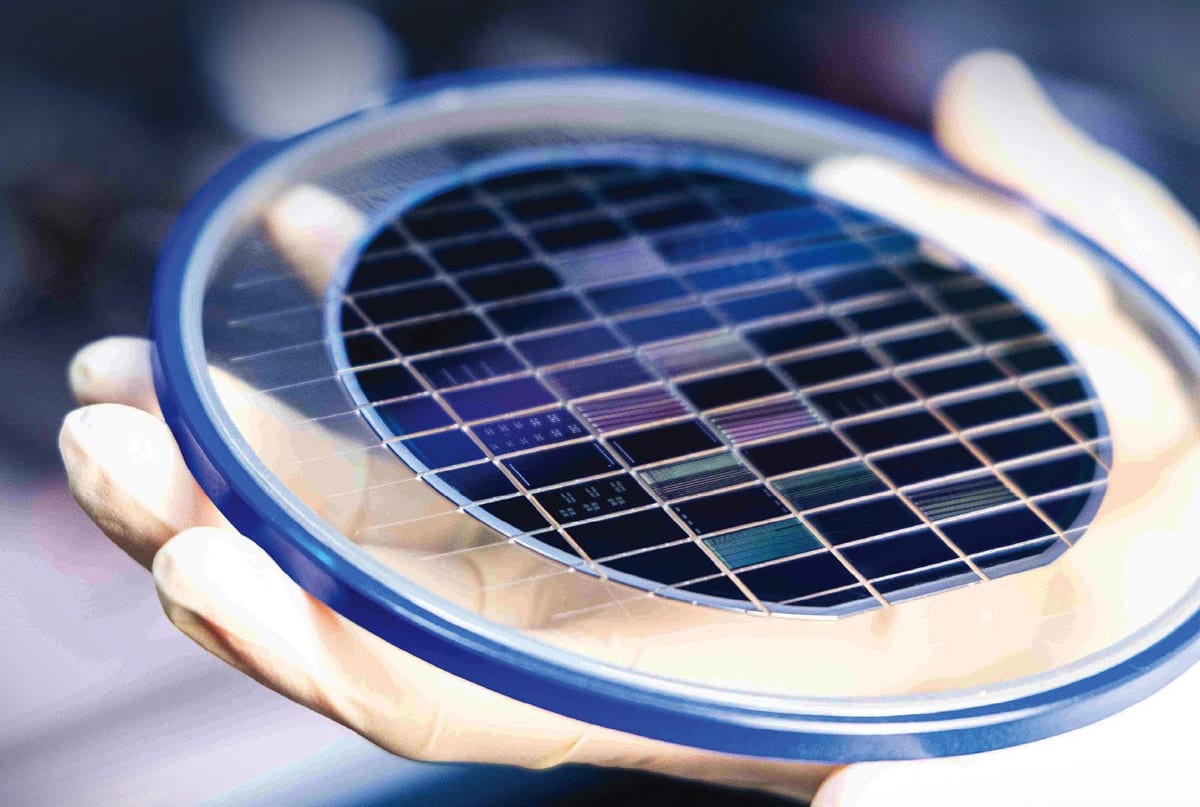
Enter Q.ANT. Founded in 2018, the company is pioneering a new era of data processing by harnessing the power of light instead of electricity. With its photonic processing approach, Q.ANT eliminates the inefficiencies of traditional transistors, offering a scalable, energy-efficient alternative to CMOS technology. The first generation of Q.ANT’s Native Processing hardware lineup was launched in 2024 and here is a look into some of the technologies that are inside.
AI Computing with Light: A Paradigm Shift
Conventional processors require thousands of transistors to execute complex mathematical operations, especially data-intensive computations for AI. For example, an 8-bit multiplication in a standard CMOS processor necessitates 1,200 transistors. In contrast, Q.ANT’s photonic processor achieves the same operation with a single optical element, making it up to 30 times more power-efficient.
Beyond energy savings, photonic computing offers another critical advantage: scalability. The semiconductor industry has long relied on Moore’s Law — shrinking transistors to boost performance. However, as technology approaches the 3nm node Moore’s Law’s impressive scaling is flattening off and physical limits are making further miniaturization increasingly difficult and costly.
Q.ANT’s photonic processors sidestep this challenge entirely. Unlike silicon-based electronics, photonics leverages the fundamental properties of light, enabling faster calculations without the need for ultra-small structure sizes.
The Role of Thin Film Lithium Niobate (TFLN)
A key enabler of Q.ANT’s breakthrough is Thin Film Lithium Niobate (TFLN), a material uniquely suited for photonic computing. TFLN enables high-precision, high-speed optical modulation with minimal noise and no thermal dissipation.
This unique combination enables Q. ANT to deliver, for the first time, an analog compute core with CMOS-like calculation precision of at least 16-bit. By harnessing the inherent electro-optical properties of TFLN, Q.ANT’s chips can implement advanced photonic structures, such as Mach-Zehnder interferometers controlled via voltage. This design achieves precise amplitude modulation with wide electrical bandwidths extending into the multi-GHz range.
This gives Q.ANT an advantage over developers using other materials for photonics processors, e.g. silicon (Si) and silicon nitride (SiN). In both, achieving a clean, low-loss phase modulation is difficult. Thermal shifters are one option. In these, similar to thermal modulators, the refractive index is changed by changing the temperature of the area in which the refractive index needs to be changed. Which means, you need to apply heat to make it work with light. This makes it inaccurate, slow and power hungry. Phase modulators made of TFLN do not have these issues because of its electro-optic properties, which neither silicon nor silicon nitride possess.
This - in itself - is a game-changer. Since TFLN-based photonics don’t generate excess heat, they eliminate the need for power-hungry cooling solutions. Moreover, the absence of thermal cross talk enables accurate computational multiplexing and parallelization, making these processors ideal for AI and HPC applications.
Overcoming Manufacturing Challenges
While the benefits of TFLN for photonic computing are clear, manufacturing these chips has been a major hurdle. Lithium niobate is not a traditional CMOS material and in fact is typically considered not CMOS compatible.
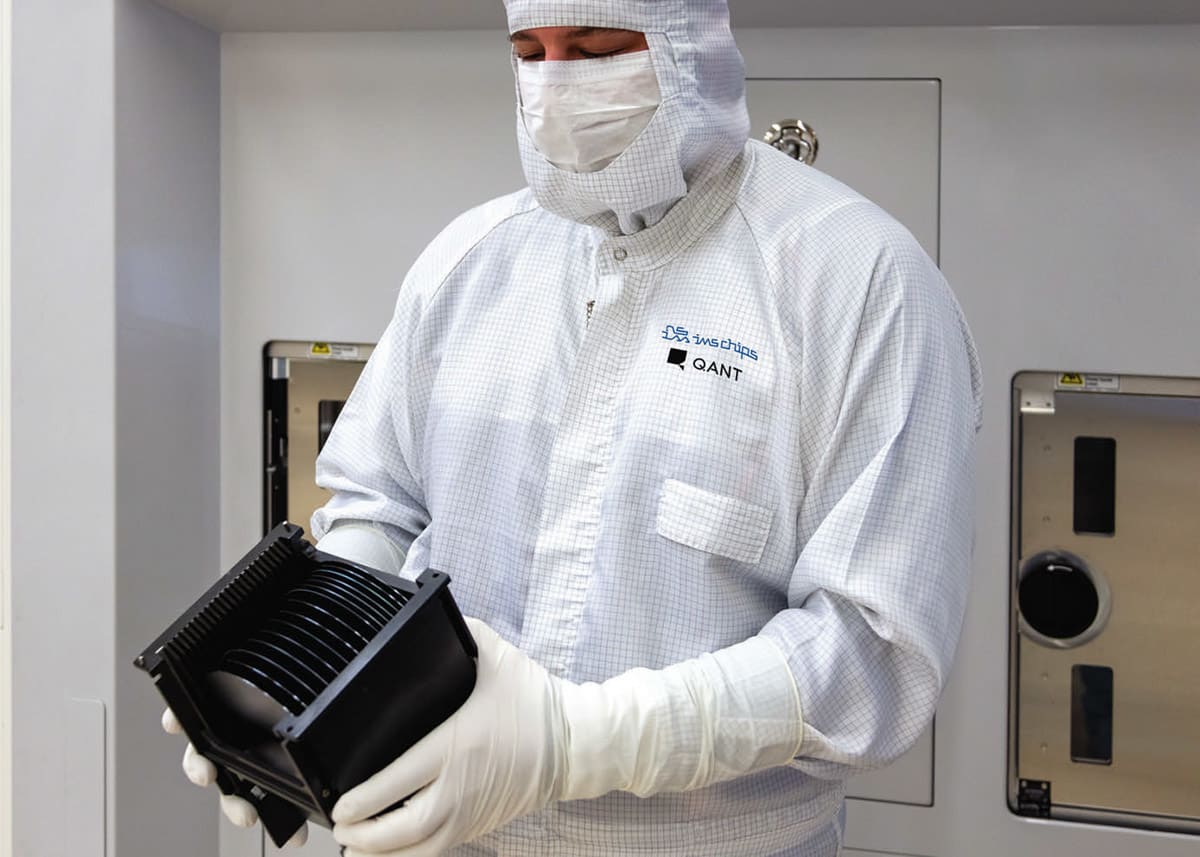
To address this challenge, Q.ANT has established a first-of-its-kind pilot line in Stuttgart, Germany, in collaboration with the Institut für Mikroelectronik Stuttgart, IMS CHIPS. This challenges the common perception that manufacturing transformative chip technologies necessarily involves investments reaching into the billions. Q.ANT and IMS CHIPS have demonstrated that it is possible to convert an existing CMOS production line into a specialized photonic chip facility. By strategically upgrading it, the teams have illustrated how targeted modernization can unlock advanced capabilities at significantly reduced costs.
Upgrading a CMOS Fab for Photonic Processor Production
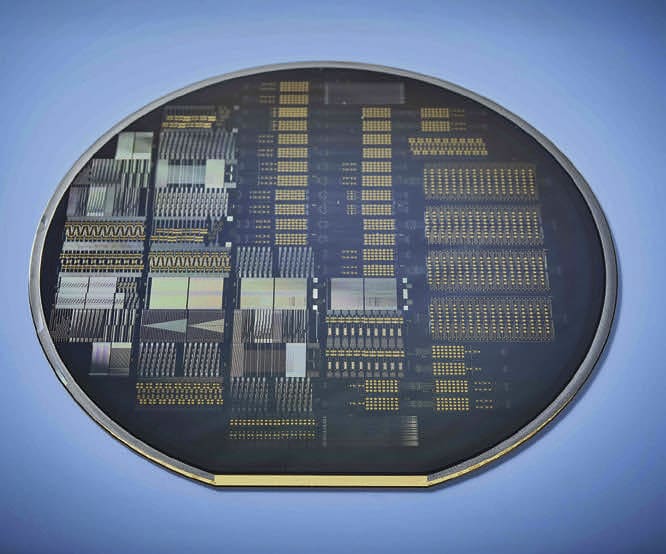
A key advantage of photonic processor manufacturing lies in its independence from extremely small process nodes, which simplifies production, reduces costs, and unlocks new business opportunities for existing foundries.
In less than two years, Q.ANT and IMS CHIPS upgraded an existing CMOS line to advance the development of photonic processors. Approximately 60 percent of the production line remained unchanged – but modifications were made in key areas such as:
Wafer quality control and enhancement. As TFLN is a rather young type of substrate the quality is far from what you can expect for standard silicon substrates. Consequently, Q.ANT invested in cultivating a deep understanding of the fabrication process for TFLN wafers of varying sizes and developed processes to improve the quality of the substrates at different states. Starting from the raw material of Lithium Niobate up to the finished TFLN wafer, Q.ANT mapped defects and inhomogeneities, which proved to be a crucial step.
Specialized Etching Techniques: Similar to the substrates, the patterning of the TFLN via etching requires the development of specialized processes which deviate from normal procedures. This process was optimized on standard cluster tools and was optimized together with mask materials as well as cleaning procedures after the etching. Only taking into account all these aspects enables the fabrication of low-loss waveguides made from TFLN.
Optimized Deposition and Thermal Processing: Achieving uniform, high quality thin-film deposition of silicon dioxide is a crucial adaptation. Silicon dioxide is not the active material of our circuits but important for the passive part and passivation. Silicon dioxide is a standard CMOS material, however, the requirements for electronics are different than for photonics. By modernizing instead of replacing existing semiconductor infrastructure, Q.ANT has been able to accelerate the transition to photonic computing without massive financial or resource-intensive investments.
The Right Processor for the Right Problem
Conventional digital processors excel at handling linear approximations, but they struggle with nonlinear functions — a fundamental limitation of digital architectures. A digital processor requires millions of parameters to approximate even relatively simple nonlinear shapes, such as drawing a circle with a desired level of accuracy. Analog processors, on the other hand, can perform both linear and nonlinear equations natively and can draw a circle efficiently using just a few parameters.
Analog computers process nonlinear equations natively. This nonlinear capability is a key component to accelerating neural networks where nonlinear functions play a critical role. The native photonic nonlinearities allow for machine learning approaches that drastically reduce the number of parameters needed for AI training and inference. Because photonic processors can directly compute these nonlinear functions, they reduce the computational load required for AI, lowering both power consumption and hardware costs.
In AI data centers, the principle of using the right processor for the right task applies more than ever. While conventional digital processors are well-suited for linear operations, photonic analog computing provides a far more efficient approach to handling complex, nonlinear calculations. Unlike digital architectures that require extensive translation of equations into binary approximations, photonic processors can execute these mathematical functions natively using light — drastically reducing computational overhead while improving both speed and energy efficiency.
How it Adds up to a Revolutionary Product
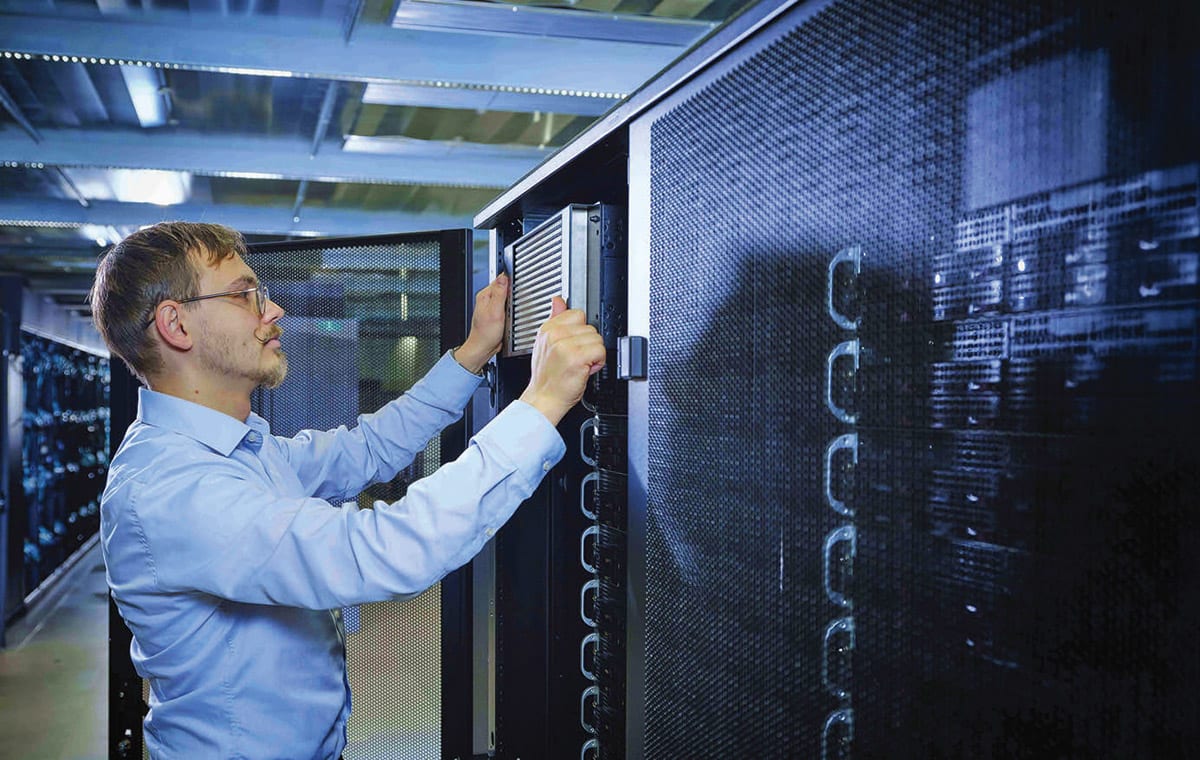
The Q.ANT Native Processing Unit (NPU) is the first commercially available photonic processor for energy-efficient, high-performance computing and real-time AI applications. With its core made from TFLN integrated photonics, the Q.ANT NPU executes complex, nonlinear mathematics natively using light instead of electrons. This core is mounted on a card with standard PCIe interface and can be assembled as a turnkey Native Processing Server (NPS) that can be integrated into any HPC or data center.
Where the Q.ANT NPU excels is with nonlinear mathematical operations, which are too energy-demanding on traditional GPUs. The Q.ANT NPU enables faster solutions for partial differential equations in physics simulations, simplifies time series analysis, and improves efficiency in solving graph problems.
Conclusion: The AI Processor of the Future Runs on Light
AI-driven computing is at a turning point. The old paradigm — squeezing ever-smaller transistors onto silicon chips — is becoming infeasible. Just increasing the chip size and with it the power consumption is unsustainable. The future lies in photonic processors that operate without electrical resistance, minimize heat dissipation, and deliver unmatched computational speed and efficiency.
By successfully retrofitting a legacy semiconductor fab, Q.ANT has proven that photonic computing isn’t just theoretical — it’s real today. Making use of existing resources is not just smart but enables more long-term growth and technological sovereignty.
AI workloads are only going to intensify and demand more energy so finding a wide range of solutions is imperative. Photonic computing is one step in the right direction that provides a scalable, sustainable and promising path forward.
This article was written by Dr. Michael Förtsch, Founder and CEO) / Dr. Victor Brasch, Head of Architecture Native Computing / Andreas Abt, VP Native Computing; Q.ANT Gmbh (Stuttgart, Germany). For more information, visit here .
Sources:
- “Five Things to Know About AI’s Thirst for Energy,” The Wall Street Journal, Feb. 1, 2025.
- “Will AI Ruin the Planet or Save the Planet?” The New York Times, Aug. 26, 2024.
- “Amazon, Microsoft Keep Data Center Spending Spree Going,” Bloomberg, Aug. 8, 2024.