-1
1290
30
Blog: Software
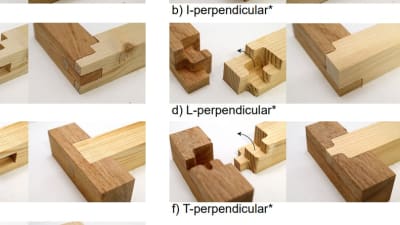
An interactive software being developed at the University of Tokyo allows architects and furniture makers with little experience in woodworking to to design and build structurally sound wood joints.
INSIDER: Motion Control
NASA’s DuAxel, a pair of two-wheeled rovers each called Axel, can split in half with each half connected only by a tether that unspools as the lead axle approaches a hazard.

Question of the Week: Robotics, Automation & Control
Would You Use a ‘SwingBot?’
A “SwingBot” robotic arm from MIT can learn the physical features of a handheld object through tactile exploration. Instead of using cameras or vision methods, the robot’s grippers use GelSight tactile sensors that measure the pose and force distribution of the object. Watch the demo on Tech Briefs TV.
Blog: Test & Measurement
A reader asks, "For AV testing, what are the respective role of simulation, closed course, and public road testing?"

Blog: Robotics, Automation & Control
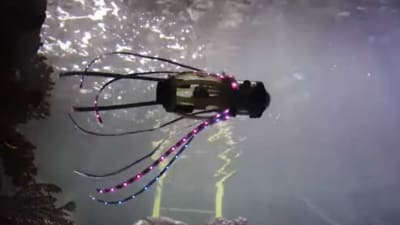
A robot being tested at the University of California San Diego takes after an aquatic invertebrate that has a jet-like way moving through the water: The Squid.
Question of the Week: Electronics & Computers
Will Self-Erasing Chips Catch On?
University of Michigan engineers reported that their new self-erasing chips could help stop counterfeit electronics or provide alerts if sensitive shipments are tampered with. The chips use a new material that temporarily stores energy, changing the color of the light it emits. The self-erase period takes seven...
Blog: Mechanical & Fluid Systems
University of Central Florida researchers are developing a human-like way for large machines to cool off and keep from overheating: Letting the machines "breathe."
Blog: Robotics, Automation & Control
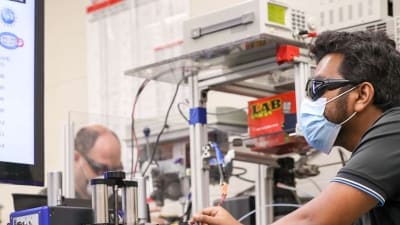
Researcher Nina Mahmoudian is finding a new way for underwater robots to recharge and upload their data, and then go back out to continue exploring, without the need for human intervention.

Question of the Week: Wearables
Will We Someday 'Draw' Sensors On Our Skin?
A Tech Brief featured in our October issue showcases how University of Missouri researchers are creating pencil-drawn sensors. The engineers demonstrated that the simple combination of pencils and paper could be used to create personal, health-monitoring devices.
Blog: Sensors/Data Acquisition
A reader asks, "Will the public feel safe enough in an autonomous vehicle?"

Blog: Mechanical & Fluid Systems
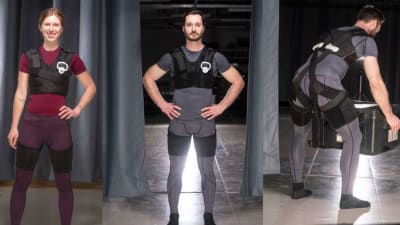
Vanderbilt University engineers are proving that their elastic exosuit can provide relief for people doing the heavy lifting.
Question of the Week: Imaging
Will Flat Fisheye Lenses Play a Greater Role in Medical Imaging and Consumer Electronics?
A recent Tech Briefs TV video demonstrated an achievement from engineers at MIT and the University of Massachusetts at Lowell. The teams designed the first completely flat fisheye lens to produce crisp, 180-degree panoramic images. The lenses, according to...
INSIDER: Robotics, Automation & Control
Researchers created a way to send tiny, soft robots into humans. Doctors would use magnetic fields to steer the soft robot inside the body, bringing medications or treatments to places that need them.
INSIDER: Sensors/Data Acquisition
Researchers at Helmholtz Zentrum München and the Technical University of Munich (TUM) have developed the world’s smallest ultrasound detector. Based on miniaturized...
INSIDER: Test & Measurement
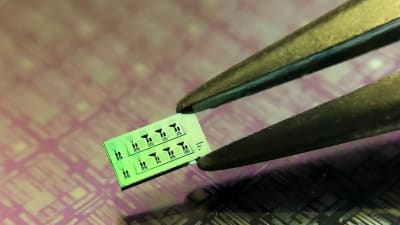
The proliferation and miniaturization of electronics in devices, wearables, medical implants, and other applications has...

INSIDER: Electronics & Computers
For a long time, something important has been regularly neglected in electronics. If you want to make electronic components smaller and smaller, you also need the right insulator materials. This is...

INSIDER: Internet of Things
Researchers at the University of Houston report that they have designed and produced a smart electronic skin and a medical robotic hand capable of assessing vital diagnostic data...

Blog: Imaging
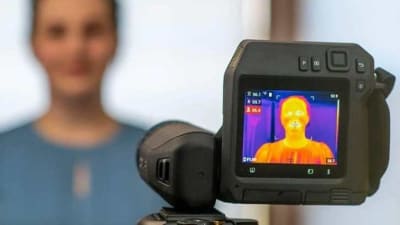
Thermal cameras detect heat radiation and can be used to identify the surface temperature of objects and people. So what's their limit, asks a reader.
Blog: Transportation
A new composite from Oak Ridge National Laboratory (ORNL) increases the electrical current capacity of copper wires, providing a new material that can be scaled for use in ultra-efficient, power-dense electric vehicle traction motors.

Question of the Week: Software
Do Software Advancements Make You Feel Safe in an Autonomous Vehicle?
Our lead story today features self-driving car software that prevents accidents by understanding and anticipating safe traffic behaviors.
INSIDER: Electronics & Computers
MIT startup Realtime Robotics invented a solution that gives robots the ability to quickly adjust their path to avoid objects as they move to a target. The Realtime controller can be connected to a...

INSIDER: Photonics/Optics
For planned robotic and crewed missions to the Moon and Mars, NASA is developing and testing precise landing and hazard-avoidance technologies. A combination of laser sensors, a camera, a high-speed...

Blog: Automotive
New software from the Technical University of Munich (TUM) wants to predict all traffic possibilities, so that self-driving vehicles will never get into accidents.

Question of the Week: Sensors/Data Acquisition
Can Courtesy Be Programmed Into Self-Driving Cars?
During a recent webcast, a Tech Briefs reader raised an interesting question about self-driving cars:
Blog: Regulations/Standards
As Brazil begins mass-producing a NASA-developed ventilator, a Tech Briefs reader asks why NASA didn't go open-source.
Blog: Test & Measurement
The new approach could help pave the way for smaller battery packs and greater driving range in electric vehicles.

INSIDER: Energy
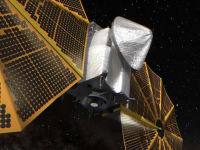
Almost all satellites are powered by solar cells – but solar cells are heavy. While conventional high-performance cells reach up to three watts of electricity per gram,...
INSIDER: Research Lab
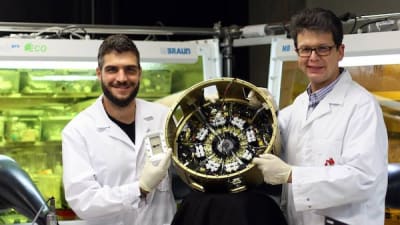
New research from the University of Southampton has discovered a way to bind two negatively charged electron-like particles which could create opportunities to form novel...
INSIDER: Energy
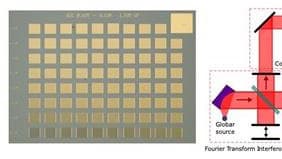
University of North Texas professor Anupama Kaul straddles the line between electrical engineering and materials science, which puts her in the perfect place to develop new...
Top Stories
 Blog: Lighting

A Stretchable OLED that Can Maintain Most of Its Luminescence
 Blog: Energy

Batteries that Can Withstand the Cold
 INSIDER: Energy

Advancing All-Solid-State Batteries
 Blog: Power

My Opinion: We Need More Power Soon — Is Nuclear the Answer?
 Quiz: Power

 Blog: Data Acquisition

Webcasts
 Upcoming Webinars: Test & Measurement

From Spreadsheets to Insights: Fast Data Analysis Without Complex...
 Upcoming Webinars: Aerospace

Cooling a New Generation of Aerospace and Defense Embedded...
 Upcoming Webinars: Sensors/Data Acquisition

Beyond AI-Copy-Paste Engineering: Advanced AI-Integration Success...
 Upcoming Webinars: Energy

Battery Abuse Testing: Pushing to Failure
 Upcoming Webinars: Power

A FREE Two-Day Event Dedicated to Connected Mobility
 Upcoming Webinars: RF & Microwave Electronics

Choosing the Right N-Port Strategy: Multiport VNAs vs. Switch...