-1
1230
30
INSIDER: Electronics & Computers
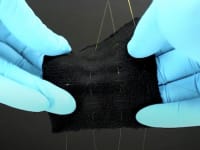
A hacker can reproduce a circuit on a chip by discovering what key transistors are doing in a circuit — but not if the transistor “type” is...

INSIDER: Medical
A research team from National University of Singapore (NUS) has taken a first step towards improving the safety and precision of industrial robotic arms by developing a new range of...

Question of the Week: Robotics, Automation & Control
Can 'Bluebots' Preserve Coral Reefs?
A team of Harvard researchers have developed fish-inspired robots that can synchronize their movements like a real school of fish, without any external control. (Watch the robots in action on Tech Briefs TV.)
Blog: Materials
The hard “coin,” could be used to make super-strength metal coatings or larger industrial components.

Blog: Materials
The "polymer of squares” could one day enable the use of plastic products many times over.

INSIDER: Mechanical & Fluid Systems
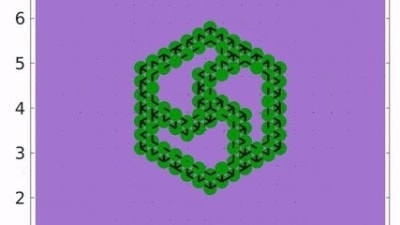
University of Pittsburgh researchers have utilized a catalytic reaction that causes a two-dimensional, chemically coated sheet to spontaneously “morph” into a three-dimensional gear.
INSIDER: Motion Control
The Tethered permanently shadowed Region EXplorer (T-REX) rover, designed and built by a team of Michigan Technological University students – is designed to provide reliable power and data to other...

Blog: Automotive
If you're concerned that electric vehicles don't have the reliability to get you where you need to go, Penn State engineers are working on a battery for...

Question of the Week: Test & Measurement
Will We Make Vibration-Free Helicopters?
A Tech Briefs TV video features a test technology from the Army that’s informally known as a “Shaker.” The Multi-Degree of Freedom (MDOF) system will study the causes of vibrations in a helicopter’s many components and subcomponents. The Army researchers hope to use the conclusions of their study to...
Blog: Photonics/Optics
Inspired by the squid's color-changing chromatophore, Rutgers engineers set out to create an artificial one.

Question of the Week: Automotive
Has the Vehicle Become Your “Second Space?”
"Honestly, the car has become an office for some people just so they can get away from the noise of their house," said Carla Bailo at CES 2021 last week. "The sound [in the car] is great, and you can connect from anywhere."
Blog: Materials
The non-contact method of curing leads to adhesives that can be activated on demand.

Blog: Transportation
In a roundtable presentation at the virtual CES 2021, panelists said the COVID-19 pandemic has changed driving patterns and consumer preferences – and that those shifts are here to stay.

INSIDER: Photonics/Optics
Bandpass Filters
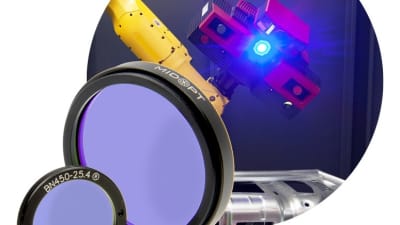
MidOpt® (Palatine, IL) introduced the BP450 Indigo Bandpass and the BN450 Narrow Indigo Bandpass, two new filters designed for multi-application use. The BP450 enhances the viewing of subjects illuminated by a...
INSIDER: Sensors/Data Acquisition
The performance of flexible large-area organic photodiodes has advanced to the point that they can now offer advantages over conventional silicon photodiode...

INSIDER: Sensors/Data Acquisition
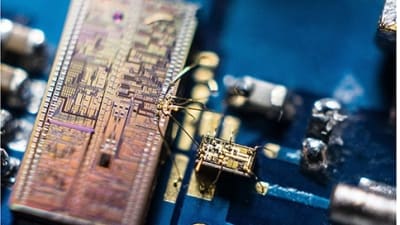
Researchers from the University of Bristol’s Quantum Engineering Technology Labs (QET Labs) and Université Côte d‘Azur have made a new miniaturized light...
INSIDER: Sensors/Data Acquisition
A phenomenon first detected in the solar wind may help solve a long-standing mystery about the sun: why the solar atmosphere is millions of degrees hotter than the...

Question of the Week: Robotics, Automation & Control
Will Robotics and Automation Lead to a Greater Appreciation of Nature?
Our lead INSIDER story today focused on the environmental impacts of robotics and automation.
Blog: Sensors/Data Acquisition
A survey of over 170 experts assessed the opportunities and challenges that drones, robots, and autonomous systems could have for urban nature and green spaces.

Question of the Week: Robotics, Automation & Control
Would You Use a 'Twining' Robotic Gripper?
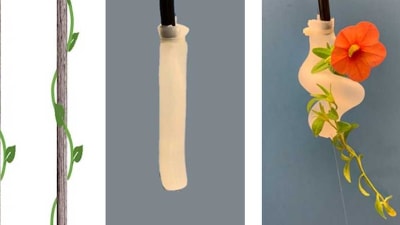
Our lead INSIDER story today focused on a twining robotic gripper that its inventor says is especially effective at grabbing thin objects like pencils, paintbrushes, and even a straightened paperclip.
Blog: Sensors/Data Acquisition
The sensor is able to detect ice formation far before you can see it occurring on a surface.

Blog: Mechanical & Fluid Systems
As engineering professor Mable Fok saw how the pole beans in her garden wrapped tightly around any objects nearby, she had an idea:
What if a robotic gripper could do the same thing?
INSIDER: Robotics, Automation & Control
USC researchers have developed a method that could allow robots to learn complicated new tasks, like setting a table or driving a car, from observing a small number of demonstrations.

INSIDER: Robotics, Automation & Control
Scientists from the U.S. Army and MIT created a new way to link materials with unique mechanical properties, opening up the possibility of future military robots made of robots. The method unifies...

Question of the Week: Sensors/Data Acquisition
Could ‘Smellicopters’ Someday Support Search-and-Rescue?
Our second INSIDER story today highlights an innovative combination of autonomous drones and live moth antennae: The “Smellicopter.”
INSIDER: Robotics, Automation & Control
A Cornell University team has created microscopic robots that incorporate semiconductor components, allowing them to be controlled – and made to walk – with standard electronic signals. The...

INSIDER: Motion Control
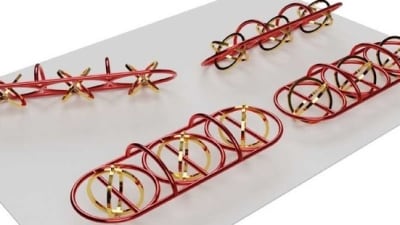
Researchers have developed a technique for manufacturing micrometer-long machines by interlocking multiple materials in a complex way. The micromachines are made out of metal and plastic, in...
INSIDER: Motion Control
With a training technique commonly used to teach dogs to sit and stay, computer scientists showed a robot how to teach itself several new tricks including stacking blocks. With the method, the robot was able...

Blog: Robotics, Automation & Control
UW doctoral student Melanie Anderson explains how to make an autonomous 'Smellicopter' to navigate toward smells.

Top Stories
 Blog: Lighting

A Stretchable OLED that Can Maintain Most of Its Luminescence
 Blog: Energy

Batteries that Can Withstand the Cold
 INSIDER: Energy

Advancing All-Solid-State Batteries
 Blog: Power

My Opinion: We Need More Power Soon — Is Nuclear the Answer?
 Quiz: Power

 Blog: Data Acquisition

Webcasts
 Upcoming Webinars: Test & Measurement

From Spreadsheets to Insights: Fast Data Analysis Without Complex...
 Upcoming Webinars: Aerospace

Cooling a New Generation of Aerospace and Defense Embedded...
 Upcoming Webinars: Sensors/Data Acquisition

Beyond AI-Copy-Paste Engineering: Advanced AI-Integration Success...
 Upcoming Webinars: Energy

Battery Abuse Testing: Pushing to Failure
 Upcoming Webinars: Power

A FREE Two-Day Event Dedicated to Connected Mobility
 Upcoming Webinars: RF & Microwave Electronics

Choosing the Right N-Port Strategy: Multiport VNAs vs. Switch...