-1
1950
30
INSIDER: Automotive
What happens when you replace a truck’s fan assembly with an electric fan system? You increase horsepower, reduce under-hood temperature, and become a winner in...

Question of the Week: Automotive
Are you confident in a vehicle's cyberattack defenses?
Our second story in today's INSIDER featured a reader's question about cybersecurity standard SAE J3061. What do you think? Are you confident in a vehicle's cyberattack defenses?
News: Semiconductors & ICs
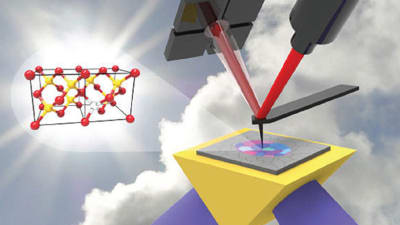
Researchers at the National Institute of Standards and Technology (NIST) have for the first time examined, with nanometer-scale precision, the variations in chemical composition and...
Blog: Sensors/Data Acquisition
Getting into the Halloween spirit, NASA released a collection of the spookiest sounds ever recorded by the agency's spacecraft instruments. Captured radio emissions...

Question of the Week: Energy
Today's lead INSIDER story features a report on transparent solar cell technology. The authors believe see-through solar cells have the potential of supplying...

INSIDER: Mechanical & Fluid Systems
An engineering team at the University of California San Diego has designed and built a gripper that can pick up and manipulate objects without needing to see them and without being...

INSIDER: Robotics, Automation & Control
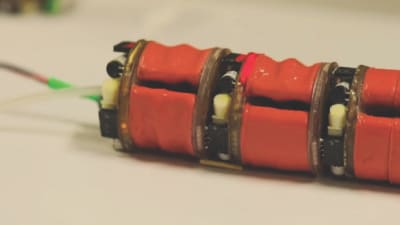
Researchers at the Ecole Polytechnique Federale de Lausanne (EPFL) in Switzerland have created the first functional robot powered entirely by vacuum. It is made up of soft building blocks that move by...
INSIDER: Motion Control
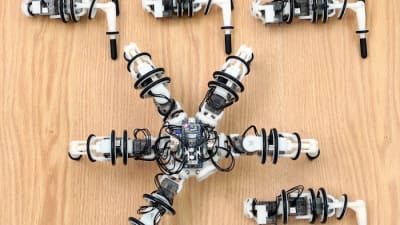
Scientists at Disney Research, Pittsburgh, PA have developed a modular, reconfigurable legged robot named Snapbot that can move forward, interact with its environment, and perform other tasks...
INSIDER: Energy
Michigan State University researchers say a new transparent solar panel technology is right outside your door. Or more precisely: inside your window. The completely clear...

INSIDER: Aerospace
At Orbital ATK, Mark Ogren works on the preliminary design of the company’s propulsion technologies, including targets, interceptors, or space launch vehicles. Ogren spoke with Tech...

Question of the Week: Energy
Will conformal batteries improve electronics design?
Today’s lead INSIDER story featured a conformal battery that bends to meet specific device shapes. What do you think?
INSIDER: Medical
A novel, pencil-sized device now provides surgeons with an alternative to traditional methods of suturing arteries. The Arterial Everter, Medical Category winner of the 2017 “Create the...

INSIDER: Materials
Looking to nature for inspiration, scientists from Lawrence Livermore National Laboratory (LLNL) and Northeastern University have used carbon nanotubes to mimic the...
INSIDER: Energy
Electronics design is often limited by the shape of the battery – a critical, but frequently uncompromising product component. A new kind of battery conforms to meet the...

INSIDER: Sensors/Data Acquisition
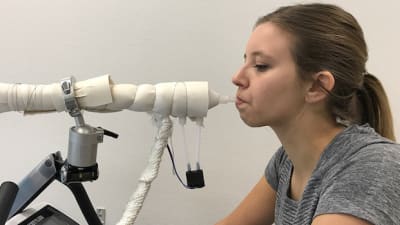
In the future, breathalyzers will not just be used by police checking for alcohol intoxication, but also for testing the condition of athletes, and for people who want to lose weight. When exactly the body...
INSIDER: Test & Measurement
Before volcanoes erupt, there are often warning signs. Using remote sensing to detect rising carbon dioxide and sulfur dioxide emissions without endangering people or equipment would greatly increase...

INSIDER: Sensors/Data Acquisition
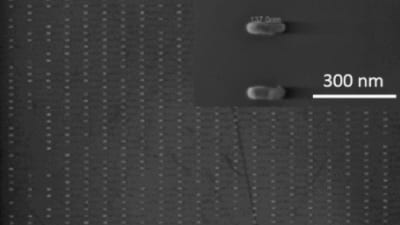
Researchers have designed and tested a series of plasmonic nanoantenna arrays that could lead to the development of a new generation of ultrasensitive and low-cost fluorescence sensors that could...
INSIDER: Photonics/Optics
In the galaxy NGC 4993, located approximately 130 million light-years from Earth, two neutron stars collided. And, for the first time, scientists detected the...

Question of the Week: Energy
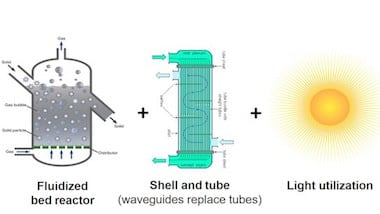
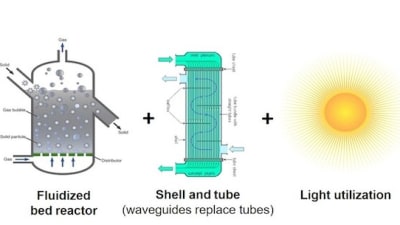
Developers of a "HI-Light" chemical reactor were awarded top honors in this year’s 'Create the Future' Design Contest. The grand-prize-winning solar...
INSIDER: Robotics, Automation & Control
Petrochemical and liquid gas companies require a regular inspection of a vessel's welds and wall thicknesses — a dangerous task given the hazardous environment. A climbing robot,...

Question of the Week: Aerospace
In 10 years, will brain-controlled UAVs support critical applications?
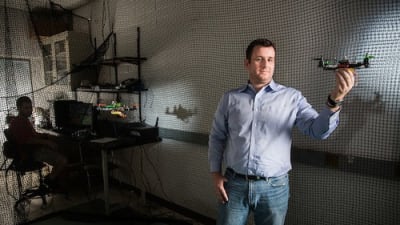
In this week’s INSIDER story, researcher Panagiotis Artemiadis predicted that we will see an increase in brain-controlled UAVs within the next ten years. The mind-controlled drones, according to the Arizona State University professor, will play critical application roles as...
INSIDER: Motion Control
Who needs a keyboard, a mouse, or a joystick? A researcher from Arizona State University wants to command machines with the human brain.
Question of the Week
Would you use MatchPoint?
This week’s INSIDER story featured a gesture-recognition technology that transforms everyday objects into remote controls. What do you think? Would you use MatchPoint?
INSIDER: Energy
Developers of a “HI-Light” chemical reactor were awarded top honors in this year’s "Create the Future" Design Contest. The grand-prize-winning...
INSIDER: Imaging
A new gesture-recognition technology from Lancaster University can make a remote control out of your coffee mug — or most everyday objects, for that matter.

INSIDER: Propulsion
On a snowy day in 1926, a 44-year-old physicist named Robert Goddard went with his wife Esther and some colleagues to his Aunt Effie’s ranch in Auburn,...

INSIDER: Robotics, Automation & Control
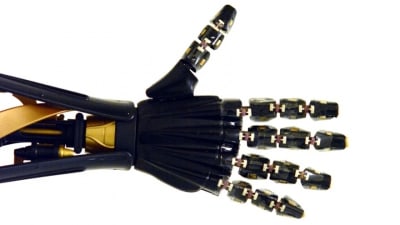
A rubber “skin” developed at the University of Houston allows a robotic hand to sense the difference between hot and cold temperatures. The semiconductor material supports new...
Question of the Week: Robotics, Automation & Control
Will "print-and-go" structures lead to printable robots?
As seen in this week's Tech Briefs TV video, MIT researchers envision many possibilities for devices that self-fold without external stimuli.
INSIDER: Mechanical & Fluid Systems
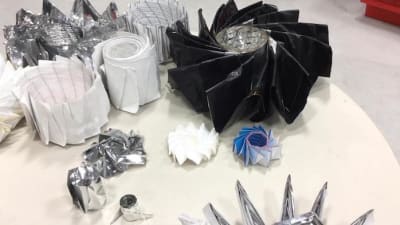
Origami has once again inspired engineers at NASA’s Jet Propulsion Laboratory (JPL) in Pasadena, California. Besides aesthetic beauty, the Japanese tradition of paper-folding addresses a...
Top Stories
 Blog: Lighting

A Stretchable OLED that Can Maintain Most of Its Luminescence
 Blog: Energy

Batteries that Can Withstand the Cold
 INSIDER: Energy

Advancing All-Solid-State Batteries
 Blog: Power

My Opinion: We Need More Power Soon — Is Nuclear the Answer?
 Quiz: Power

 Blog: Data Acquisition

Webcasts
 Upcoming Webinars: Test & Measurement

From Spreadsheets to Insights: Fast Data Analysis Without Complex...
 Upcoming Webinars: Aerospace

Cooling a New Generation of Aerospace and Defense Embedded...
 Upcoming Webinars: Sensors/Data Acquisition

Beyond AI-Copy-Paste Engineering: Advanced AI-Integration Success...
 Upcoming Webinars: Energy

Battery Abuse Testing: Pushing to Failure
 Upcoming Webinars: Power

A FREE Two-Day Event Dedicated to Connected Mobility
 Upcoming Webinars: RF & Microwave Electronics

Choosing the Right N-Port Strategy: Multiport VNAs vs. Switch...