-1
2610
30
INSIDER: Automotive
People have been making rubber products, from elastic bands to tires, for centuries, but a key step in this process has remained a mystery. Scientists from the Kyoto Institute...

INSIDER: Manufacturing & Prototyping
Nanyang Technological University’s (NTU) start-up Blacksmith Group launched a compact 3D printer that can also scan items into digitized models. Named the Blacksmith Genesis, this...

INSIDER: Sensors/Data Acquisition
Chameleon-Like Material Changes Color on Demand
Researchers from the University of California at Berkeley have created a thin, chameleon-like material that can be made to change color — on demand — by applying a minute amount of force.
News: Medical
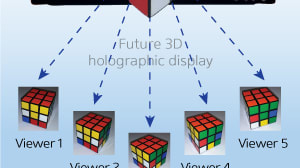
The 3D effect produced by stereoscopic glasses used to watch movies cannot provide perfect depth cues. Furthermore, it is not possible to move one’s head and observe that objects...
News: Robotics, Automation & Control
A sweeping view of the "Pahrump Hills" outcrop on Mars, where NASA's Curiosity rover has been working for five months, surrounds the rover in Curiosity's latest self-portrait. The selfie is assembled from...

News: Automotive
A new software system developed at the University of Michigan uses video game technology to help solve one of the most daunting hurdles facing self-driving and automated cars: the high...

News: RF & Microwave Electronics
During 10 years of discovery, NASA's Cassini spacecraft has pulled back the smoggy veil that obscures the surface of Titan, Saturn's largest moon. Thanks to a recently developed...

Question of the Week
Will 2015 be the year that virtual reality goes mainstream?
This week's Question: New virtual reality technologies were revealed at this month's Game Developers Conference in San Francisco, including the HTC Vive from game developer Valve Corporation and smartphone maker HTC. Vive uses lasers, sensors, and controllers to track motion in 3D space....
INSIDER: Photonics/Optics
BeeRotor Robot Equipped with Insect-Like Eye
Biorobotics researchers at the Institut des Sciences du Mouvement (Aix Marseille University) have developed the BeeRotor, a tethered flying robot. The robot adjusts its speed and follows terrain without an accelerometer or the measurement of altitude.
INSIDER: Energy
Energy-Harvesting Method Shows Promise for Mars Power Stations
Northumbria and Edinburgh Universities researchers have developed an innovative, new technique to harvest energy from carbon dioxide. The method may enable the creation of future power stations on the surface of Mars.The research proposes a new kind of engine for producing energy based...
INSIDER: Test & Measurement
When ice accumulates on the surface of an aircraft during flight, it distorts the smooth flow of air necessary to stay aloft. The result is a reduction in lift, which can lead to...

INSIDER: Test & Measurement
Researchers have developed a fluorescence-based sensor device that can rapidly identify cancer-related volatile organic compounds found exclusively in the exhaled breath of some people with lung...

INSIDER: Test & Measurement
Researchers have visualized on a microscopic level how certain steels fracture when extreme loads are applied to them. Scientists used a scanning electron microscope to obtain high-resolution images (around...

Question of the Week
Will 'Bloon' rides catch on?
This week's Question: Zero2infinity, a Spanish company, plans to launch passengers to near space using technologies called "Bloons." A maximum of four passengers will join two pilots in the Bloon cabin, which will be chained to a balloon filled with inert helium. Once fully inflated, the balloon will pull the cabin to...
INSIDER: Photonics/Optics
Ultra-Thin Lens Captures Perfect Colors
Harvard School of Engineering and Applied Sciences researchers developed an ultra-thin, completely flat lens made of a glass substrate and tiny, light-concentrating silicon antennas. Color correction is achieved in the single, miniaturized device.
Question of the Week
Are FAA drone rules too restrictive?
This week's Question: This month, the Federal Aviation Administration proposed long-awaited rules on the commercial use of small drones, requiring operators to be certified, fly only during daylight, and keep their aircraft in sight. The ruling, for now, prevents drones from being used for a range of possible...
INSIDER: Electronics & Computers
Radio Chip Reduces Power Leakage
To realize the "Internet of things” — the idea that all parts of the human environment, from kitchen appliances to industrial equipment, could be equipped with sensors and processors that exchange data — transmitters must be energy-efficient enough to last for months.
A group researchers at the Massachusetts...
INSIDER: Materials
Paper-Like Material Boosts Electric Vehicle Batteries
Researchers at the University of California, Riverside’s Bourns College of Engineering have developed a novel paper-like material for lithium-ion batteries. The spongelike silicon nanofibers are 100 times thinner than human hair. The technology could be used in batteries for electric vehicles...
INSIDER: Motion Control
The future belongs to electric motors, and commercial vehicles are no exception. To date, however, many attempts to develop electric motors for commercial vehicles have stalled at the...

INSIDER: Motion Control
Scientists with the Pacific Northwest Seismic Network installed instruments to provide real-time monitoring of the Seattle Seahawks’ stadium movement during the 2015 NFL playoffs. The...

INSIDER: Motion Control
Scientists have developed an octopus-like robot that can zoom through water with ultra-fast propulsion and acceleration never before seen in man-made underwater vehicles. The octopus is...

Question of the Week
Would you take a one-way trip to Mars?
This week's Question: Mars One, a group that plans to send humans on a one-way trip to Mars, has narrowed its application pool from 200,000 to 100. The finalists will spend the next decade in training, including team-building exercises and isolation. The goal of the Netherlands-based non-profit is to start a...
INSIDER: Electronics & Computers
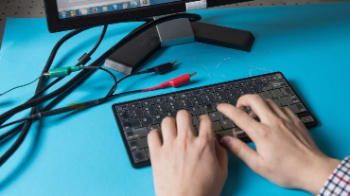
By analyzing such parameters as the force applied by key presses and the time interval between them, a new self-powered, non-mechanical, intelligent keyboard could provide a...
INSIDER: Electronics & Computers
A door has been opened to low-power off/on switches in micro-electro- mechanical systems (MEMS) and nanoelectronic devices, as well as ultrasensitive bio-sensors, with the first...

INSIDER: Unmanned Systems
A new underwater robot designed by University of Washington researchers will monitor the effects of tidal and wave energy on marine habitats.

INSIDER: Test & Measurement
A NASA scientist, who has played a key role in developing and demonstrating a new technique for gathering carbon-dioxide (CO2) measurements, is applying the same general principles to develop a new laser...

Question of the Week
Will selfies replace the password?
This week's Question: New apps, including one created by West Virginia University students in 2014, uses advanced facial recognition and liveness detection capabilities to authenticate smartphone users. A free technology from Hoyos Labs, showcased at this year’s Consumer Electronics Show in Las Vegas, similarly...
INSIDER: Imaging
ORCA Prototype Ready to Observe Ocean
If selected for a NASA flight mission, the Ocean Radiometer for Carbon Assessment (ORCA) instrument will study microscopic phytoplankton, the tiny green plants that float in the upper layer of the ocean and make up the base of the marine food chain.
INSIDER: Energy
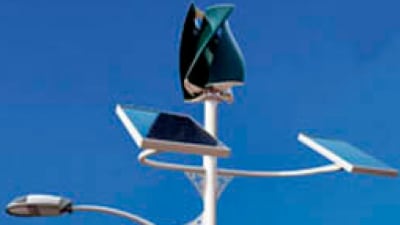
A researcher at the Barcelona College of Industrial Engineering, in collaboration with the company Eolgreen, has developed the first autonomous industrialized public lighting system that...
Top Stories
 Blog: Lighting

A Stretchable OLED that Can Maintain Most of Its Luminescence
 Blog: Energy

Batteries that Can Withstand the Cold
 INSIDER: Energy

Advancing All-Solid-State Batteries
 Blog: Power

My Opinion: We Need More Power Soon — Is Nuclear the Answer?
 Quiz: Power

 Blog: Data Acquisition

Webcasts
 Upcoming Webinars: Test & Measurement

From Spreadsheets to Insights: Fast Data Analysis Without Complex...
 Upcoming Webinars: Aerospace

Cooling a New Generation of Aerospace and Defense Embedded...
 Upcoming Webinars: Sensors/Data Acquisition

Beyond AI-Copy-Paste Engineering: Advanced AI-Integration Success...
 Upcoming Webinars: Energy

Battery Abuse Testing: Pushing to Failure
 Upcoming Webinars: Power

A FREE Two-Day Event Dedicated to Connected Mobility
 Upcoming Webinars: RF & Microwave Electronics

Choosing the Right N-Port Strategy: Multiport VNAs vs. Switch...