33
-1
600
30
Briefs: Imaging
The combination of conductive polymers on nanostructures was demonstrated as suited to creating electronic displays as thin as paper. The “paper” is similar to the Kindle tablet. It does...

Briefs: Electronics & Computers
Waterproof Graphene Electronic Circuits
The many applications of graphene, an atomically-thin sheet of carbon atoms with extraordinary conductivity and mechanical properties, include the manufacture of sensors. These transform environmental parameters into electrical signals that can be processed and measured with a computer. Due to their...
Briefs: Software
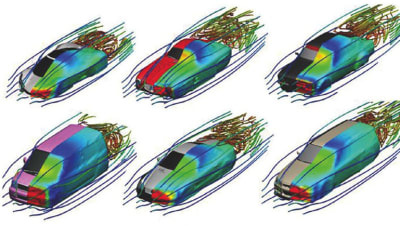
When engineers want to test the aerodynamic properties of the newly designed shape of a car, airplane, or other object, they would normally model the flow of air...
Briefs: Communications
A current-steering digital-to-analog converter (DAC) was developed that achieves improved switching times (up to 75% faster) in high-speed (gigahertz), high-resolution (8-14 bits)...

Briefs: Manufacturing & Prototyping
NASA’s Langley Research Center has developed a new way to reduce the high-temperature heating requirement of sapphire substrates in wafer production. The growth of...

Briefs: Materials
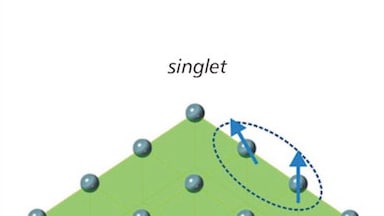
Anew type of magnet — called a singlet-based magnet — was discovered that differs from conventional magnets in which small magnetic constituents align with one another to create a strong...
Briefs: Semiconductors & ICs
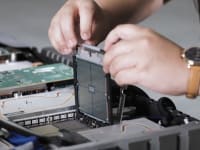
Traditionally, electronics are cooled using a heat sink that transfers the heat generated by the electronic system into the air or a liquid coolant. For the heat sink to work, it has to be...

Briefs: Mechanical & Fluid Systems
Transparent, Self-Healing Electronic Skin
Scientists have taken inspiration from underwater invertebrates like jellyfish to create an electronic skin with similar functionality. Like a jellyfish, the electronic skin is transparent, stretchable, touch-sensitive, and self-healing in aquatic environments.
Briefs: Electronics & Computers
Mechanical systems such as engines and motors rely on two principal types of motions of stiff components: linear motion, which involves an object moving from one point to another in a straight line,...

Briefs: Materials
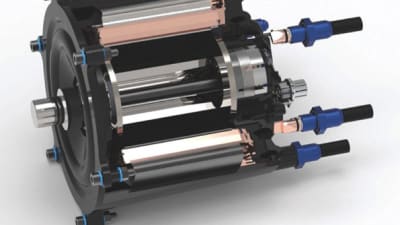
Making electric cars lighter also involves reducing the weight of the motor. One way to do that is by constructing it from fiber-reinforced polymer materials. A new cooling concept was...
Briefs: Test & Measurement
Technique Provides Rapid Assessment of Radiation Exposure
Researchers have developed a new technique that assesses radiation exposure in about an hour using an insulator material found in most modern electronics. The technique can be used to triage medical cases in the event of a radiological disaster.
Briefs: Electronics & Computers
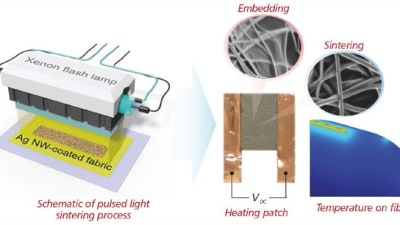
Thin, durable heating patches were created using intense pulses of light to fuse tiny silver wires with polyester. Their heating performance is nearly 70 percent higher than similar patches. The inexpensive patches...
Briefs: Green Design & Manufacturing
Recent technical advances have enabled flywheel energy storage systems (FESS) to become more compact and able to support higher-power applications. Due to their proven reliability,...

Briefs: Medical
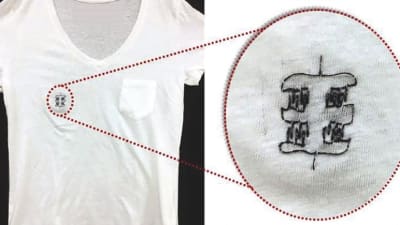
Wearable biosensors for health monitoring lack a lightweight, long-lasting power supply. A new method was developed for making a charge-storing system that is easily integrated into clothing...
Briefs: Transportation
Rechargeable, High-Temperature, Molten Salt Battery
Growing demand for electric vehicles and more sustainable forms of transport means finding new forms of energy storage such as batteries, supercapacitors, and fuel cells. Currently, a major challenge facing the industry is the poor performance quality of rechargeable batteries, which often lose...
Briefs: Communications
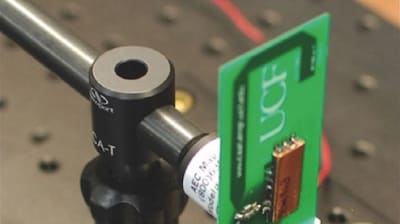
The traditional approach for wireless sensors involves interrogators that communicate with each other (i.e., the two boxes “talk” to each other). In contrast, surface acoustic wave...
Briefs: Electronics & Computers
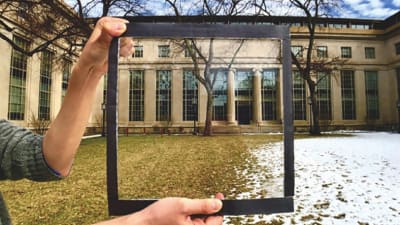
A heat-rejecting film was developed that could be applied to a building’s windows to reflect up to 70 percent of the Sun’s incoming heat. The film remains highly transparent below...
Briefs: Test & Measurement
Signal Combiner for Wideband Communication
NASA’s Glenn Research Center has devised an efficient new method of combining primary and secondary signals with minimal loss and noise. With its ability to reduce system noise, this novel signal combiner delivers the best opportunity to receive a desired signal not easily distinguished from background...
Briefs: Test & Measurement
From cellphones to satellites, industry spends millions on traditional gold alloy electrical contact coatings. While gold and other metal alloys have been an industry standard to protect metal components from...
Briefs: Test & Measurement
Measurement Technique for Continuous-Wave, Modulated, and Pulsed Monochromatic Radiation
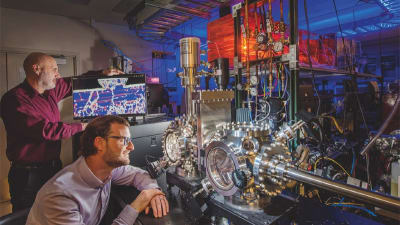
In many applications, such as remote sensing of atmospheric trace gases, monochromatic radiation with multiple discrete wavelengths is required. To date, there no instrument or technique that measures the wavelength jitters and fluctuations in real time.
Briefs: Sensors/Data Acquisition
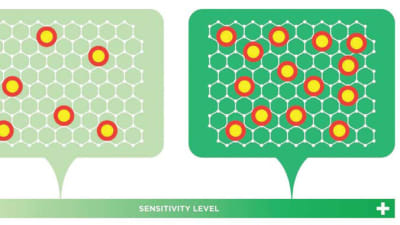
A team of researchers at the New York University Tandon School of Engineering and NYU Center for Neural Science has solved a longstanding puzzle of how to build ultra-sensitive, ultra-small, electrochemical...
Briefs: Communications
Sponsored by the Office of Naval Research's (ONR) TechSolutions program, the Flashing Light to Text Converter (FLTC) features a camera that can be mounted atop a signal lamp...

Briefs: Electronics & Computers
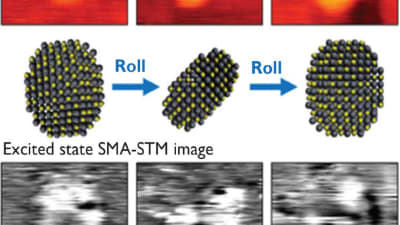
Researchers have developed an imaging technique that uses a tiny, super sharp needle to nudge a single nanoparticle into different orientations and capture 2-D images to help reconstruct...
Briefs: Manufacturing & Prototyping
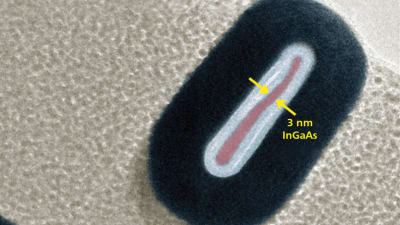
To keep up with Moore's Law — an observation made in the 1960s that the number of transistors on an integrated circuit doubles about every two years — researchers are...
Briefs: Sensors/Data Acquisition
Composable Storage Platform for High-Performance Computing
Large-scale, high-performance computing — supercomputing — is essential to solving both complex and large questions. But storage platforms essential for these advanced computer systems have been stuck in a rigid framework that required users to either choose between customization of...
Briefs: Semiconductors & ICs
Multi-Purpose, Flexible Wing Structure for Small Unmanned Aerial Systems
Small unmanned aircraft systems (UAS), also known as micro air vehicles, are promising tools for a variety of military and commercial applications. Some small UAS have flexible wings and are lightweight, making them back-packable and easy to deploy. Most UAS that are currently...
Briefs: Photonics/Optics
Light is the most energy-efficient way to move information; however, light shows one big limitation: it is difficult to store. Data centers, for example, rely primarily on magnetic hard drives in...

Briefs: Materials
Heat shields are essentially used as the brakes to stop spacecraft from burning up and crashing on entry and reentry into a planet's atmosphere. Current spacecraft heat shield methods include huge...

Briefs: Semiconductors & ICs
Objects in our daily lives, such as speakers, refrigerators, and even cars, are becoming “smarter” day by day as they connect to the Internet and exchange data, creating the Internet of Things (IoT)....

Top Stories
 Blog: Lighting

A Stretchable OLED that Can Maintain Most of Its Luminescence
 Blog: Energy

Batteries that Can Withstand the Cold
 INSIDER: Energy

Advancing All-Solid-State Batteries
 Blog: Power

My Opinion: We Need More Power Soon — Is Nuclear the Answer?
 Quiz: Power

 Blog: Data Acquisition

Webcasts
 Upcoming Webinars: Test & Measurement

From Spreadsheets to Insights: Fast Data Analysis Without Complex...
 Upcoming Webinars: Defense

Cooling a New Generation of Aerospace and Defense Embedded...
 Upcoming Webinars: AR/AI

Beyond AI-Copy-Paste Engineering: Advanced AI-Integration Success...
 Upcoming Webinars: Automotive

Battery Abuse Testing: Pushing to Failure
 Upcoming Webinars: Connectivity

A FREE Two-Day Event Dedicated to Connected Mobility
 Upcoming Webinars: RF & Microwave Electronics

Choosing the Right N-Port Strategy: Multiport VNAs vs. Switch...