
52
-1
30
30
Briefs: RF & Microwave Electronics
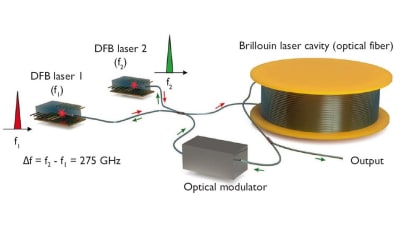
The researchers anticipate that with multiplexing techniques (where more than one channel can be used) and more sensitive receivers, the data rate can be increased to 1 terabit per second, ushering in a new era of near-instantaneous global communication. Read on to learn more.
Briefs: RF & Microwave Electronics
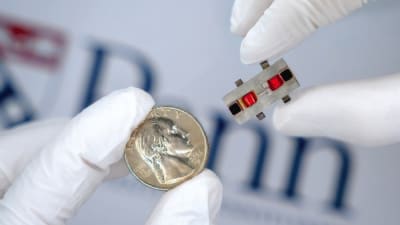
With a goal to revolutionize cellular communications, Penn engineers have developed an adjustable filter that can successfully prevent interference, even in higher-frequency bands of the electromagnetic spectrum. Read on to learn more about the matter.
Briefs: RF & Microwave Electronics
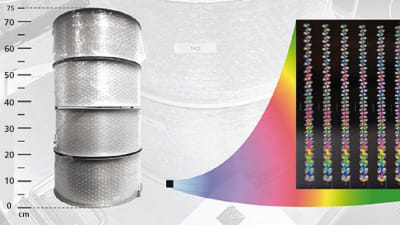
Researchers at Chalmers University of Technology have developed an optical amplifier that they expect will revolutionize both space and fiber communication.
Briefs: Electronics & Computers
Innovators have developed a method and apparatus to multiplex Radio Frequency Identification (RFID) signals efficiently. The resulting Hyper-Distributed RFID Antenna (HYDRA) system enhances distribution of the RFID reader signal, providing improved coverage for large areas as well as for small, fixed regions requiring a high density of reader antennas.

Briefs: AR/AI
To help improve the safety and security of AVs, researchers have devised a novel algorithm designed to mimic an attacking device. The algorithm lets researchers identify areas for improvement in autonomous vehicle security.

Briefs: Aerospace
Ice build-up on aircraft and wind turbines can impact the safety and efficiency of their systems. Microwave sensors were developed that can identify in real time these accumulations while calculating the rate of melting. This is crucial data for aviation.

Briefs: RF & Microwave Electronics
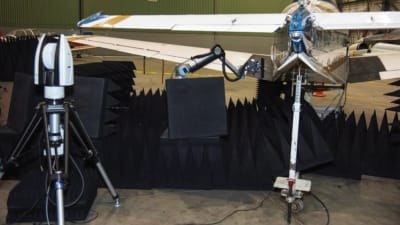
Innovators at the NASA Glenn Research Center have developed the PLGRM system, which allows an installed antenna to be characterized in an aircraft hangar. All PLGRM components can be packed onto pallets, shipped, and easily operated.
Briefs: Robotics, Automation & Control
Researchers from Japan have developed DPPFA–Net, an innovative network that overcomes challenges related to occlusion and noise introduced by adverse weather.

Briefs: Communications
Researchers at the University of Birmingham have developed a new type of high-performance “phase shifter” using a liquid gallium alloy — which varies the phase angle of microwave and millimeter-wave radio signals — for use in advanced phase array antenna systems.

Briefs: RF & Microwave Electronics
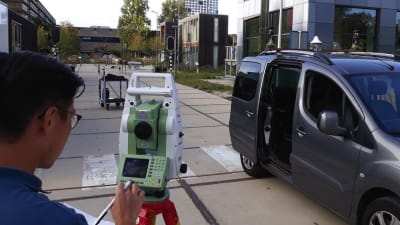
This new technology — developed by engineers at Delft University of Technology, Vrije Universiteit Amsterdam, and VSL, and which can achieve an accuracy of 10 centimeters — is important for the implementation of a range of location-based applications, such as automated vehicles, quantum communication, and next-generation mobile communication systems.
Briefs: Aerospace
Northrop Grumman Corporation is developing AN/APG-85, an advanced Active Electronically Scanned Array (AESA) radar for the F-35 Lightning II.

Briefs: Information Technology
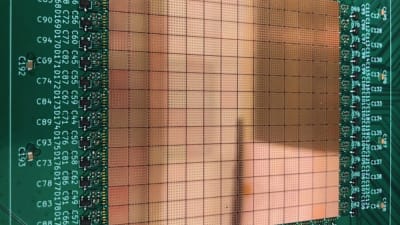
Researchers have created a device that enables them to electronically steer and focus a beam of terahertz electromagnetic energy with extreme precision. This opens the door to high-resolution, real-time imaging devices that are hundredths the size of other radar systems and more robust than other optical systems.
Briefs: RF & Microwave Electronics
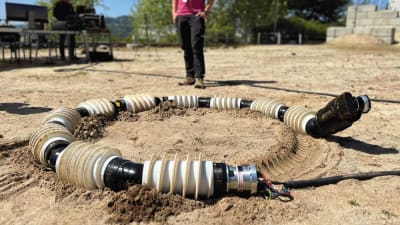
Called EELS (Exobiology Extant Life Surveyor), the self-propelled, autonomous robot was inspired by a desire to look for signs of life in the ocean hiding below the icy crust of Saturn's moon Enceladus by descending narrow vents in the surface that spew geysers into space.
Briefs: RF & Microwave Electronics
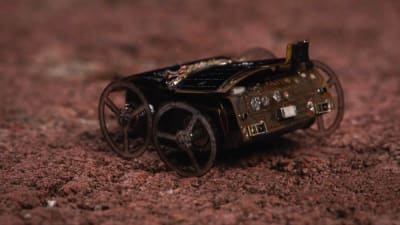
Moving robots demands a lot of energy, and batteries, the typical power source, limit lifetime and raise environmental concerns. Researchers at the University of Washington have now created MilliMobile, a tiny, self-driving robot powered only by surrounding light or radio waves.
Briefs: Electronics & Computers
MIT researchers have demonstrated the first system for ultra-low-power underwater networking and communication, which can transmit signals across kilometer-scale distances. This technique uses about one-millionth the power that existing underwater communication methods use.

Briefs: Aerospace
A research team at the Illinois Institute of Technology has for the first time demonstrated the use of a novel control method in a tailless aircraft. The technology allows an aircraft to be as smooth and sleek as possible — making it safer to fly in dangerous areas where radar scans the sky for sharp edges.

Briefs: Electronics & Computers
Testing Smart Surfaces to Improve Wireless Communication
Researchers at UBC Okanagan are looking at ways to improve cell phone connectivity and localization abilities by examining “smart” surfaces that can bounce signals from a tower to customers to improve the link.
Briefs: Electronics & Computers
Exploiting Signals Broadcast by Multi-Constellation LEO Satellites
Researchers have developed an algorithm that can “eavesdrop” on any signal from a satellite and use it to locate any point on Earth, much like GPS. The study represents the first time an algorithm was able to exploit signals broadcast by multi-constellation low-Earth orbit satellites.
Briefs: Materials
Researchers have developed a viable dust, water, and ice mitigation optical coating for space flight, aeronautical, and ground applications. The innovation of the LOTUS coating prevents contamination on sensitive surfaces.

Briefs: Sensors/Data Acquisition
Research reveals that expertly timed lasers shined at an approaching LIDAR system can create a blind spot in front of the vehicle.

Briefs: Energy
Most space satellites are powered by photovoltaic cells that convert sunlight to electricity. Exposure to certain orbit radiation can damage the devices. Scientists have proposed a radiation-tolerant photovoltaic cell design that features an ultrathin layer of light-absorbing material.
Briefs: RF & Microwave Electronics
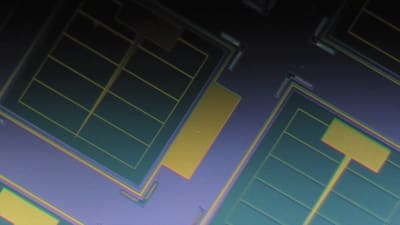
The Laser Communications Relay Demonstration (LCRD) will usher in a new era of laser communications.

Briefs: Manned Systems
In 1978, NASA scientist Donald J. Kessler theorized that an increasing amount of space pollution would lead to more collisions between objects in orbit, and thus more debris — the Kessler Syndrome. Multiple teams of researchers are working on solutions.
Briefs: RF & Microwave Electronics
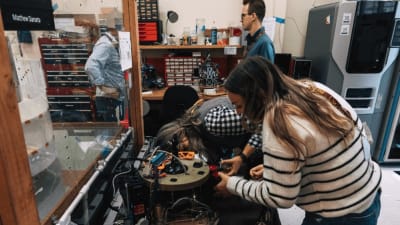
A team has introduced a new method for taking high-res images of fast-moving and rotating objects in space, such as satellites or debris in low-Earth orbit.

Briefs: RF & Microwave Electronics
A new paper on wireless connectivity from researchers at the lab of Dinesh Bharadia, an affiliate of the UC San Diego Qualcomm Institute (QI), introduces a new technique for increasing access to the 5G-and-beyond millimeter wave (mmWave) network.

Briefs: IoMT
The technology exploits the inherently passive nature of RFID to approximate the services provided by traditional active Internet of Things (IoT) protocols like ZigBee and Bluetooth.
Briefs: RF & Microwave Electronics
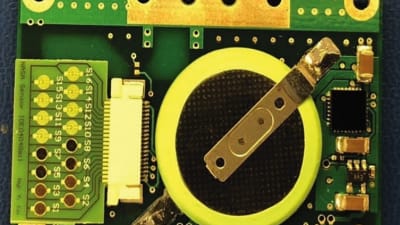
Innovators at NASA Johnson Space Center have developed a quarter-wavelength RFID slot antenna that provides polarization diversity and employs dual resonances, but in a form factor that is much smaller than other RFID antennas that provide similar functionality.
Briefs: Communications
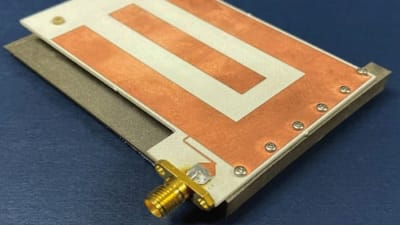
NASA's newly developed antenna is lightweight (at or below 2 grams), low volume (at or below 1.2 cm3), and low stowage thickness (approx. 0.7 mm), all while delivering high performance (at or above 10 dBi gain).

Top Stories
 Blog: Design

Aerial Microrobots That Can Match a Bumblebee's Speed
 Blog: Energy

My Opinion: We Need More Power Soon — Is Nuclear the Answer?
 Blog: Electronics & Computers

Turning Edible Fungi into Organic Memristors
 Blog: Semiconductors & ICs

Revolutionizing the Production of Semiconductor Chips
 Blog: Robotics, Automation & Control

Microscopic Swimming Machines that Can Sense, Respond to Surroundings
 Quiz: Energy

Webcasts
 Upcoming Webinars: Power

Hydrogen Engines Are Heating Up for Heavy Duty
 Upcoming Webinars: Transportation

Advantages of Smart Power Distribution Unit Design for Automotive...
 Upcoming Webinars: Unmanned Systems

Quiet, Please: NVH Improvement Opportunities in the Early Design...
 Upcoming Webinars: Power

A FREE Two-Day Event Dedicated to Connected Mobility
 On-Demand Webinars: Automotive

E/E Architecture Redefined: Building Smarter, Safer, and Scalable Vehicles
 Podcasts: Unmanned Systems

How Sift's Unified Observability Platform Accelerates Drone Innovation