39
-1
600
30
Briefs: Mechanical & Fluid Systems
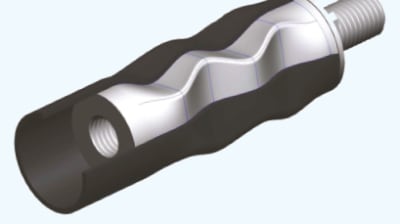
NASA’s Langley Research Center has developed a composite joint connector that is more structurally efficient than joints currently on the market. Traditionally, composite joints can...
Briefs: Mechanical & Fluid Systems
Eddy-Current-Minimizing Flow Plug for Use in Flow Conditioning and Flow Metering
Innovators at NASA’s Marshall Space Flight Center have developed a suite of prototype fluid plug technologies with an array of capabilities for fluid flow metering, mixing, and conditioning. Each innovation within this suite is based upon a core technology that has...
Briefs: Mechanical & Fluid Systems
Process for Forming a High-Temperature Single Crystal Preloader
Friction has long been a thorny problem for sealing-device designers. Traditional sealing devices rely on a contacting relationship between surfaces and sealing elements to prevent fluid leakage, but in the case of moving elements, this contact produces friction that causes wearing and...
Briefs: Mechanical & Fluid Systems
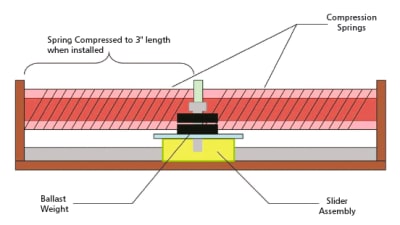
NASA’s Langley Research Center has developed a compact tuned damper to reduce vibration occurring at a fixed frequency. Tuned dampers reduce vibration of the base structure by the dissipation of energy. The magnitude...
Briefs: Mechanical & Fluid Systems
NASA’s Langley Research Center develops innovative technologies to control fluid flow in ways that will ultimately result in improved performance and fuel efficiency. Often...

Briefs: Mechanical & Fluid Systems
Nanotube-Based Device Cooling System
Carbon nanotubes (CNTs) are being studied for applications in high-strength/low-weight composites and other applications. Recent research on thermal dissipation materials for high-power electronic devices is generating a lot of interest in various industries. NASA has developed a method for cooling a device,...
Briefs: Mechanical & Fluid Systems
A Method for Accurate Load/Position Control of Rigidly Coupled Electromechanical Actuators
NASA has developed a technique designed to prevent cross-coupling in systems where two or more linear electro-mechanical actuators (EMA) are rigidly connected and are in danger of becoming cross-coupled. In such systems where the linked EMAs are commanded to...
Briefs: Mechanical & Fluid Systems
Ultralight Self-Deployable Solar Sails
Deployment of large structures such as solar sails relies typically upon electromechanical mechanisms, mechanically expandable or inflatable booms, launch restraints, controls, and other mechanisms that drastically increase the total mass, stowage volume, and areal density. The primary performance parameter...
Briefs: Mechanical & Fluid Systems
Ultra-Compact Heat Rejection System
Radiator panels are the baseline heat rejection approach for most space systems. This approach is sound, but requires a large amount of surface area to radiate the anticipated heat load. The large panels require support structures to hold them in place and prevent damage. These structures impact mass and cost....
Briefs: Mechanical & Fluid Systems
Transformable and Reconfigurable Entry, Descent, and Landing Systems and Methods
The Adaptable, Deployable Entry Placement Technology (ADEPT) concept is a mechanically deployable, semi-rigid aeroshell entry system capable of achieving low ballistic coefficient during entry for planetary or Earth return missions. The decelerator system offers a...
Briefs: Mechanical & Fluid Systems
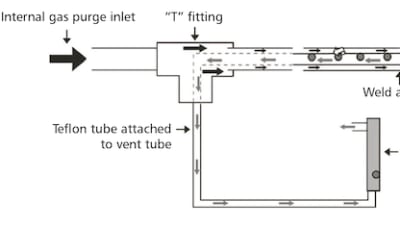
NASA’s Goddard Space Flight Center invites companies to license this dead-end welding device for use in the welding of tubing. This technology solves the problem of unacceptable welds in dead-end...
Briefs: Mechanical & Fluid Systems
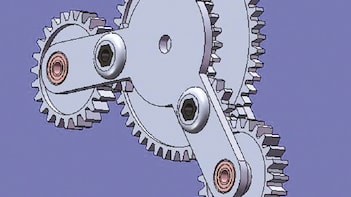
NASA Glenn researchers have developed a spoked drive mechanism for robots and other vehicles that is capable of two rotational modes. This robust ground traction (drive) assembly for remotely controlled vehicles...
Briefs: Mechanical & Fluid Systems
Self-Latching Piezocomposite Actuator
NASA’s Langley Research Center has developed a self-latching piezocomposite actuator. The self-latching nature of this invention allows for piezo actuators that do not require constant power draw. Among other applications, the invention is well suited for use in aerodynamic control surfaces and engine inlets....
Briefs: Robotics, Automation & Control
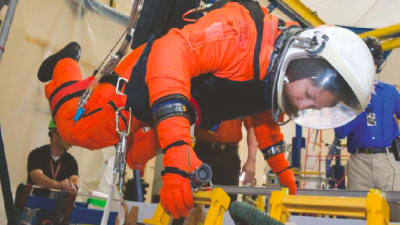
To train astronauts to live and work in the weightless environment on the International Space Station, NASA employs a number of techniques and facilities that simulate microgravity. Engineers at the...
Briefs: Robotics, Automation & Control
NASA Marshall Space Flight Center’s Fluid Structure Coupling (FSC) technology is a highly efficient and passive method to control the way fluids and structures communicate and dictate the behavior of a system. This...

Briefs: Mechanical & Fluid Systems
Variable-Aperture Reciprocating Reed Valve
NASA’s Marshall Space Flight Center engineers have developed a new reed valve for controlling fluid flow back and forth between two chambers. The VARR valve provides two-way flow that is proportional to flow demand. As the pressure gradient builds on one side, the reed valve responds by opening an amount...
Briefs: Robotics, Automation & Control
Passive, Integrated, Sublimator-Driven Coldplate
Spacecraft thermal control systems typically perform three key functions — heat acquisition, heat transport, and heat rejection — in addition to those of insulation, heat generation, and heat storage. In a typical pumped fluid-loop spacecraft thermal control system, heat is acquired from...
Briefs: Mechanical & Fluid Systems
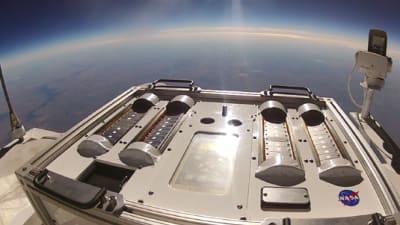
Experiments in space can be expensive and infrequent, but Earth’s upper atmosphere is accessible via large scientific balloons, and can be used to address many of the same fundamental questions. Scientific balloons are made of a thin...
Briefs: Robotics, Automation & Control
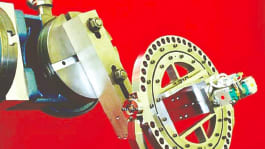
Human operation in space over long time periods causes bone and muscle deterioration, so there is a need for countermeasures in the form of physical exercises consisting of working against controlled...

Briefs: Mechanical & Fluid Systems
NASA’s Kennedy Space Center has developed a novel ruggedized housing for an electrical or fluid umbilical connector that prevents intrusion of dust, sand, dirt, mud, and moisture during field use under harsh...

Briefs: Mechanical & Fluid Systems
Systems, Methods, and Apparatus of a Low-Conductance Silicon Micro-Leak for Mass Spectrometer Inlet
Mass spectrometers on atmospheric entry probes require a method for introducing gas from high-pressure ambient regions to the vacuum of the mass spectrometer interior.
Briefs: Mechanical & Fluid Systems
NASA’s Langley Research Center has developed three techniques and systems to calibrate and validate...
Briefs: Robotics, Automation & Control
Release of a Stuck Solar Array or Antenna
Satellite launches experience approximately one deployment failure every two years. These failures include a solar array or antenna that fails to deploy because it is stuck due to a mechanism failure, or is snagged by a cable or thermal blanket. Knowledge of the exact circumstances of the deployable failure...
Briefs: Robotics, Automation & Control
High-Heat-Flux-Capable Boundary Layer Vortex Generator and Boundary Layer Transition Device
Afixed geometry device has been developed to promote boundary layer transition and generation of streamwise vorticity, and is capable of withstanding entry heating environments for the Space Shuttle Orbiter. Designed to have a total height above the surface...
Briefs: Robotics, Automation & Control
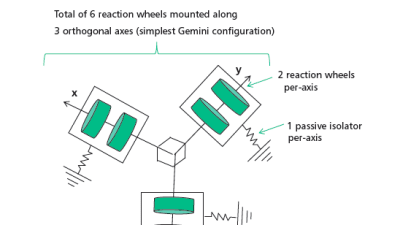
Because of the cost-effectiveness of flying smallsats compared to large flagship spacecraft, there is increasing interest in boosting their capabilities for...
Briefs: Mechanical & Fluid Systems
This actuator was developed out of a need for a cryogenic actuator that can operate effectively in spite of the thermal mismatch involved with construction materials that have different expansion...
Briefs: Aerospace
Aromatic Thermosetting coPolyester (ATSP) Composites for High-Temperature and Cryogenic Applications
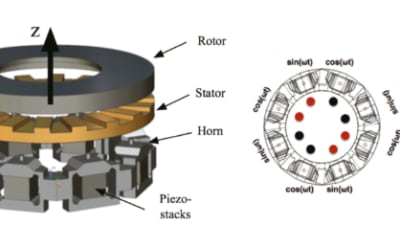
Advanced composite materials processable by cost-effective manufacturing play an important role in developing lightweight structures for future space and planetary exploration missions. With the growing demand for improved performance in the...
Briefs: Mechanical & Fluid Systems
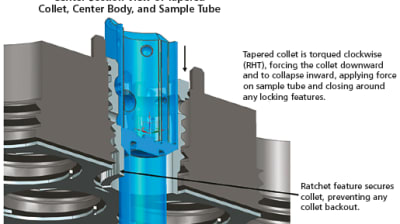
Aridged retention interface is necessary to secure planetary sample tubes within a caching system for use in future sample return missions. The assumed retention...
Briefs: Mechanical & Fluid Systems
Planetary Ice Mining by Down-Hole Energy Injection
Ice has been discovered on Mars and is present in the permanently shadowed craters on the Moon and on many asteroids. The ice is usually buried beneath an overburden of regolith. Evidence indicates this overburden may be a meter deep in some locations for the Moon; for Mars, it varies with latitude...
Top Stories
 Blog: Power

My Opinion: We Need More Power Soon — Is Nuclear the Answer?
 Blog: AR/AI

Aerial Microrobots That Can Match a Bumblebee's Speed
 News: Energy

 Blog: Electronics & Computers

Turning Edible Fungi into Organic Memristors
 Blog: Robotics, Automation & Control

Microscopic Swimming Machines that Can Sense, Respond to Surroundings
 INSIDER: Sensors/Data Acquisition

Webcasts
 Upcoming Webinars: Power

Hydrogen Engines Are Heating Up for Heavy Duty
 Upcoming Webinars: Electronics & Computers

Advantages of Smart Power Distribution Unit Design for Automotive...
 Upcoming Webinars: Transportation

Quiet, Please: NVH Improvement Opportunities in the Early Design...
 Upcoming Webinars: Sensors/Data Acquisition

From Spreadsheets to Insights: Fast Data Analysis Without Complex...
 Upcoming Webinars: Energy

Battery Abuse Testing: Pushing to Failure
 Upcoming Webinars: AR/AI