Stories
33
147
0
30
30
INSIDER: Electronics & Computers
Superconductivity is an advantageous property observed in some materials. It entails an electrical resistance of zero at extremely low temperatures....

INSIDER: Electronics & Computers
What if ultrafast pulses of light could operate computers at speeds a million times faster than today's best processors? A team of scientists, including researchers from...
Articles: Communications
In this in-depth interview, Antonio Sturiale, Director of Telecom Domain in Italy at Thales Alenia Space, discusses HydRON and the company’s approach to optical communications as well as the role it will play in upcoming lunar, Martian, and deep-space exploration missions.

Products: Electronics & Computers
See the product of the month: Lanner Electronics' ICS-P770 rugged industrial-grade computer with ICS/SCADA security. It is designed to power mission-critical substation automation, virtualization, and network security.

Special Reports: Robotics, Automation & Control

Smart Factory/Warehouse Automation - May 2025
The latest advances in humanoid robots…the automated future of aerospace manufacturing…AI and industrial robotics – beyond the hype. Read all about it in this compendium of articles from the...Articles: Electronics & Computers
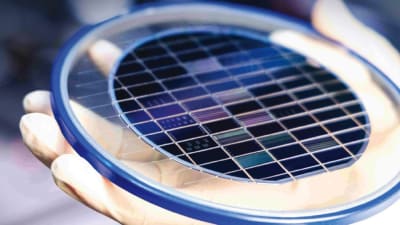
AI-driven computing is at a turning point. The old paradigm — squeezing ever-smaller transistors onto silicon chips — is becoming infeasible. Just increasing the chip size and with it the power consumption is unsustainable. The future lies in photonic processors that operate without electrical resistance, minimize heat dissipation, and deliver unmatched computational speed and efficiency. Read on to learn more.
Articles: AR/AI
Thanks to Internet of Things technologies, there are many ways to make previously unconnected things talk. Processes, conditions, equipment, or machines have much to say about themselves and help keep the industry applications they’re integrally involved in running smoothly.

Briefs: Software
Computer scientists have invented a highly effective, yet incredibly simple, algorithm to decide which items to toss from a web cache to make room for new ones. Known as SIEVE, the new open-source algorithm holds the potential to transform the management of web traffic on a large scale. Read on to learn more.

Briefs: AR/AI
Magnets generate invisible fields that attract certain materials. Far more important to our everyday lives, magnets also can store data in computers. Exploiting the direction of the magnetic field, microscopic bar magnets each can store one bit of memory as a zero or a one — the language of computers.

Briefs: Electronics & Computers
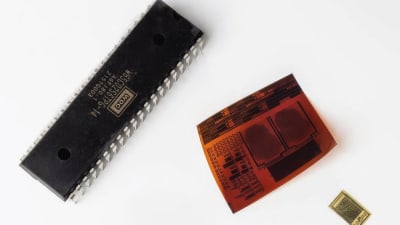
The mass production of conventional silicon chips relies on a successful business model with large “semiconductor fabrication plants” or “foundries.” New research by KU Leuven and imec shows that this “foundry” model can also be applied to the field of flexible, thin-film electronics. Read on to learn more.
Podcasts: Electronics & Computers
Nigel Forrester, Director of Product Strategy, Concurrent Technologies, discusses the future of TSN Ethernet for aerospace and defense applications on this episode of the Aerospace & Defense Technology podcast.
INSIDER: Electronics & Computers
Researchers from the National University of Singapore (NUS) have demonstrated that a single, standard silicon transistor, the fundamental building block of microchips used in...
Products: Electronics & Computers
See what's new on the market, including Endress+Hauser's FMR63B 80 GHz radar level sensor; the TP-108 Series, the smallest of all test points from Components Corporation; Sumida America's family of Resin-Shielded Surface-Mount Power Inductors; Coilcraft's XGL3020 series of ultra-low loss power inductors; Yokogawa Electric Corporation's OpreX™ Intelligent Manufacturing Hub; and much more.
INSIDER: Electronics & Computers
As more satellites, telescopes, and other spacecraft are built to be repairable, it will take reliable trajectories for service spacecraft to...

Quiz: Information Technology
Test your knowledge of cloud computing with this quiz.

Products: Semiconductors & ICs
See what's new on the market, including electronic control products from NORD DRIVESYSTEMS; the new F-141 photonics alignment system from PI; InnoPhase IoT's expansion of its Talaria platform; Aerotech, Inc.'s HexGen® HEX150-125HL Miniature Hexapod; and more.
INSIDER: Design
The electronics industry is approaching a limit to the number of transistors that can be packed onto the surface of a computer chip. So, chip manufacturers are looking to build up rather than out.

INSIDER: Research Lab
Existing computer systems have separate data processing and storage devices, making them inefficient for processing complex data like AI. A Korea Advanced Institute of Science and...

Products: Electronics & Computers
See the product of the month: Darveen Co.'s SPC-9000 Series IP66 stainless steel touch panel PCs, which are specifically designed to meet high hygiene standards, making them ideal for food processing, pharmaceutical, and chemical industries, and humid or hot kitchen environments.

Briefs: Electronics & Computers
A recent study demonstrates that soft skin pads doubling as sensors made from thermoplastic urethane can be efficiently manufactured using 3D printers. Read on to learn more.

Briefs: Data Acquisition
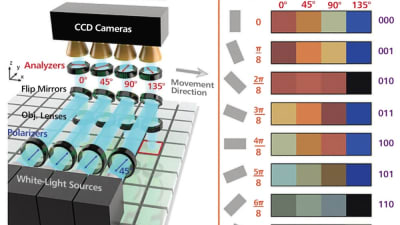
Purdue researchers have created technology aimed at replacing Morse code with colored “digital characters” to modernize optical storage. They are confident the advancement will help with the explosion of remote data storage during and after the COVID-19 pandemic. Read on to learn more.
Products: Electronics & Computers
See what's new on the market, including Cotronics' Duralco™ 215, an alumina ceramic-based high temperature coating, specially developed for impregnating and coating electrical products to 2500 ºF; COMSOL's Multiphysics ® version 6.3, which delivers new features and capability updates for efficient physics modeling and simulation app development; Binder's angled M5 panel mount connectors; and much more.
Briefs: Materials
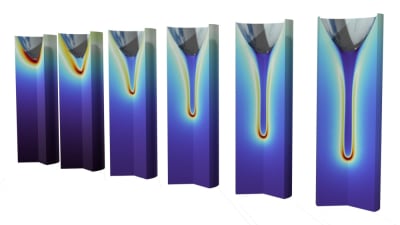
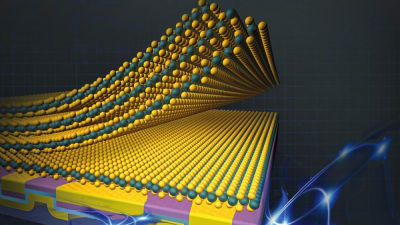
Researchers from MIT and elsewhere have developed a new technique to integrate 2D materials into devices in a single step while keeping the surfaces of the materials and the resulting interfaces pristine and free from defects. Read on to learn more.
Briefs: Robotics, Automation & Control
Researchers have developed a new soft robot design that engages in three simultaneous behaviors: rolling forward, spinning like a record, and following a path that orbits around a central point. The device, which operates without human or computer control, holds promise for developing soft robotic technologies that can be used to navigate and map unknown environments. The new soft robots are called twisted ringbots. Read on to learn more about them.

INSIDER: Robotics, Automation & Control
Mimicking how some parts of the human body work, researchers from King’s College London have transmitted a series of commands to devices with a new kind of compact circuit,...

INSIDER: Information Technology
In the classic cartoon “The Jetsons,” Rosie the robotic maid seamlessly switches from vacuuming the house to cooking dinner to taking out the trash. But in real life, training a...

Products: Electronics & Computers
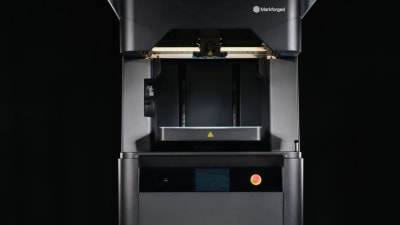
See what's new on the market, including Pi Americas' S-335 fast steering mirror; Smalley's new online shopping tool for its customers; Markforged Holding Corporation's FX10 Metal Kit, a print engine that brings metal printing capability to the FX10; Automated Precision, Inc.'s iScanMagic Composite 3D Scanner and iScanLite 3D Blue Laser Line Scanner; Navitas Semiconductor's portfolio of third-generation automotive-qualified SiC MOSFETs in D2PAK-7L (TO-263-7) and TOLL packages; and much more.
Briefs: Robotics, Automation & Control
Yen-Ling Kuo at the University of Virginia School of Engineering and Applied Science is collaborating with a team at the Toyota Research Institute to build language representations of driving behavior that enable a robot to associate the meaning of words with what it sees by watching how humans interact with the environment or by its own interactions with the environment. Read on to learn more.

Quiz: Electronics & Computers
Machine vision is the technology, software, hardware, integrated systems, actions, methods, and expertise used to provide imaging-based automatic inspection and analysis. How much do you know about machine vision? Find out with this quiz.

Top Stories
 Blog: Power

My Opinion: We Need More Power Soon — Is Nuclear the Answer?
 Blog: AR/AI
Aerial Microrobots That Can Match a Bumblebee's Speed
 News: Energy

 Blog: Electronics & Computers

Turning Edible Fungi into Organic Memristors
 Blog: Robotics, Automation & Control

Microscopic Swimming Machines that Can Sense, Respond to Surroundings
 INSIDER: Sensors/Data Acquisition

Webcasts
 Upcoming Webinars: Energy

Hydrogen Engines Are Heating Up for Heavy Duty
 Upcoming Webinars: Electronics & Computers

Advantages of Smart Power Distribution Unit Design for Automotive...
 Upcoming Webinars: Unmanned Systems

Quiet, Please: NVH Improvement Opportunities in the Early Design...
 Upcoming Webinars: AR/AI

From Spreadsheets to Insights: Fast Data Analysis Without Complex...
 Upcoming Webinars: Automotive

Battery Abuse Testing: Pushing to Failure
 Upcoming Webinars: AR/AI