Stories
33
147
0
90
30
Briefs: Electronics & Computers
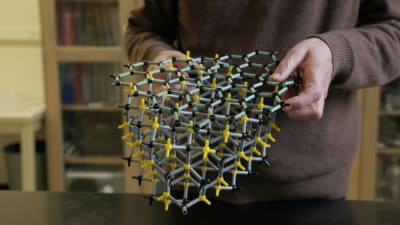
The atom-by-atom approach to MOF design enabled by AI will allow scientists to have what Argonne Senior Scientist and Data Science and Learning Division Director Ian Foster called a “wider lens” on these kinds of porous structures.

Briefs: Robotics, Automation & Control
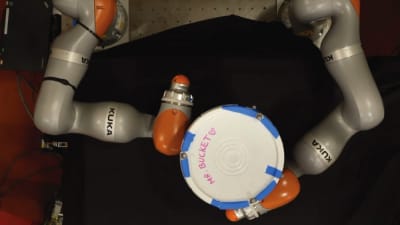
Humans are generally good at whole-body manipulation, but robots struggle with such tasks. Now, MIT researchers have found a way to simplify this process, known as contact-rich manipulation planning.
Articles: Materials
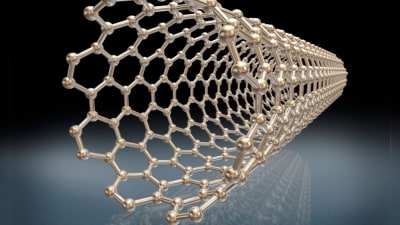
See the products of tomorrow, including Lightmatter's chip specializing in AI operations and its interconnect that facilitates data transfer between chips; implantable biomedical devices; and a metallic nanotube.
Products: Electronics & Computers
See what's new on the market, including: new TEMPUS™ technology from Renishaw, SPIROL's Series CL6000 Compression Limiters, binder-USA's protective caps, a breakthrough lithium coin cell holder from Keystone Electronics, and more.

Briefs: Semiconductors & ICs
A multi-institutional project led by a Penn State researcher is focused on developing an all-in-one semiconductor device that can both store data and perform computations. The project recently received $2 million in funding over three years as part of the new National Science Foundation Future of Semiconductors (FuSe) program.

Briefs: Software
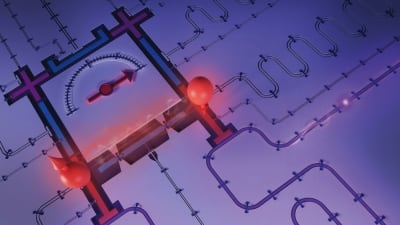
MIT researchers have developed a quantum computing architecture that aims to enable extensible, high-fidelity communication between superconducting quantum processors.
Briefs: Communications
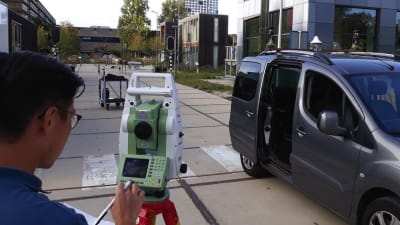
This new technology — developed by engineers at Delft University of Technology, Vrije Universiteit Amsterdam, and VSL, and which can achieve an accuracy of 10 centimeters — is important for the implementation of a range of location-based applications, such as automated vehicles, quantum communication, and next-generation mobile communication systems.
Articles: Design
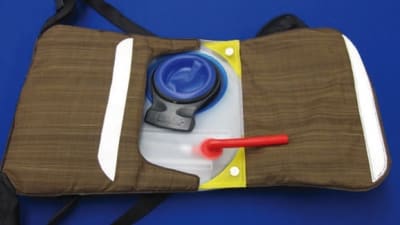
See the products of tomorrow, including: a new metamaterial that takes advantage of the non-reciprocal magnetoelectric (NME) effect; fully 3D-printed, three-dimensional solenoids; and a freeze-resistant hydration system.
Briefs: Electronics & Computers
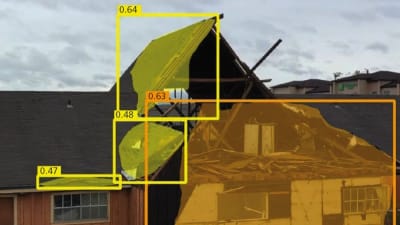
By using artificial intelligence, researchers are developing a system that can automatically identify buildings after disasters and make an initial determination of whether they are damaged and how serious that damage might be.
Products: Electronics & Computers
See the products of the year: The Talaria TWO Module Ultra-Low Power Wi-Fi optimized solution for cloud-connected IP video IoT devices by InnoPhase IoT; Hexagon's Elements, simulation software to better understand the increasingly complex behavior of systems in modern products; and Nexa3D's highest throughput additive production system, the QLS 820.

Briefs: Electronics & Computers
IO-Link is a digital advancement combining the essential electrical and electronic characteristics of other connectivity methods. The resulting devices and architecture are enabling designers to create more intelligent equipment, streamline installation, and reduce overall costs.

Briefs: Sensors/Data Acquisition
Engineers at the University of California San Diego have developed electronic “stickers” that measure the force exerted by one object upon another. The force stickers are wireless, run without batteries and fit in tight spaces. That makes them versatile for a wide range of applications.

Briefs: Electronics & Computers
A research team has successfully overcome the limitations of soft strain sensors by integrating computer vision technology into optical sensors. The team developed a sensor technology known as computer vision-based optical strain (CVOS) during its study. Unlike conventional sensors reliant on electrical signals, CVOS sensors employ computer vision and optical sensors to analyze microscale optical patterns, extracting data regarding changes.

Briefs: Electronics & Computers
Meet Air-Guardian: A system developed by researchers at the MIT Computer Science and Artificial Intelligence Laboratory (CSAIL). As modern pilots grapple with an onslaught of information from multiple monitors, especially during critical moments, Air-Guardian acts as a proactive co-pilot; a partnership between human and machine, rooted in understanding attention.

Briefs: Data Acquisition
MIT researchers developed a machine-learning technique called Diffusion-CCSP. Diffusion models learn to generate new data samples that resemble samples in a training dataset by iteratively refining their output.

Briefs: Electronics & Computers
Researchers from MIT, the MIT-IBM Watson AI Lab, and elsewhere have developed a technique that enables deep-learning models to efficiently adapt to new sensor data directly on an edge device. Their on-device training method, Pock-Engine, determines which parts of a huge machine-learning model need to be updated to improve accuracy, and only stores and computes with those specific pieces.

INSIDER: Design
Scientists have created the world’s first working nanoscale electromotor, according to research published in the journal Nature Nanotechnology. The science team designed a turbine engineered from DNA...

Blog: Electronics & Computers
The open source code library — snnTorch — has surpassed 100,000 downloads and is used in a wide variety of projects, from NASA satellite tracking efforts to semiconductor companies optimizing chips for AI.

Articles: Electronics & Computers
What are the opportunities and risks AI offers in manufacturing? How can manufacturers successfully implement AI and prepare their workforce to integrate it into their processes? What’s its future outlook? Tech Briefs asked four industry experts in this roundtable.

Products: Electronics & Computers
See what's new on the market, including a new feature for RJG's CoPilot process control system, Renishaw's expanded RenAM 500, AIRMAR's three medium ultra-wide transducers, Coilcraft's molded power inductors, VP810 vapor phase soldering systems from ASSCON, and more.

Videos of the Month: Electronics & Computers
See the videos of the month, including one on Purdue University researchers teaching robots how to navigate the swaying deck of a boat, one on a Carnegie Mellon-led team developing a soft robot to better understand an organism — the pleurocystitid — that existed 450 million years ago, and more.

Briefs: Electronics & Computers
Harvard researchers have realized a key milestone in the quest for stable, scalable quantum computing, an ultra-high-speed technology that will enable game-changing advances in a variety of fields, including medicine, science, and finance.

INSIDER: Semiconductors & ICs
Researchers at the Georgia Institute of Technology have created the world’s first functional semiconductor made from graphene, a single sheet of carbon atoms held...
Products: Sensors/Data Acquisition
See what's new on the market, including Keystone Technologies' THM Test Points, Nikon IMBU's CT systems for non-destructive inspection, Renesas' SoCs and MCUs, Rad Source NDT's X-ray Inspection System, the Precision Specimen Loader from Instron, and more.

Articles: Connectivity
The next evolution in mobile networks is on the horizon with 6G. Set to surpass 5G with enhanced speed, reduced latency, and expanded capacity, countless applications will benefit. Manufacturing is anticipated to be one of the greatest beneficiaries.

INSIDER: Electronics & Computers
Unmanned Underwater Vehicles (UUVs) are used around the world to conduct difficult environmental, remote, oceanic, defense, and rescue missions in often unpredictable and harsh conditions.

INSIDER: Data Acquisition
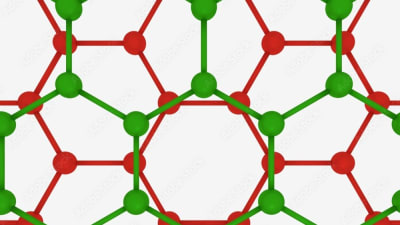
The 'wonder material' graphene is well-known for its high electrical conductivity, mechanical strength, and flexibility. Stacking two layers of graphene...
Articles: Robotics, Automation & Control
Ultimately, zonal architectures require a fundamentally reorganized software structure that allows the OEM to independently, quickly, easily, and modularly adapt the control of the entire vehicle while minimizing the complexity in the wiring harness and the number of control devices.

Products: Imaging
See the new products, including new Vision hardware from Beckhoff; Renishaw’s new Central manufacturing connectivity and data platform; Weidmuller USA's new open operating system, u-OS; a Digital Valve Controller featuring the Device™ technology; and more.

Top Stories
 Blog: Power

My Opinion: We Need More Power Soon — Is Nuclear the Answer?
 Blog: AR/AI
Aerial Microrobots That Can Match a Bumblebee's Speed
 News: Energy

 Blog: Electronics & Computers

Turning Edible Fungi into Organic Memristors
 Blog: Robotics, Automation & Control

Microscopic Swimming Machines that Can Sense, Respond to Surroundings
 INSIDER: Sensors/Data Acquisition
Webcasts
 Upcoming Webinars: Energy

Hydrogen Engines Are Heating Up for Heavy Duty
 Upcoming Webinars: Transportation

Advantages of Smart Power Distribution Unit Design for Automotive...
 Upcoming Webinars: Automotive

Quiet, Please: NVH Improvement Opportunities in the Early Design...
 Upcoming Webinars: Test & Measurement

From Spreadsheets to Insights: Fast Data Analysis Without Complex...
 Upcoming Webinars: Power

Battery Abuse Testing: Pushing to Failure
 Upcoming Webinars: Internet of Things