Stories
8,33,42,44,45,47,52,54,68
0
4830
30
INSIDER: Electronics & Computers
In an effort to help solve one of the grand challenges of artificial intelligence, the University of Michigan and IBM have launched a $4.5 million collaboration to develop a new class of...
INSIDER Product: Electronics & Computers
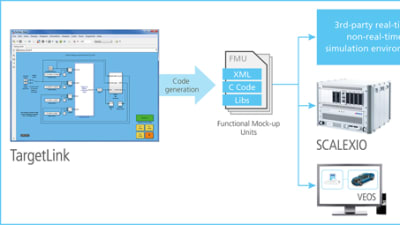
dSPACE’s (Wixom, MI) latest production code generator, TargetLink 4.1, supports the Functional Mock-up Interface (FMI) 2.0 and the latest version of the AUTOSAR standard, AUTOSAR 4.2. Moreover, MISRA C compliance and...
INSIDER: Electronics & Computers
Barry Industries (Attleboro, MA) and Modelithics, Inc. have published a report detailing the broadband performance of Barry's 5mm high temperature co-fired ceramic (HTCC) quad-flat-no-leads (QFN) package to 40GHz. The report...
INSIDER Product: Electronics & Computers
ADLINK Technology, Inc. (San Jose, CA) released its latest industrial ATX motherboard, the IMB-M43, powered by 6th Generation Intel® Core™ i7/i5/i3 processors and providing up to five PCIe slots. The PCIe slots can be...

INSIDER: Electronics & Computers
A new design for gigantic blades longer than two football fields could help bring offshore 50-megawatt (MW) wind turbines to the United States and the world. Sandia National Laboratories...

INSIDER: Electronics & Computers
NASA's Juno mission to Jupiter broke the record to become humanity's most distant solar-powered emissary when Juno was about 493 million miles from the Sun. Launched in 2011, Juno is the...

INSIDER: Photonics/Optics
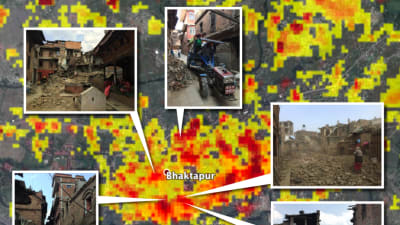
During natural disasters like high-magnitude earthquakes, areas most in need of assistance must be located as fast as possible. Researchers, led by Sang-Ho Yun at NASA's Jet Propulsion Laboratory,...
Briefs: Electronics & Computers
Development of a Multi-User Modem for Space Telecommunications
Efficient support of planetary surface missions typically requires an orbiting asset that acts as a relay point to/from Earth. Orbital relay passes are normally 5 to 15 minutes in duration over any specific landed site. When multiple landed assets are co-located or near-located in the...
Briefs: Electronics & Computers
Scientific imaging arrays need to have their individual imaging elements arranged in a close-spaced mosaic. The typical single imaging element is a silicon chip mounted on a larger support frame. This...

Briefs: Electronics & Computers
cFE/CFS Evolution for Multicore Platforms
This effort ports the Core Flight Executive (cFE)/Core Flight System (CFS) flight software architecture to multicore processor platforms, and provides mission developers with a common, flightready, flexible software environment that supports single, multi-processor, and multicore systems. Currently the...
Briefs: Electronics & Computers
One of the most common causes of electronics failure is moisture. Because water and electronics do not mix well, several strategies exist to protect mission-critical components from...

Briefs: Information Technology
The Advanced Data Analytics Platform (ADAPT): Concept, Design, Architecture, and Operation
NASA scientists are uniquely positioned to research and understand the processes affecting the Earth’s climate. To study these important processes, scientists must address the Big Data challenges posed by working with massive amounts of observational and...
Briefs: Information Technology
Orion Heat Shield Thermal Mapping Tool
The Orion Heat Shield Mapping Tool collects data from a set of output files from various re-entry thermal response codes, interpolates the data, and maps the analysis code data onto a finely meshed finite element model.
Briefs: Information Technology
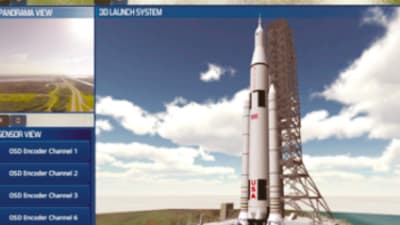
The Ground Systems Development and Operations (GSDO) Smart Firing Room Project aims to create a firing room using cutting-edge technologies of today that...
Briefs: Information Technology
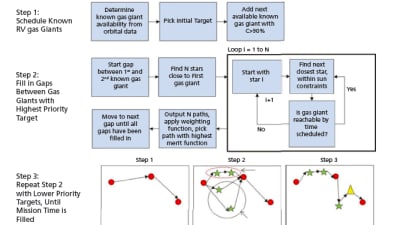
The Design Reference Mission (DRM) tool was developed to support the Exo-Starshade (Exo-S) Science and Technology Definition Team for modeling both the Dedicated (30-m...
Briefs: Information Technology
Data Parallel Line Relaxation Code (DPLR) Version 3.05
The Reacting Flow Environments branch at NASA ARC is interested in characterizing the aerothermal environment of three main classes of problem: planetary entry vehicles, reusable launch vehicles (RLVs), and arc-jet (or other ground test) flow simulations. Each of these problem classes has...
Briefs: Information Technology
Front End Data System (FEDS) Version 10.0
In traditional missions at NASA, ground systems were normally custom-built for each project. Additionally, there would be separate ground systems for each part of the spacecraft as well as a totally separate ground system for mission operations. Each of these generally interfaced through non-standard...
Briefs: Information Technology
Link Complexity Scheduling Algorithm
NASA’s Deep Space Network (DSN) provides communication and other services for planetary exploration for both NASA and international users. The DSN operates antennas at three complexes in California, Spain, and Australia, with the longitudinal distribution of the complexes enabling full sky coverage and...
Briefs: Information Technology
BUMPER-CEV Micrometeoroid and Orbital Debris Risk Assessment Code Rev. A
BUMPER-CEV Version 1.71 is used to perform micrometeoroid/orbital debris (MMOD) risk assessments for the Orion Multi-Purpose Crew Vehicle (MPCV) spacecraft. BUMPER is the primary risk analysis program used by NASA to provide for reliable and safe operations of spacecraft...
Briefs: Software
Advanced Numerical Integration Techniques for High-Fidelity SDE Spacecraft Simulation
Simulation study is an integral part of the validation of navigation algorithms for spacecraft. While it is possible to come up with an estimate of a navigation algorithm’s performance with a low-fidelity system model, the mathematical analysis is intractable...
Briefs: Software
One of the crucial ground structures employed at the launch pad during the Space Shuttle program is the rainbird nozzle system, whose primary objective is to...

Briefs: Software
Seismometer Simulation Software
Seismometer Simulation Software (SEISim) is written to provide a simulation for the seismometer instrument in the Insight (Interior Exploration using Seismic Investigations, Geodesy, and Heat Transport) mission so that flight software developers can use it to develop and test their software applications. It can...
Briefs: Information Technology
Numerical simulations of plume impingement heating to the International Space Station (ISS) and its visiting vehicles require a specific way to...

Briefs: Information Technology
Submersible Phase Change Float Sizing
This software allows sizing of submersibles powered by hydraulic generators that are pressurized by ocean thermal gradients at various depths. The software allows the operator to input the fixed size of the vessels containing the phase change material (PCM). The effective expansion of the PCM is also input,...
Briefs: Information Technology
Method for Evaluating the Pneumatic Hammer Stability of a Fluid-Film Bearing Using CFD
This invention relates to a fluid film bearing and a process for evaluating pneumatic hammer instability. Based on the stability criteria, a method was developed using 3D CFD (computational fluid dynamics) evaluation dynamics to evaluate the onset of pneumatic...
Briefs: Information Technology
DAWN: a Simulation Model for Evaluating Costs and Tradeoffs of Big Data Science Architectures
Data science is emerging as a critical area of research and technology to advance scientific discovery, knowledge, and decision-making through systematic computational approaches to analyzing massive data sets. The sheer volume of data increase, coupled...
Briefs: Information Technology
Auxiliary Payload Sensor System Simulation Software
Auxiliary Payload Sensor System Simulation Software (APSSim) provides a simulation of the seismometer used in the Insight (Interior Exploration using Seismic Investigations, Geodesy, and Heat Transport) mission. The software takes recorded or simulated APSS data as an input, preprocesses the input...
Briefs: Software
Multiphysics Piezoelectric Finite Element Modeling for Designing a Piezoelectric Damping Treatment for Vibration Control of Rotating Blades
The requirements for advanced aircraft engine components lead to designs that are more lightweight and efficient, yet more susceptible to excessive vibration, complex dynamic behavior, and uncertain durability...
Briefs: Information Technology
EXOS Software
An improved version of EXOS software allows for the modeling of fabrics, mixtures, and porous materials, and also provides the ability to accept hex mesh geometries. The code employs a novel numerical method, a hybrid particle finite element approach, as well as particles and elements in tandem, each modeling distinct aspects of the...
Top Stories
 Blog: Power

My Opinion: We Need More Power Soon — Is Nuclear the Answer?
 Blog: AR/AI

Aerial Microrobots That Can Match a Bumblebee's Speed
 News: Energy

 Blog: Electronics & Computers

Turning Edible Fungi into Organic Memristors
 Blog: Robotics, Automation & Control

Microscopic Swimming Machines that Can Sense, Respond to Surroundings
 INSIDER: Sensors/Data Acquisition

Webcasts
 Upcoming Webinars: Automotive

Hydrogen Engines Are Heating Up for Heavy Duty
 Upcoming Webinars: Transportation

Advantages of Smart Power Distribution Unit Design for Automotive...
 Upcoming Webinars: Transportation

Quiet, Please: NVH Improvement Opportunities in the Early Design...
 Upcoming Webinars: Sensors/Data Acquisition

From Spreadsheets to Insights: Fast Data Analysis Without Complex...
 Upcoming Webinars: Test & Measurement

Battery Abuse Testing: Pushing to Failure
 Upcoming Webinars: Transportation