
Stories
38
49
0
2070
30
Briefs: Materials
When testing composite structures, it is important to understand the response of the structure to the load. Of significance is the formation of damage and growth of that damage leading to...

Briefs: Propulsion
Large-scale liquid rocket engines with regeneratively cooled nozzles will enable reliable and reduced-cost access to space. The coolant that circulates through the internal...

Briefs: Robotics, Automation & Control
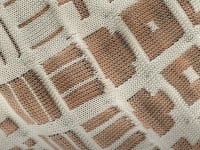
Polymer-Based 2D-to-3D Transformable Surfaces
Technologies using stretchable materials are increasingly important. Yet, in general, it is not possible to control how they stretch with much more sophistication than inflating balloons. A method was developed that allows the calculated transformation of 2D stretchable surfaces into targeted 3D shapes.
Question of the Week: Materials
Will sponges effectively soak up oil spills?
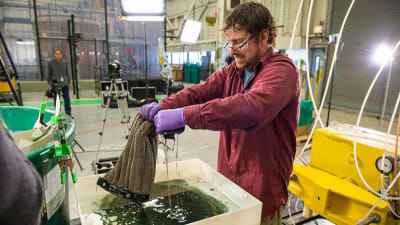
This week’s lead INSIDER story highlights the Oleo sponge – a reusable material that may someday support oil-spill remediation efforts.
Blog: Green Design & Manufacturing
A reusable sponge from the U.S. Department of Energy’s Argonne National Laboratory cleans up spills – not in the kitchen, but on the coast.
Question of the Week: Manufacturing & Prototyping
Will All-Liquid 3D-Printing lead to ‘Liquid Electronics’?
A recent video on Tech Briefs TV featured an achievement from Berkeley Lab scientists who have developed a way to print all-liquid 3D structures.
Blog: Materials
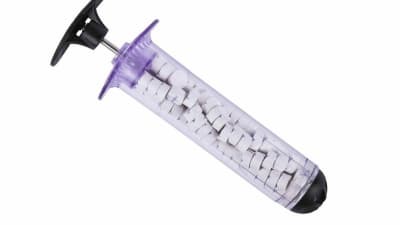
With a syringe-like applicator, the XSTAT hemostatic tool injects small, rapidly-expanding sponges into a wound cavity.
Briefs: Sensors/Data Acquisition
A technique was developed to prevent cross-coupling in systems where two or more linear electromechanical actuators (EMAs) are rigidly connected, and are in danger of becoming...
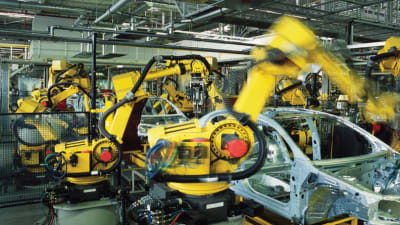
Facility Focus: Materials
Sandia National Laboratories — headquartered in Albuquerque, MN, with a principal lab in Livermore, CA — is operated and managed by National Technology and Engineering Solutions of Sandia, LLC (a wholly owned...

Briefs: Manufacturing & Prototyping
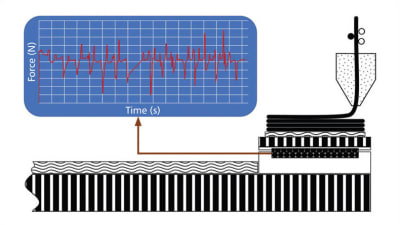
NASA Langley Research Center has developed a test station capable of in-situ testing of material deposition and layer adhesion in an extrusion additive manufacturing process. The technology addresses the problem of...
Briefs: Energy
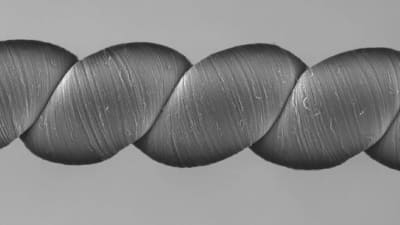
Researchers have developed yarns that generate electricity when they are stretched or twisted. The “twistron” yarns are constructed from carbon nanotubes — hollow cylinders of carbon...
Briefs: Mechanical & Fluid Systems
A small robot with the ability to hoist large loads could have countless applications, not only as a small, inexpensive, disposable, mobile sensor in the realms of search and rescue,...

Briefs: Manufacturing & Prototyping
Every complex human tool has contained multiple materials wedged, tied, screwed, glued, or soldered together. But the next generation of tools, from autonomous squishy robots to flexible...

Briefs: Mechanical & Fluid Systems
A new way to treat wood makes it 12 times stronger than natural wood and ten times tougher. The wood substance could be comparable to steel or titanium alloys; it is also comparable to...

Briefs: Photonics/Optics
Most electronic devices have glass or plastic covers that protect against dust, moisture, and other environmental contaminants, but light reflection from these surfaces can make...

Articles: Data Acquisition
This column presents technologies that have applications in commercial areas, possibly creating the products of tomorrow. To learn more about each technology, see the contact information provided for that innovation.
Briefs: Mechanical & Fluid Systems
By binding photosensitive dyes to common plastic membranes and adding water, chemists have made a new type of solar power generator. The device is similar to familiar silicon...

Briefs: Aerospace
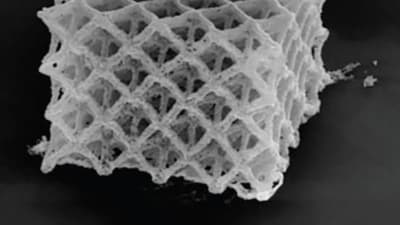
In 3D printing — also known as additive manufacturing — an object is built layer-by-layer, allowing for the creation of structures that would be impossible to manufacture by...
Blog: Manufacturing & Prototyping
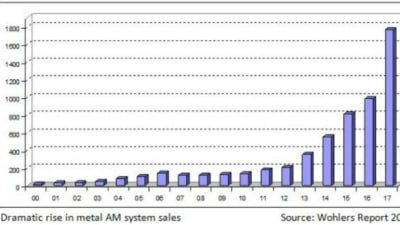
A report released this week revealed a spike in the adoption of metal additive-manufacturing systems – an increase due largely to a growing number of new companies.
Blog: Materials
Physical chemists at the Georgia Institute of Technology discovered an emerging class of semiconductors with some unexpected moves.

INSIDER: Test & Measurement
Researchers from the University of British Columbia have developed a stretchable sensor that can be weaved into a fabric to detect a range of complex human movements, including finger gestures and heartbeats.

Q&A: Electronics & Computers
Researchers from NC State have developed a new technique for directly printing metal circuits, creating flexible, stretchable electronics. The technique can...

Briefs: Sensors/Data Acquisition
Food allergies are extremely common. In the US, Federal regulations require packaged foods to disclose the presence of some of the most common allergens such as gluten, nuts, and milk products, which is...

Briefs: Materials
A low-cost sensor technology, called Chemical Identification by Magneto-Elastic Sensing (ChIMES), uses target response materials (TRMs) as actuators in magneto-elastic (M-E) sensors...

Briefs: Sensors/Data Acquisition
Researchers at Pacific Northwest National Laboratory (PNNL) have developed an inexpensive electrochemical sensing system that significantly improves the ability to rapidly and accurately detect heavy...

Briefs: Medical
In London's St. Paul's Cathedral, a whisper can be heard far across the circular whispering gallery as the sound curves around the walls. Now, an optical whispering gallery mode resonator developed by Penn...
Briefs: Manufacturing & Prototyping
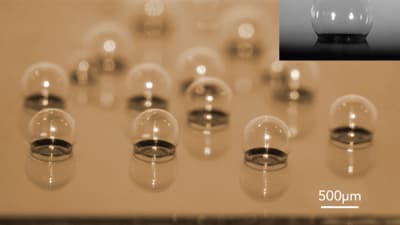
New graphene printing technology can produce electronic circuits that are low-cost, flexible, highly conductive, and water-repellent. Low-cost, inkjet-printed graphene can...

Briefs: Transportation
NASA’s Langley Research Center has developed a landing gear cavity modification that reduces noise produced during aircraft approach and landing. The modification is an innovative stretchable mesh...

Briefs: Medical
Currently, most 3D-printed organ models are made using hard plastics or rubbers. This limits their application for accurate prediction and replication of the organ’s physical behavior...

Top Stories
 Blog: Robotics, Automation & Control

Aerial Microrobots That Can Match a Bumblebee's Speed
 Blog: Electronics & Computers

Turning Edible Fungi into Organic Memristors
 Blog: Manufacturing & Prototyping

Revolutionizing the Production of Semiconductor Chips
 News: Energy

 INSIDER: Electronics & Computers

World’s Smallest Programmable, Autonomous Robots
 INSIDER: Manufacturing & Prototyping
Webcasts
 On-Demand Webinars: Power

E/E Architecture Redefined: Building Smarter, Safer, and Scalable Vehicles
 Upcoming Webinars: Energy

Hydrogen Engines Are Heating Up for Heavy Duty
 Upcoming Webinars: Electronics & Computers

Advantages of Smart Power Distribution Unit Design for Automotive...
 Upcoming Webinars: Automotive

Quiet, Please: NVH Improvement Opportunities in the Early Design...
 Upcoming Webinars: Power

A FREE Two-Day Event Dedicated to Connected Mobility
 Podcasts: Defense

How Sift's Unified Observability Platform Accelerates Drone Innovation